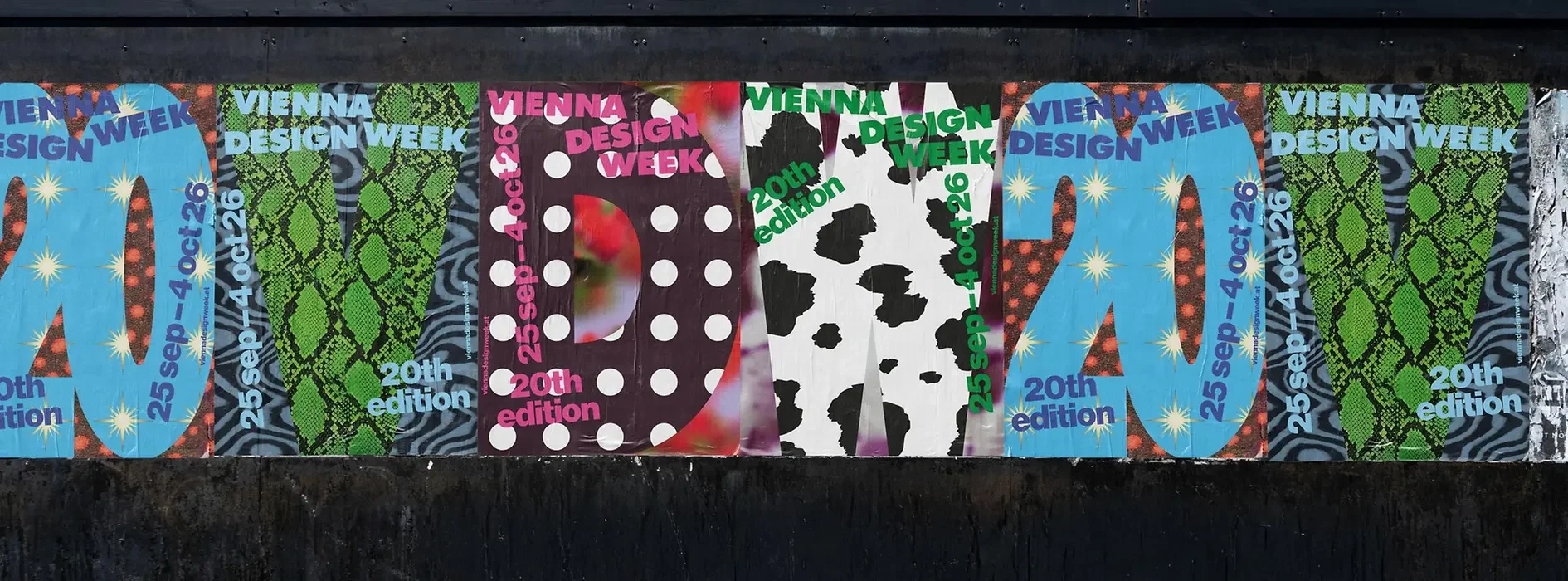
Vienna has always understood that design belongs to the city, not simply to the showroom. During Vienna Design Week, streets, workshops, historic businesses, cultural institutions, studios, temporary spaces, and unexpected buildings become part of a wider conversation about how objects, materials, architecture, craft, and social systems shape everyday life. In 2026, that conversation carries particular emotional weight as the annual event celebrates its 20th edition, two decades after the festival was founded by Lilli Hollein, Tulga Beyerle, and Thomas Geisler.
Taking place from September 25 to October 4, 2026, the anniversary edition continues Vienna Design Week’s character as an internationally oriented, curated design festival rather than a conventional trade fair. The program moves between contemporary product design, architecture, craftsmanship, circularity, material research, social design, food systems, acoustics, publishing, and cultural exchange. For architects, interior designers, collectors, developers, creative professionals, and design minded travelers, this annual event offers something increasingly valuable: the opportunity to understand not only what is being designed, but why design matters now.
The 2026 festival is anchored by a new Festival Headquarters in Vienna’s Hietzing district, while numerous projects extend across the city. The headquarters itself, a high rise office building designed by Austrian architect Harry Glück, becomes part of the curatorial experience, reinforcing a recurring Vienna Design Week idea: architecture is never merely a container for culture, it can become part of the cultural argument.
Vienna Design Week 2026 Details
Vienna Design Week is Austria’s largest curated design festival and an annual event that approaches design through cultural, social, economic, and creative perspectives. Its anniversary year places particular attention on the festival’s history while continuing its commitment to experimentation and contemporary debate.
Event: Vienna Design Week
Edition: 20th edition
Dates: September 25 to October 4, 2026
City: Vienna, Austria
Main venue: Festival Headquarters, Hietzinger Kai 101, 1130 Vienna
Festival Headquarters opening hours: Daily, 11:00 AM to 7:00 PM
Spotlight on the Festival Headquarters: September 26, 2026, 5:00 PM to 10:00 PM
Next edition: Dates for the 2027 edition have not yet been officially announced.
The Festival Headquarters sits directly beside the Unter St. Veit U4 underground station, making the principal venue relatively easy to reach by public transport. However, Vienna Design Week is deliberately citywide. Exhibitions, talks, installations, workshops, craft encounters, and partner projects unfold at multiple locations, meaning visitors should always verify individual program pages for venue specific hours and registration requirements.
A High Rise Becomes a Cultural Laboratory
One of the most compelling characteristics of this annual event is its tradition of activating unusual buildings. For 2026, the Festival Headquarters occupies Hietzinger Kai 101, a high ise office building designed by Harry Glück. Instead of treating the building as neutral exhibition infrastructure, the festival allows its architecture, history, circulation, atmosphere, and temporary occupation to become part of the visitor experience.
This approach is especially meaningful for architecture and real estate professionals. Adaptive reuse, temporary occupation, meanwhile spaces, and the cultural activation of existing property are increasingly important subjects in international cities. Vienna Design Week places these questions in front of the public without reducing them to a technical seminar. The annual event asks visitors to experience transformation physically, room by room.
Why the 20th Edition of Vienna Design Week Matters
Twenty years is long enough for a design festival to build traditions, but also long enough for those traditions to deserve examination. Founded in 2006, Vienna Design Week has spent two decades connecting designers with craftsmanship, industry, urban life, institutions, businesses, and wider social questions. Festival director Gabriel Roland has framed the anniversary as a moment to consider both what has been created and what the festival might become next.
That balance between reflection and renewal gives the 2026 annual event unusual depth. Anniversary programming does not simply revisit celebrated objects. It asks what remains relevant after two decades of changing technologies, economic conditions, environmental pressures, social expectations, and definitions of good design.
Previous edition context: Vienna Design Week 2025 welcomed approximately 50,000 visitors, presented more than 120 program items across nearly 50 locations, and involved around 500 designers. The figures illustrate why the annual event now functions as both an important Austrian design platform and an increasingly international cultural meeting point.
FOKUS 2026: The Essence of Lightness
Among the most poetic elements of the 2026 program is FOKUS: The Essence of Lightness, curated by Swiss guest curator Connie Hüsser. The exhibition gathers international design positions exploring lightness not as decoration, but as a material, emotional, spatial, and atmospheric quality.
Objects are considered through qualities such as openness, movement, fragility, clarity, ease of use, and visual calm. In an era when luxury is increasingly associated with restraint, material intelligence, longevity, and emotional ease rather than simple excess, the exhibition should be particularly relevant to interior designers and collectors. Its underlying question is subtle but important: Can sophisticated design feel effortless without becoming empty?
Luxembourg as GAST
The international dimension of this annual event is further expressed through Luxembourg as the 2026 GAST. Presented with Kultur | lx, Arts Council Luxembourg, and Design Luxembourg, the guest country format introduces designers and cultural voices through exhibitions, discussions, listening formats, and live radio sessions.
Rather than presenting national design as a fixed visual identity, the program emphasizes exchange. That idea is visible in TWO O EIGHT, DESIGNING VOICES, where Luxembourg designers meet members of Austria’s design community in live conversations. The annual event becomes less about presenting a finished national image and more about listening to how contemporary design cultures influence one another.
Design With Social Consequences
The Stadtarbeit format remains one of the festival’s clearest demonstrations that design extends beyond furniture and physical objects. For 2026, selected projects explore celebration, public space, collective experience, inclusion, and the social rituals through which cities build connection. The program is supported through Erste Bank’s Vermehrt Schönes! initiative and developed in cooperation with Caritas Vienna.
For professionals accustomed to discussing design in terms of finishes, specifications, and visual identity, Stadtarbeit expands the frame. It treats behavior, access, interaction, and communal life as things that can also be intentionally designed.
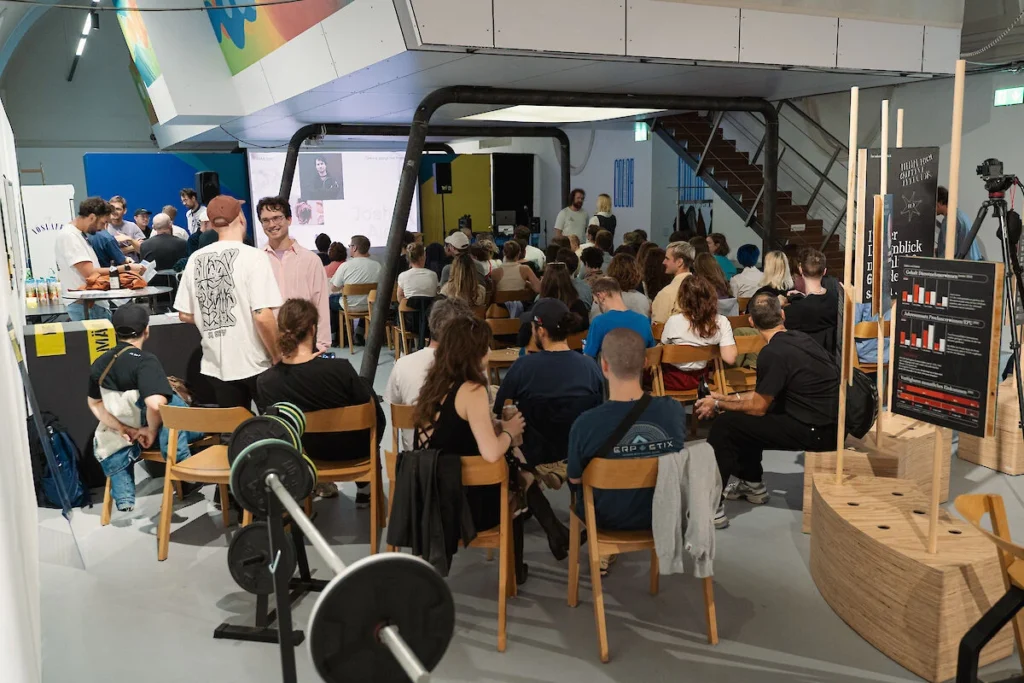
An evening of design, conversation, and creative exchange at Vienna Design Week 2024, capturing the festival’s vibrant community spirit. Image: VIENNA DESIGN WEEK / eSeL.at / Robert Puteanu.
Meet the Speakers at Vienna Design Week 2026
The intellectual strength of this annual event lies in the range of disciplines entering the same conversation. The confirmed 2026 program brings together architects, designers, researchers, industry specialists, circular economy experts, publishers, curators, and business leaders. Below are several of the officially announced voices particularly relevant to an international architecture and design audience.
Gabriel Roland, Vienna Design Week
Gabriel Roland, Director of Vienna Design Week , appears in the MissionAcoustic program alongside David Dorolti. Their conversation, MAKING MANIFESTO, considers the development of an immersive acoustic design platform within the context of the anniversary festival.
David Dorolti, MissionAcoustic
David Dorolti, Founder and CEO of MissionAcoustic, participates across talks, sessions, and workshops dedicated to acoustic architecture and interior environments. MissionAcoustic connects architects and design professionals with sustainable acoustic solutions and planning tools.
Vanessa Nica, Louis Poulsen
Vanessa Nica, Head of B2B Central Europe at Louis Poulsen, is confirmed for the MissionAcoustic Conference on September 28 and a MissionAcoustic Session on September 29. Her participation brings lighting and commercial design into a broader conversation around sensory space, acoustics, and interior experience.
Pascal van Dort, Rockfon and SONATA Horizon
Pascal van Dort, associated in the official program with Rockfon and SONATA Horizon, presents a keynote on September 29 at 11:00 AM. His contribution forms part of MissionAcoustic Manifesto, a major 2026 exploration of contemporary room acoustics, materials, technology, and architectural planning.
Katharina Mischer and Thomas Traxler, mischer’traxler studio
Vienna based designers Katharina Mischer and Thomas Traxler of mischer’traxler studio appear in MATTERS UNUSED. Their practice is known for combining conceptual experimentation, making, technology, and material investigation. For this annual event, their work contributes to a discussion about industrial byproducts, circular production, and alternative material systems.
Karin Huber Heim, Circular Economy Forum Austria
Karin Huber Heim, President of the Circular Economy Forum Austria, participates in MATTERS UNUSED. Her presence connects experimental material design with the broader economic and organizational challenges of transitioning toward circular systems.
Sigrid Stagl, Vienna University of Economics and Business
Sigrid Stagl of Vienna University of Economics and Business also joins the MATTERS UNUSED discussion. As an academic working in ecological economics and sustainability transformation, she brings an economic perspective to questions that design industries can no longer treat purely as matters of aesthetics.
Anna Valentiny, Valentiny hvp Architects and Point Nemo Publishing
Architect and publisher Anna Valentiny is a partner at Valentiny hvp Architects and director of Point Nemo Publishing. During CURATING THOUGHTS, BETWEEN SPACE AND PRINT, she considers the relationship between architecture, publishing, ideas, and curatorial practice.
Jerome Becker, MAGAZIN
Jerome Becker, cofounder and codirector of MAGAZIN, Space for Contemporary Architecture, joins Anna Valentiny on October 1. The conversation provides an opportunity to consider how architecture can be curated differently in physical exhibitions and printed media.
Manuele Amprimo, CNH
Manuele Amprimo, Industrial Design Director at CNH, leads FROM FARM MACHINE TO DESIGN ICON on September 29. The talk explores the creative and engineering process behind agricultural machinery, using the STEYR Cervus tractor as its central case study. It is a useful reminder that industrial design can create emotional identity even within highly technical product categories.
Armin Winter, Michael Neuman, Michael Moser, Alexandra Brückner and Christine Bertl
The final Sunday introduces another cross disciplinary group. Armin Winter of BOKU University, Michael Neuman of Kitocoat, Michael Moser of Cucina Alchimia, Alexandra Brückner of Vienna Design Week , and Christine Bertl of Circular Economy Forum Austria take part in EAT YOUR WASTE. Their roundtable connects food design, biological resources, circular products, science, hospitality, and material innovation.
The official 2026 calendar confirms a rich sequence of talks throughout the annual event. The selection below focuses on discussions with particular relevance to architecture, interior design, material research, circularity, cultural production, and the future of creative practice. Visitors should always consult the official program before attending because individual locations, capacity limits, and booking conditions vary.
September 26: MAKING MANIFESTO
6:30 PM to 7:00 PM, Festival Headquarters
David Dorolti of MissionAcoustic joins Gabriel Roland of Vienna Design Week for a concise discussion accompanying the MissionAcoustic Manifesto installation. The broader program explores how acoustic quality can move from an invisible technical concern to an intentional element of contemporary interior architecture.
September 28: MissionAcoustic Conference
3:00 PM to 7:00 PM, Festival Headquarters
The confirmed conference program includes Vanessa Nica of Louis Poulsen, David Dorolti of MissionAcoustic, and architect Sophie Luger, alongside additional speakers. Advance registration is requested via [email protected].
The Specialists in Bespoke
Turn your Designs into Reality with Nolita Harbour
September 28: MATTERS UNUSED, Industrial Byproducts as a Resource for New Materials
6:30 PM to 9:00 PM, LAUFEN space Wien, Salzgries 21
Katharina Mischer and Thomas Traxler of mischer’traxler studio present alongside Gordon Selbach and Jakob Travnik of bioregional.agency, followed by a discussion involving Karin Huber Heim of Circular Economy Forum Austria, Denis Milosevic of Wiener Linien, and Sigrid Stagl of WU Vienna. The session examines industrial manufacturing byproducts, regional value chains, and circular production. Places are limited and registration is requested at [email protected].
September 29: Pascal van Dort Keynote
11:00 AM, Festival Headquarters
Pascal van Dort, presented by the festival in association with Rockfon and SONATA Horizon, contributes to the MissionAcoustic program. For architects and designers interested in how sound influences comfort, hospitality, workplaces, and residential interiors, this is one of the annual event’s more specialized professional sessions.
September 29: FROM FARM MACHINE TO DESIGN ICON
5:30 PM to 7:00 PM, Festival Headquarters
Manuele Amprimo, Industrial Design Director at CNH, considers how designers and engineers collaborate on highly technical machinery. The STEYR Cervus tractor provides an unexpected but compelling lens through which to examine functionality, sustainability, performance, identity, and emotional design.
September 30: 24/7 DESIGNING CARE
3:30 PM to 5:00 PM, Festival Headquarters
Presented by NeverAtHome and Humainprojects, this conversation investigates design, material culture, well being, inclusion, and care. The event deliberately moves away from a conventional panel format and unfolds around coffee, using an inclusive cup system as a physical starting point for discussing dignity, autonomy, and everyday objects.
October 1: CURATING THOUGHTS, BETWEEN SPACE AND PRINT
3:00 PM, Festival Headquarters
Anna Valentiny of Valentiny hvp Architects and Point Nemo Publishing joins Jerome Becker of MAGAZIN. Their lecture addresses architecture, publishing, exhibition design, and the curation of knowledge, making it particularly valuable for practitioners interested in how architectural ideas travel beyond completed buildings.
October 2: FEMALE POWER, Ella Briggs and Her Relevance Today
3:00 PM to 4:30 PM, Festival Headquarters
Organized by Bo:IA, Bund Österreichischer Innenarchitektur, this interior architecture discussion examines the legacy of architect and interior architect Ella Briggs with authors Elana Shapira and Dörte Kuhlmann. Themes include visibility, female perspectives, professional history, and the relevance of overlooked design narratives to present day practice.
October 2: DESIGNING RELATIONS, Design Meets Change
5:00 PM, Festival Headquarters
Christian Hauser, Max Kure, and Leo Mühlfeld explore how design thinking can be applied to organizations, collaboration, behavioral structures, and cultural change. The session broadens the definition of what designers create, suggesting that relationships and organizational systems can be considered design challenges alongside objects and environments.
October 4: EAT YOUR WASTE, What If the Leftovers Were the Luxury?
11:00 AM to 12:00 PM, Festival Headquarters
This English language roundtable from Circular Economy Forum Austria brings together Armin Winter, Michael Neuman, Michael Moser, Alexandra Brückner, and Christine Bertl. An edible protective food coating becomes the starting point for a larger discussion about biological resources, cross sector collaboration, food systems, and circular products.
Editorial Callout: Follow the Ideas, Not Only the Objects
The strongest way to experience this annual event may be to combine exhibitions with conversations. Seeing an experimental material before hearing researchers discuss its economic implications, or experiencing an acoustic installation before attending a keynote on sound, creates a richer understanding of design than either format offers alone.
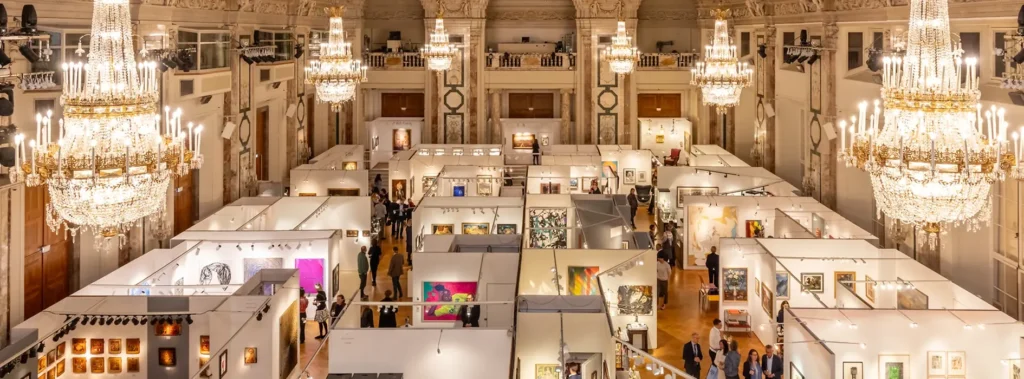
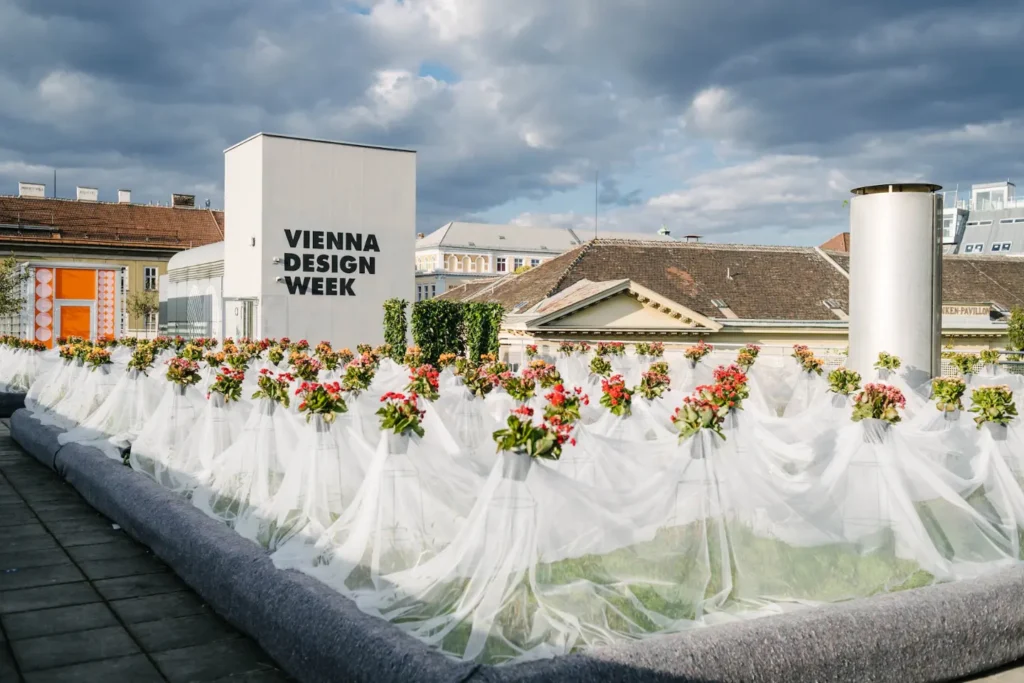
Vienna Design Week turns the city itself into a canvas for creativity, where design, nature, and architecture meet. Image via The Aficionados / Vienna Design Week.
How to Register for VIENNA DESIGN WEEK 2026
How to Register as a Visitor
There is no single mandatory festival wide visitor registration for VIENNA DESIGN WEEK 2026. Admission to the Festival Headquarters is free, and many exhibitions and public program elements can be visited without a general ticket. However, selected tours, workshops, guided programs, talks, and education formats require individual booking or registration.
The festival provides a dedicated official booking page linking visitors to the relevant ticket shops. Tickets for booked tours should be presented digitally or in print. The booking page also identifies sessions that have already reached capacity, which is why advance planning matters for this annual event. ndex=35}
Filter the program by date, format, or area of interest.
Open the individual event listing and check whether booking is required.
If a booking link or partner email is provided, register directly through that channel.
Keep digital or printed confirmation available for ticketed tours.
Check the event page again shortly before attending for any changes.
Registration arrangements are sometimes managed by program partners rather than through one central festival system. MATTERS UNUSED, for example, has limited capacity and requests registration through LAUFEN, while MissionAcoustic sessions use a dedicated MissionAcoustic email address.
How to Register as an Exhibitor or Program Partner
For 2026, the festival invited external participants through formats including PLATFORM and Mixer!. The official partner call welcomed manufacturers, brands, design studios, architecture practices, stores, universities, museums, cultural institutions, and other organizations capable of contributing a strong design led project.
PLATFORM is intended for participants presenting their own program at their own location. Mixer! responds to another common challenge: designers with content but no venue, or venues searching for suitable content. In that format, the festival’s curatorial team works to create appropriate combinations.
Applications for 2026 are now closed. The final published deadline for the 2026 Become a Partner call was June 30, 2026, at 24:00 CEST. Standard participation was listed at €5,500 excluding VAT, with reduced rates of €3,300 excluding VAT for eligible SMEs, cultural institutions, and universities, and €1,100 excluding VAT for eligible young design studios and sole traders.
Who Is the Annual Event Looking For?
The festival is not simply looking for companies that want visibility. Its application process emphasizes quality, curatorial relevance, and meaningful content. VIENNA DESIGN WEEK states that submissions are reviewed by its curatorial team, reflecting the annual event’s position as a curated cultural festival rather than an unrestricted commercial exhibition.
Future applicants should therefore think beyond product placement. A compelling proposal might involve new research, an installation, a material experiment, a collaboration with local craftsmanship, an educational format, a public intervention, or an exhibition that provides context around a product or process.
Tips Before Registering
Read the individual event page carefully. Free admission does not always mean that advance reservation is unnecessary.
Book specialist tours early. Some 2026 architectural walks are already listed as fully booked on the festival booking page.
Build your schedule geographically. VIENNA DESIGN WEEK is citywide, so consecutive events may not be within walking distance.
Check language information. Some formats are German language only, while selected international talks are presented in English.
For future professional participation, prepare content rather than advertising. The annual event’s strongest projects usually bring a clear point of view to the wider design conversation.
Planning Your Visit to Vienna
How Much Time Should You Allow?
A single day can provide a strong introduction, but architecture and design professionals should consider two or three days if possible. The annual event operates across numerous venues and program formats, and its value often lies in moving between the main headquarters, independent exhibitions, talks, craft businesses, architectural tours, and temporary installations.
A thoughtful itinerary might dedicate one day primarily to the Festival Headquarters and Hietzing, followed by another focused on central Vienna, partner venues, museums, or specialist programming. Those interested in material innovation and circular design may want to prioritize FOKUS, Urban Food & Design, MATTERS UNUSED, and EAT YOUR WASTE, while architecture focused visitors can combine talks with the festival’s guided urban walks.
Where to Stay
VIENNA DESIGN WEEK does not currently present a universal festival accommodation package on its main visitor pages. International visitors can instead consult the Vienna Tourist Board accommodation directory, which includes approximately 400 hotels, guesthouses, and other properties with search filters for location and facilities.
Because the annual event is distributed through Vienna, staying directly beside one venue is not essential. Good access to the underground and tram network may be more useful than choosing accommodation solely according to walking distance from the headquarters.
Getting to the Festival Headquarters
The 2026 Festival Headquarters is located at Hietzinger Kai 101, immediately next to the Unter St. Veit U4 station. Public transportation is therefore the most straightforward option for many visitors.
Parking
Visitors arriving by car should be aware that Vienna operates regulated parking conditions across the city. The Vienna Tourist Board recommends Park & Ride facilities as a practical alternative to central parking. One relevant option for travelers approaching the western part of the city is Park & Ride Hütteldorf, which is connected to the U4 underground line. Vienna’s official visitor information currently lists Park & Ride facilities from approximately €4.60 per day.
Because this annual event spans many districts, driving from venue to venue may be less convenient than combining public transport and walking.
The 20th edition takes place from September 25 to October 4, 2026. It is a ten day annual event with programming across Vienna.
Where is the main venue?
The 2026 Festival Headquarters is at Hietzinger Kai 101, 1130 Vienna, beside Unter St. Veit U4 station. Additional events take place throughout the city.
What are the Festival Headquarters opening hours?
The headquarters is scheduled to open daily from 11:00 AM to 7:00 PM from September 25 through October 4. The Spotlight evening on September 26 continues from 5:00 PM to 10:00 PM, while the final day finissage takes place from 4:00 PM to 7:00 PM.
Is VIENNA DESIGN WEEK free?
Admission to the Festival Headquarters is free. Many other elements of the annual event are also freely accessible, but certain workshops, guided tours, education formats, and partner events require tickets or advance registration. Always check each event listing before attending.
Do visitors need to register before attending?
There is no universal visitor registration deadline for the entire festival. Registration requirements depend on the individual activity. Some exhibitions are open without booking, while guided formats and limited capacity sessions may require advance reservation.
What is the exhibitor registration deadline?
The 2026 professional partner application process is closed. The official Become a Partner page lists its final deadline as June 30, 2026, at 24:00 CEST. Anyone interested in participating in a future edition should monitor the festival’s Open Calls page.
Has VIENNA DESIGN WEEK 2027 been announced?
As of September 18, 2026, official dates for the next annual event in 2027 have not yet been announced on the festival’s published information pages. Visitors and potential participants should wait for confirmation from VIENNA DESIGN WEEK rather than relying on estimated dates.
Is there official festival accommodation?
No festival wide accommodation package is currently identified on the main official visitor information reviewed for this article. International visitors can use Vienna’s official tourism accommodation service to compare options.
Is parking available at the Festival Headquarters?
The festival has not published a dedicated visitor parking program for the headquarters. Since Hietzinger Kai 101 is directly beside an underground station, public transportation is the more practical option for many visitors. Travelers who need to drive can consider Vienna’s Park & Ride network.
Is the Festival Headquarters accessible for visitors with reduced mobility?
The official 2026 Festival Headquarters information reviewed for this article does not provide a comprehensive venue wide accessibility statement. Because this annual event also uses numerous independent locations with different architectural conditions, visitors with specific mobility or access requirements should confirm arrangements directly with the festival or individual venue before traveling. The VIENNA DESIGN WEEK team can be contacted through the official website at viennadesignweek.at.
What language are the talks presented in?
Language varies by event. Some educational programming is listed as German only, while several international sessions are presented in English. EAT YOUR WASTE, for example, is officially confirmed as an English language roundtable. Check individual program entries before planning your itinerary.
What should firs time visitors prioritize?
Begin with the Festival Headquarters, where multiple exhibitions and installations can be experienced in one location. From there, select one or two themes that genuinely interest you, such as craftsmanship, circularity, interior architecture, sound, food design, social design, collectible objects, or publishing.
For a first visit, trying to see everything may weaken the experience. This annual event rewards curiosity more than speed. Leave time for conversations, unfamiliar studios, unexpected materials, and the small projects between headline events. These are often where the most memorable ideas emerge.
Visitor Tip
Do not treat VIENNA DESIGN WEEK as a conventional fair itinerary. Its most distinctive quality comes from Vienna itself. Move through neighborhoods, observe the architecture between venues, enter workshops, listen to designers explain their processes, and allow the annual event to reveal the city through design.
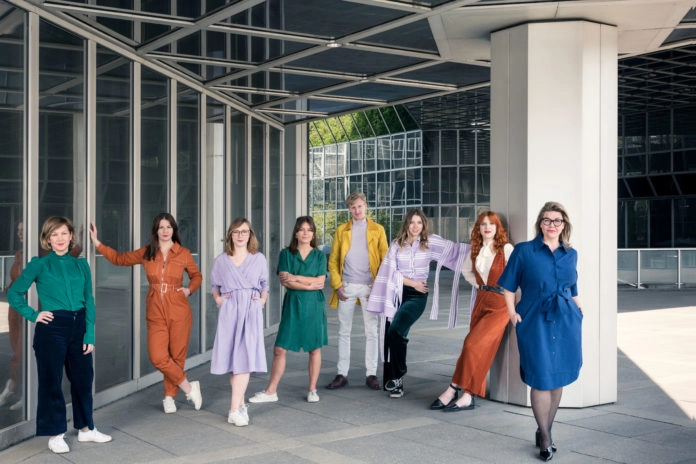
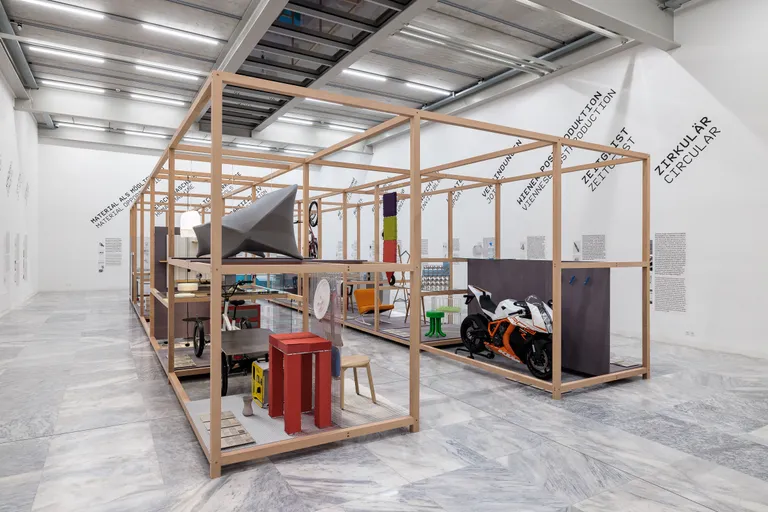
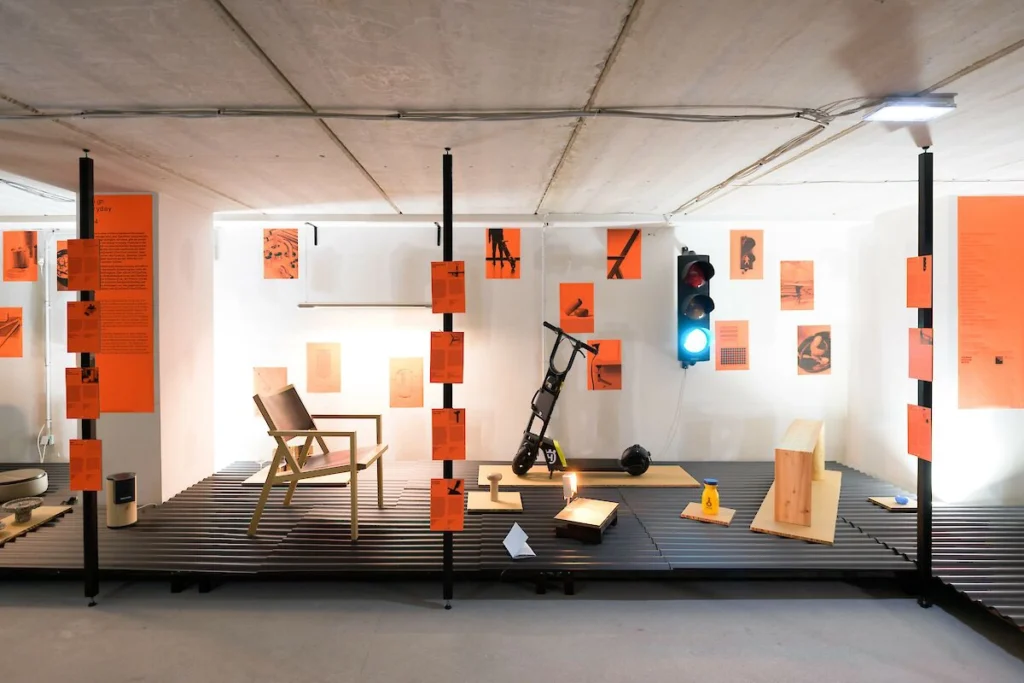
Experimental objects and bold ideas reveal Vienna Design Week as a laboratory for the future of design. Image via Creative Austria.
Looking Ahead to VIENNA DESIGN WEEK
There is something quietly fitting about VIENNA DESIGN WEEK reaching its twentieth edition at a moment when design is being asked to carry more responsibility than ever. Objects must use materials more intelligently. Interiors are expected to support physical and emotional well being. Buildings must adapt rather than simply expand. Industries are reconsidering waste streams. Public spaces must serve more diverse communities. Luxury itself is being redefined through craftsmanship, longevity, cultural meaning, and restraint.
The 2026 annual event captures these shifts without suggesting that design has simple answers. Instead, it creates a framework in which practitioners, industries, researchers, institutions, and visitors can examine the questions together.
That is why the anniversary matters. The most interesting design festivals are not merely places where new chairs, lamps, surfaces, or technologies appear. They are places where society negotiates what those objects mean, what resources they consume, whose lives they improve, what traditions they preserve, and what futures they quietly make possible.
From Connie Hüsser’s meditation on lightness to debates around circular manufacturing, inclusive objects, acoustic environments, publishing, social structures, food waste, craftsmanship, and industrial design, VIENNA DESIGN WEEK 2026 presents design as a cultural practice with consequences.
For architects and interior designers, it offers new material and conceptual references. For brands and manufacturers, it demonstrates the growing importance of narrative, research, responsibility, and collaboration. For collectors and design conscious travelers, it creates access to emerging ideas before they become familiar visual language. And for Vienna, the annual event once again turns the city into something larger than a backdrop.
For ten days in autumn, Vienna becomes a place where design can be seen, touched, questioned, debated, and reconsidered. After twenty editions, perhaps that remains VIENNA DESIGN WEEK’s most enduring achievement: not telling us exactly what the future of design should look like, but creating the conditions in which we can imagine it more intelligently.
Luxury Mountain Resorts: 8 Exceptional Retreats Redefining the Modern Chalet
Manage Consent
To provide the best experiences, we use technologies like cookies to store and/or access device information. Consenting to these technologies will allow us to process data such as browsing behavior or unique IDs on this site. Not consenting or withdrawing consent, may adversely affect certain features and functions.
Functional
Always active
The technical storage or access is strictly necessary for the legitimate purpose of enabling the use of a specific service explicitly requested by the subscriber or user, or for the sole purpose of carrying out the transmission of a communication over an electronic communications network.
Preferences
The technical storage or access is necessary for the legitimate purpose of storing preferences that are not requested by the subscriber or user.
Statistics
The technical storage or access that is used exclusively for statistical purposes.The technical storage or access that is used exclusively for anonymous statistical purposes. Without a subpoena, voluntary compliance on the part of your Internet Service Provider, or additional records from a third party, information stored or retrieved for this purpose alone cannot usually be used to identify you.
Marketing
The technical storage or access is required to create user profiles to send advertising, or to track the user on a website or across several websites for similar marketing purposes.