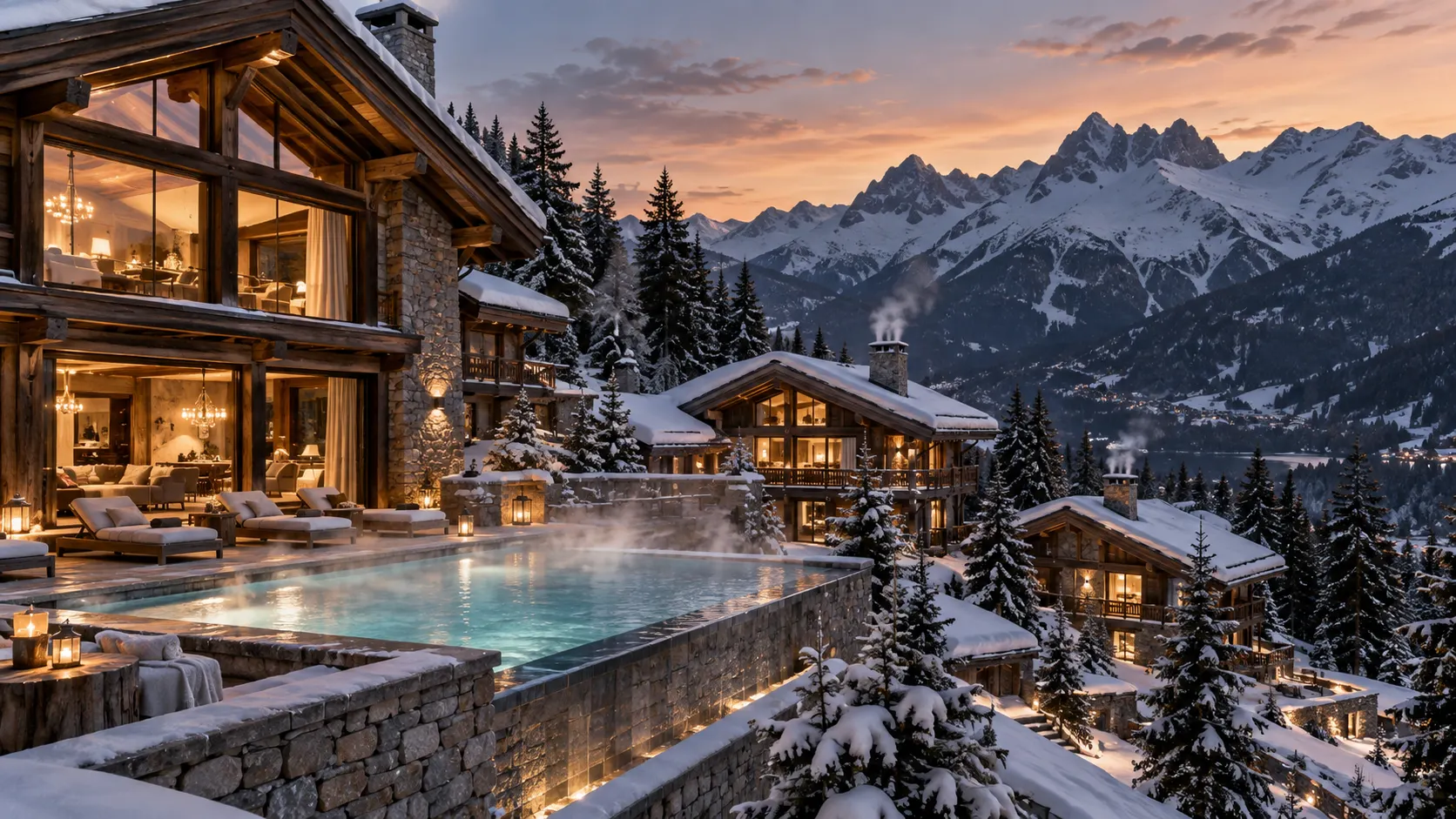
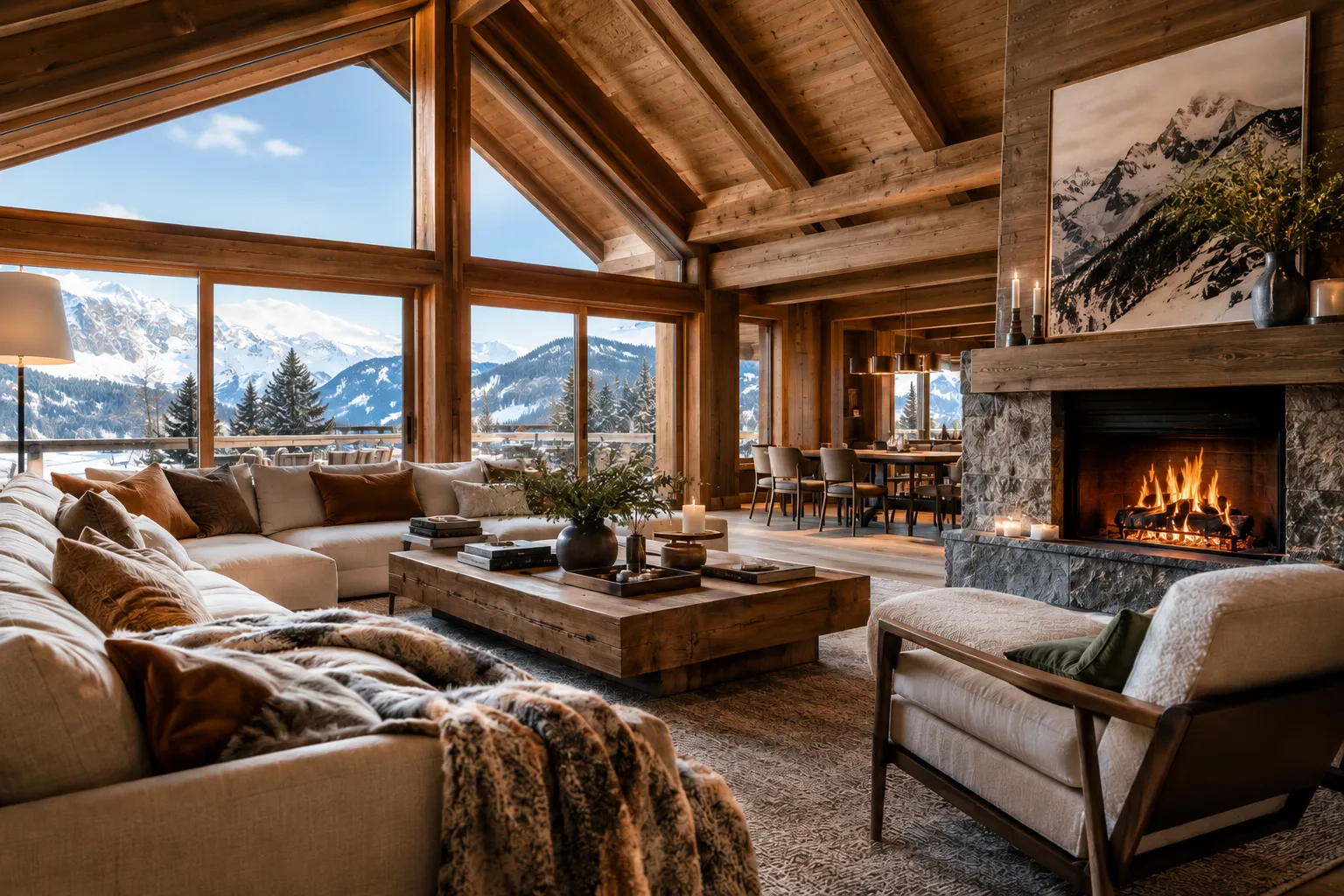
What defines the finest luxury mountain resorts today? Increasingly, the answer lies not in spectacle alone, but in the intimacy of chalet inspired architecture, tactile natural materials, fireside rooms, deep connections to landscape, and hospitality that feels residential rather than institutional. Across Europe and North America, a new generation of mountain retreats is translating the chalet into something more sophisticated, pairing craftsmanship and privacy with serious wellness, contemporary art, exceptional dining, and direct access to nature.
This selection brings together eight exceptional luxury mountain resorts that demonstrate different interpretations of chalet living. Some are intimate maisons, others are larger destination resorts, while one is conceived as an entire hamlet of private chalets. What connects them is a shared ability to make architecture, landscape and hospitality feel inseparable.
Editorial Selection
This is an editorial selection rather than a numerical ranking. The properties were chosen for their architectural character, interior design, relationship with their surroundings, level of privacy, wellness offering and relevance to the evolving language of luxury mountain resorts. Property information and official links were reviewed in September 2026. Seasonal services and experiences can change, therefore specific arrangements should always be confirmed directly with each resort.
What Defines the New Generation of Luxury Mountain Resorts?
The traditional chalet was fundamentally a response to place. Timber, stone, pitched roofs, protected openings and generous hearths answered the practical demands of mountain life. Yet the most interesting luxury mountain resorts are no longer interested in reproducing tradition literally. Instead, they are extracting its emotional qualities, warmth, enclosure, material honesty and communal living, then combining them with contemporary expectations of space, comfort and service.
That shift matters. High end travellers increasingly expect a resort to possess a clear architectural identity. A bedroom can no longer be an anonymous luxury room transplanted into a mountain setting. Guests want to understand where they are through materials, views, craftsmanship, food and the rhythm of the spaces around them. The most successful resorts achieve this without allowing local references to become theatrical.
Wellness is equally central. Pools, private treatment rooms, saunas, thermal experiences and spaces for physical recovery are becoming architectural anchors rather than secondary amenities. At the same time, suites are growing more residential, with fireplaces, dressing rooms, substantial terraces and living areas designed for extended stays.
For architects, designers and developers, these properties offer another lesson. Luxury mountain resorts increasingly succeed when they feel less like hotels and more like highly considered private homes, with the infrastructure of a world class resort discreetly concealed behind the experience.
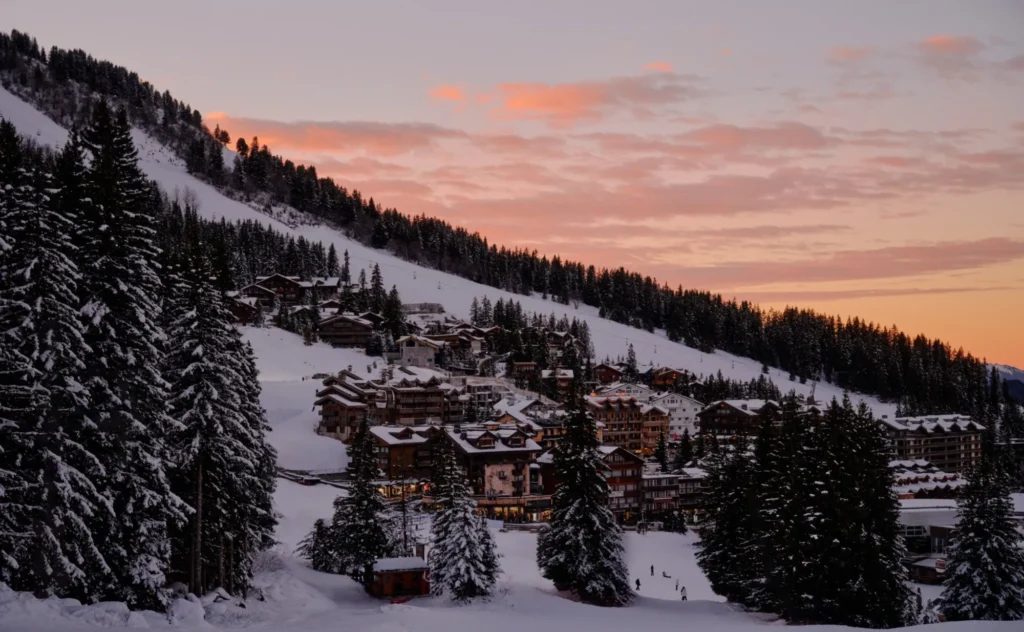
Courchevel unfolds beneath a soft winter sunset, with snow covered slopes, dense pine forests and chalet style architecture creating the refined mountain setting that surrounds Aman Le Mélézin. Official image source.
Aman Le Mélézin, Courchevel, France
Few names illustrate quiet mountain luxury as effectively as Aman Le Mélézin. Set directly on the Bellecôte piste in Courchevel 1850, the property rises four storeys above the village and combines the presence of a traditional French mountain residence with the visual restraint associated with Aman. The result is one of the most composed luxury mountain resorts in Courchevel, a place where atmosphere is created less through decoration than through proportion, material and silence. Aman currently states that the hotel will reopen for the winter season on 10 December 2026.
Inside, timber creates a strong architectural rhythm, while restrained upholstery, carefully framed windows and softly layered lighting allow the landscape to carry much of the visual drama. Several rooms and suites have balconies, while selected accommodations add outdoor Jacuzzis. Large windows continually return attention to the slopes and surrounding forest, reinforcing the sense that the building belongs to its setting rather than simply overlooking it.
The property is particularly interesting for designers because it demonstrates that chalet character does not require visual excess. There is no need for every room to become an exhibition of rustic references. Instead, warmth comes through texture, timber detailing and the repetition of crafted elements. The result feels residential, composed and deeply private.
Why Aman Le Mélézin Stands Out
Aman adds another layer to the chalet model through its emphasis on ritual and calm. The wellness facilities include an indoor heated pool, Jacuzzis, sauna, hammam and cold plunge, while a dedicated ski room supports the practical rhythm of a winter stay.
Among luxury mountain resorts, this is a compelling choice for travellers who value architectural restraint, privacy and an atmosphere of deliberate quiet. It proves that mountain luxury can be immersive without becoming visually loud.
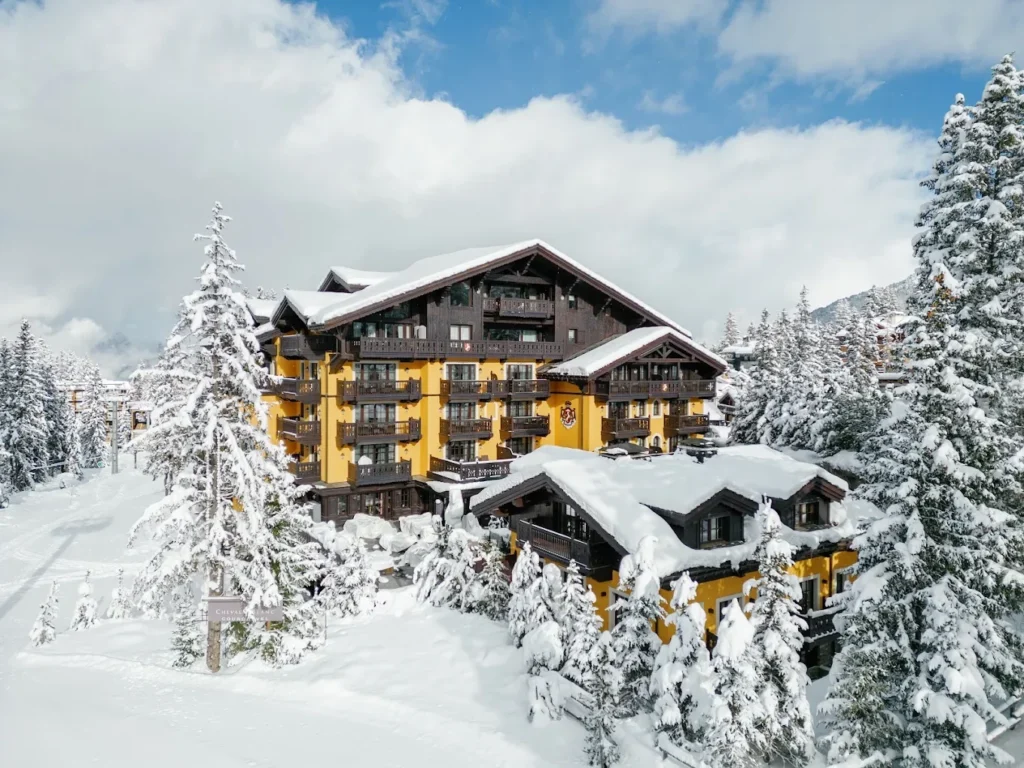
Cheval Blanc Courchevel sits within the snow covered landscape of Courchevel 1850, where chalet inspired architecture, direct access to the slopes and an intimate residential character shape one of France’s most distinctive luxury mountain resorts. Official image source.
Cheval Blanc Courchevel, France
Cheval Blanc Courchevel occupies a different position within the world of luxury mountain resorts. Conceived with the spirit of a private family chalet, the Maison combines contemporary art, saturated colour, fine materials and an intensely residential approach to hospitality. It has just 36 rooms and suites, allowing it to retain a level of intimacy that would be difficult to achieve within a much larger resort.
The interiors by Sybille de Margerie are particularly relevant from a design perspective. Traditional mountain materials are placed alongside polished brass, bronze, steel, leather and tactile fabrics. The intention is not historical recreation. Instead, familiar materials are reassembled within a contemporary decorative language, one that feels confident enough to introduce art and colour without losing warmth. Works by artists including Bruno Peinado, Paola Pivi, Walter Niedermayr and Xavier Veilhan further reinforce the sense that the Maison operates as a living collection rather than simply a hotel.
For guests seeking an even more private expression of the concept, The Chalet offers 315 square metres across four floors, with three bedrooms, living and dining areas, a screening room, private treatment room, sauna and outdoor Nordic bath.
Where Art and Chalet Living Meet
This is what makes Cheval Blanc especially interesting among luxury mountain resorts. It treats the chalet not as a fixed visual style, but as a framework for collecting art, design, craft and hospitality. The residence still provides the emotional cues associated with mountain living, fireside warmth, cocooning spaces and direct access to snow, yet the visual language is more urbane.
The Chalet living area or one of the art filled interiors, ideally illustrating the meeting of timber, contemporary colour and collectible design. View The Chalet.
The gastronomic programme strengthens that sense of destination, with Le 1947 holding three Michelin stars. Combined with the Cheval Blanc Spa and its Guerlain rituals, the experience extends far beyond skiing.
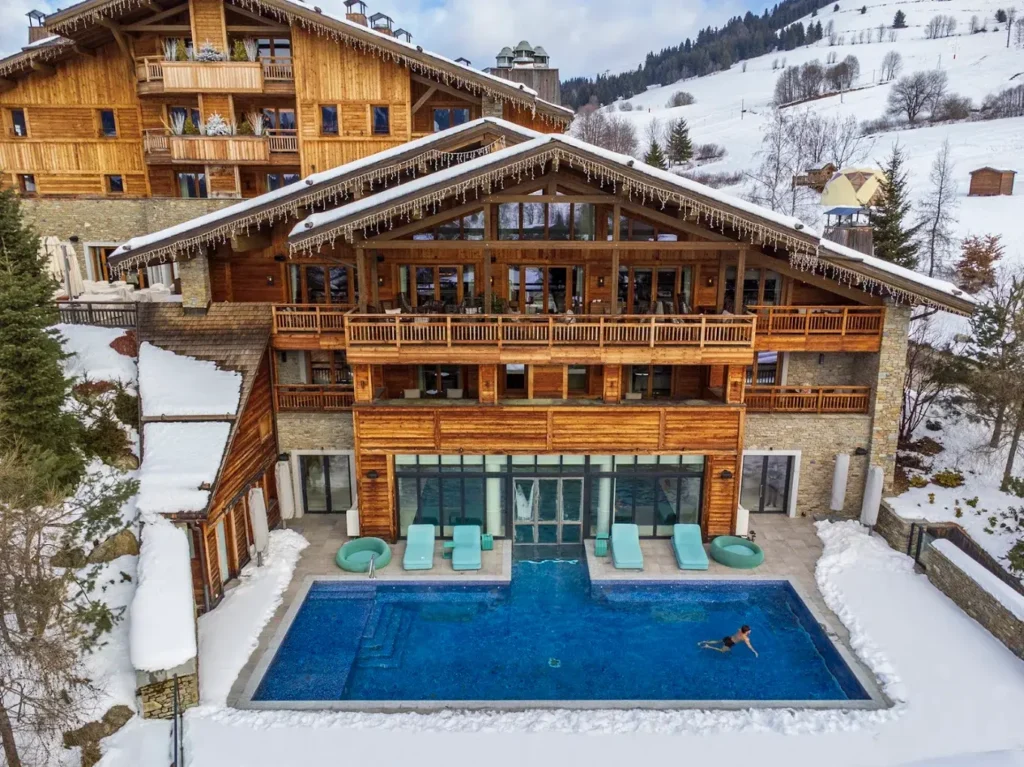
Four Seasons Resort Megève brings together chalet inspired timber architecture, snow covered surroundings and year-round wellness, with its heated indoor and outdoor pool creating a striking connection between the spa experience and the mountain landscape. Official image source.
Four Seasons Resort Megève, France
On the slopes of Mont d’Arbois, Four Seasons Resort Megève offers another interpretation of chalet inspired hospitality. The resort has 55 rooms and suites, direct ski access and the coveted Palace distinction, while its identity draws upon the legacy of the Edmond de Rothschild family.
The architecture feels substantial but residential. Timber, generous roof forms and extensive glazing place the building firmly within the mountain landscape, while contemporary interiors prevent the chalet vocabulary from becoming nostalgic. The Suite des Aravis is a useful example, with dark timber, contemporary furniture, a living room and a wraparound balcony. Larger accommodations, including the Suite Mont Blanc, extend the private residence concept to groups and families.
There is also a strong emphasis on wellness. The resort describes its spa as one of the largest in the region, while its official photography identifies approximately 900 square metres of spa facilities. The indoor and outdoor pool strengthens the relationship between bathing, climate and landscape.
A Chalet Resort With a Social Dimension
Where some luxury mountain resorts pursue almost total seclusion, Four Seasons Megève balances retreat with sociability. Restaurants, wine, wellness and generous shared spaces make the resort suitable for guests who want privacy without isolation.
For architects and interior designers, the property also shows how chalet architecture can operate successfully at resort scale. Repetition is softened through material richness, views and variations in accommodation, while the wider experience still feels coherent.
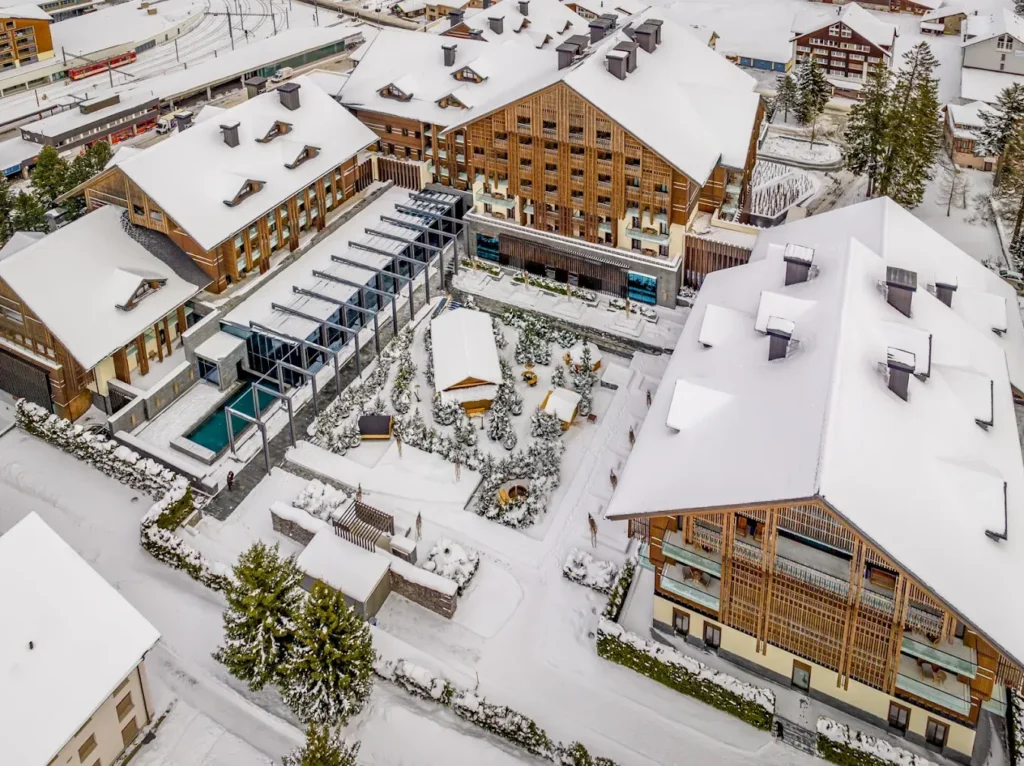
The Chedi Andermatt blends contemporary chalet inspired architecture with refined Swiss mountain character, using timber, stone and generous glazing to create a sophisticated retreat within Andermatt’s snow covered landscape. Image source.
The Chedi Andermatt, Switzerland
The Chedi Andermatt demonstrates how successfully different cultural design languages can coexist. Designed by architect Jean Michel Gathy, the hotel combines Swiss mountain architecture with a quieter Asian influence. Natural stone, rich timber, fireplaces and carefully controlled lighting create a sense of warmth, while the composition of the spaces remains refined and disciplined. The hotel comprises 119 rooms and suites.
The rooms are notably generous. Even the Deluxe category extends from approximately 55 to 69 square metres and includes natural materials, panoramic windows and a fireplace. Larger suites move decisively into residential territory, making The Chedi particularly relevant to the ongoing convergence between luxury hotels and private mountain homes.
What prevents the hotel from becoming merely grand is the consistency of its material palette. Timber ceilings, stone surfaces, low lighting and large scale windows recur throughout the property, creating visual continuity between bedrooms, restaurants and shared rooms. Fire is frequently used as an architectural element, creating centres of gravity around which furniture and social activity are arranged.
Mountain Warmth Meets Far Eastern Restraint
Among the luxury mountain resorts in this selection, The Chedi Andermatt offers perhaps the clearest example of cross cultural design handled with restraint. Neither influence is treated superficially. Instead, the project uses balance, texture and proportion to build atmosphere.
Wellness forms a substantial part of the experience, while the hotel’s dining programme includes Michelin recognised restaurants. Heated indoor and outdoor pools reinforce its role as a retreat for both active days and prolonged periods of recovery.
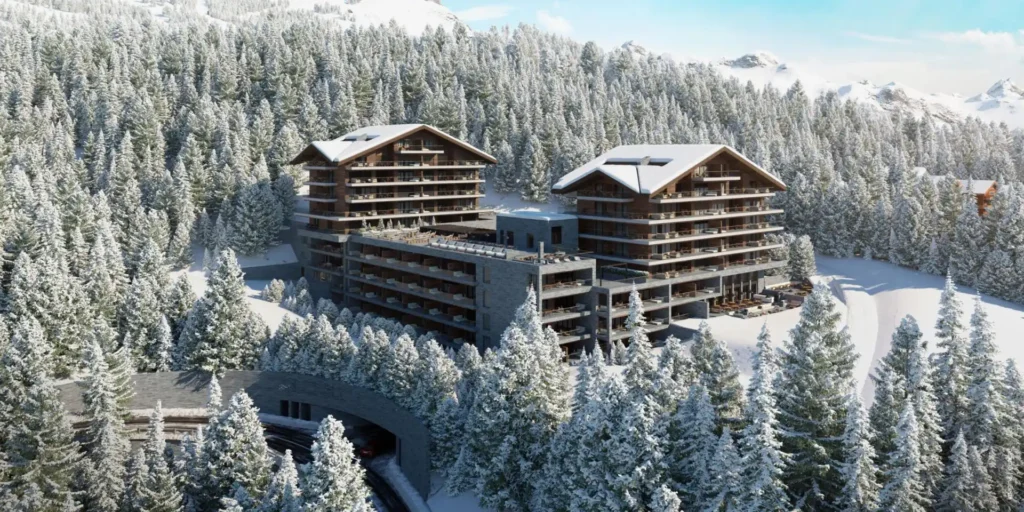
Six Senses Crans Montana rises among snow-covered forests with a contemporary interpretation of chalet inspired architecture, combining timber, stone, generous glazing and a strong connection to the surrounding landscape, a defining quality of today’s luxury mountain resorts. Image source.
Six Senses Crans Montana, Switzerland
Six Senses Crans Montana shifts the chalet conversation towards wellbeing and contemporary sustainability. Positioned directly beside the slopes, the resort combines traditional mountain references with a more sculptural interior language, using timber, stone, natural textures and extensive glazing rather than relying on decorative nostalgia.
Guest rooms and suites are conceived around terraces and views, allowing the landscape to remain present even when the guest is indoors. Selected Terrace Suites add private saunas, while the residences range from approximately 210 to 330 square metres, with three to five bedrooms. This mixture of resort accommodation and serviced residential living is increasingly important within luxury mountain resorts, particularly for multigenerational families and guests planning longer seasonal stays.
The spa is one of the property’s defining elements. At approximately 2,000 square metres, it combines traditional thermal experiences with contemporary wellness technologies, bringing recovery, physical performance and slower forms of relaxation into the same architectural programme.
Wellness as Part of the Architecture
What distinguishes Six Senses is that wellbeing is not treated as a separate destination reached after skiing. It informs the entire resort experience, from material choices and air quality considerations to spa spaces, food and quieter forms of social interaction.
For design professionals, this is an important direction. The next generation of luxury mountain resorts may be judged as much by how effectively they support restoration as by the visual impact of their lobbies or suites.
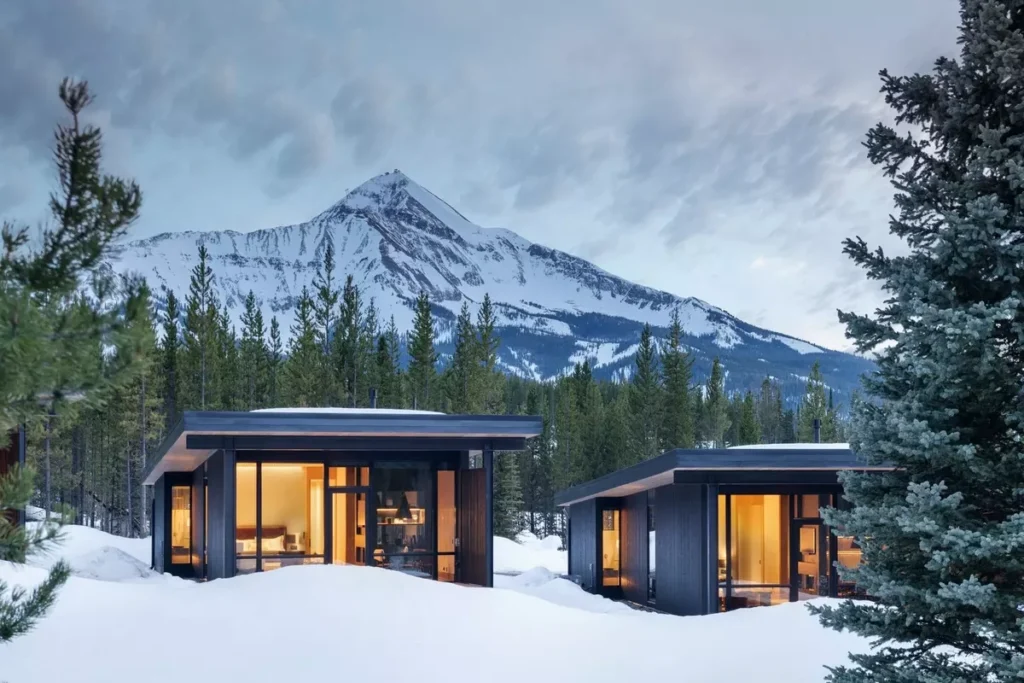
One&Only Moonlight Basin reinterprets mountain retreat living through private contemporary cabins set among snow covered forests, combining warm interiors, expansive glazing and a strong sense of immersion in Montana’s dramatic landscape. Official image source.
One&Only Moonlight Basin, Montana, United States
One&Only Moonlight Basin brings the chalet resort idea into an unmistakably North American landscape. Set among forests and open mountain terrain in Big Sky, Montana, the resort is conceived through a collection of rooms, suites and standalone cabins rather than as a single monumental hotel.
This dispersed planning is significant. It allows guests to experience the privacy associated with a mountain cabin while remaining connected to the dining, spa and service infrastructure of a major luxury resort. The standalone cabins are surrounded by pine forest and use large windows to frame the landscape. Selected cabins include hot tubs, firepits, outdoor living spaces and deep soaking tubs, giving the accommodation the emotional intimacy of a private retreat.
The material language is contemporary rather than rustic. Polished timber floors, moss toned textiles and floor to ceiling glazing create interiors that feel grounded in their environment without relying heavily on lodge clichés. It is a useful reminder that chalet style can be interpreted through spatial ideas, shelter, warmth, fire, timber and connection to landscape, rather than through geographical imitation.
A New American Expression of Mountain Luxury
Among contemporary luxury mountain resorts, One&Only Moonlight Basin is especially relevant because it reflects the growing demand for privacy within a fully serviced hospitality ecosystem. Guests can retreat into a cabin, then move outward into restaurants, spa facilities and seasonal experiences when desired.
The resort’s wellness programme includes holistic treatments, a pool and heated outdoor hot tub, while the wider property is structured around year round access to the Montana landscape.
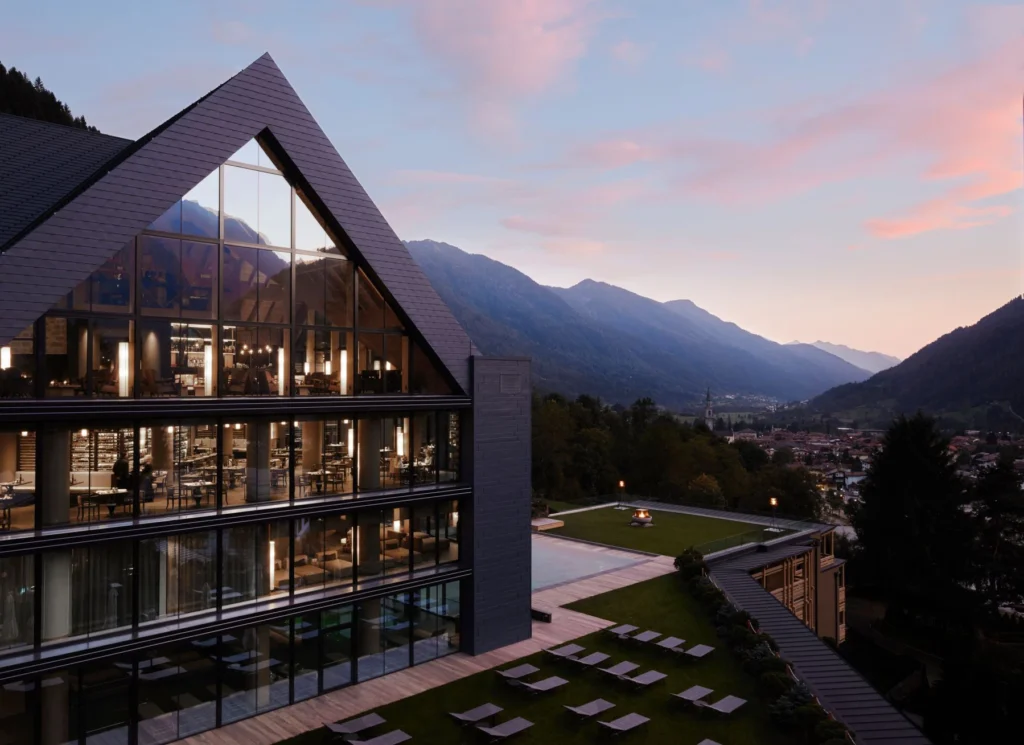
Lefay Resort & SPA Dolomiti pairs contemporary mountain architecture with expansive glazing and a strong connection to the surrounding landscape, creating a refined setting where wellness, design and nature become part of the same experience. Official image source.
Lefay Resort & SPA Dolomiti, Italy
In Pinzolo, within the dramatic landscape of the Dolomites, Lefay Resort & SPA Dolomiti demonstrates how chalet references can be expanded into a larger wellness resort without losing a sense of place. The architecture draws inspiration from traditional local mountain buildings, using wood, stone and restrained finishes to integrate the resort with its wooded surroundings.
The property comprises 88 suites and 21 residences according to Lefay’s 2024 sustainability reporting, creating a substantial hospitality environment that still seeks the intimacy associated with mountain living. Suites incorporate terraces or balconies, fireplaces and generous bathrooms, while larger categories introduce private spa facilities. The Royal Pool & SPA Suite extends from approximately 315 to 430 square metres and includes its own wellness zone, dining space and outdoor whirlpool.
The defining feature, however, is the 5,000 square metre spa, arranged across four levels. It includes heated pools, treatment rooms, private spa spaces, saunas, steam environments and areas dedicated to physical and mental restoration.
When the Mountain Resort Becomes a Wellness Destination
For anyone studying the direction of luxury mountain resorts, Lefay is important because the spa is not a decorative addition. It is one of the property’s main architectural programmes. The resort effectively asks guests to alternate between landscape, movement, water, warmth and stillness.
Its interiors are equally instructive. By limiting the material palette and allowing stone, timber and natural light to dominate, the project avoids competing with the extraordinary landscape outside. It represents a quieter Italian interpretation of chalet inspired luxury, where wellbeing and material restraint take priority over decorative drama.
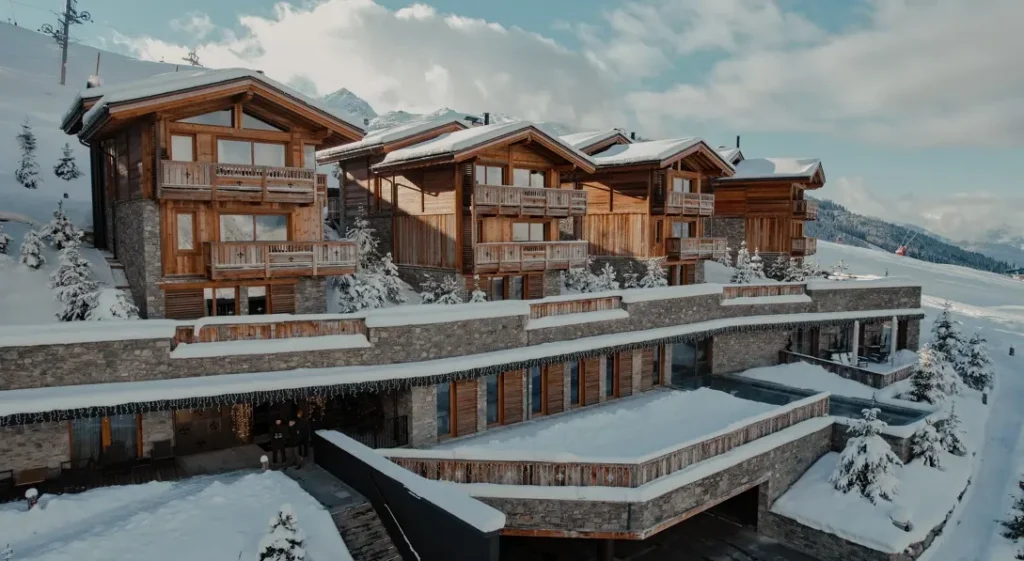
ltima Hotel Courchevel brings together a collection of private timber and stone chalets directly beside the snowy slopes, creating an intimate residential setting where privacy, mountain architecture and luxury hospitality come together. Image source.
Ultima Hotel Courchevel, France
If most luxury mountain resorts reinterpret the chalet within a hotel, Ultima Hotel Courchevel reverses the model. The resort is conceived as a hamlet of 13 luxury chalets, combining the privacy of individual residences with five star hotel services. The chalets range from one to five bedrooms, while the wider resort provides access to two mountain view spa environments.
This arrangement addresses one of the central desires shaping contemporary luxury travel, the ability to live privately without sacrificing service. Guests have their own living areas, kitchens, fireplaces, balconies and bedrooms, yet can access concierge assistance, butler service, wellness facilities and additional private chef experiences.
The location on the Belvédère slopes allows the architecture to remain closely connected with skiing. Some chalets sit directly beside the slope, turning the usual hotel journey from bedroom to piste into something far more immediate. The resort sits at approximately 1,750 metres above sea level and positions itself as a residential alternative to the more formal hospitality found elsewhere in Courchevel.
The Chalet Hamlet as a Resort Model
Ultima may be one of the clearest indications of where luxury mountain resorts are heading. Rather than asking guests to choose between a private chalet and a hotel, it combines both models.
Architecturally, this creates a different sense of scale. Instead of one large building, guests occupy smaller individual volumes. Privacy increases, circulation becomes more domestic, and families or groups can inhabit the destination much as they would a private mountain residence.
Its two spa areas, including heated pools, sauna and steam facilities, ensure that the resort experience remains collective when desired. The result is private architecture supported by shared infrastructure, a model likely to become increasingly important at the top end of the market.
What These Luxury Mountain Resorts Reveal About Contemporary Mountain Design
Viewed together, these properties reveal how far the mountain resort has evolved. Luxury mountain resorts are increasingly defined by emotional architecture rather than decorative themes. The objective is no longer to place enough timber, stone and fur inside a room for guests to recognise where they are. The best projects use architecture itself to create that sense of place.
1. The Landscape Has Become the Primary Artwork
Across almost every property in this selection, windows are becoming larger and interiors quieter. Views are framed deliberately, furniture is arranged towards mountains and forests, and terraces act as extensions of interior rooms. The landscape is not background scenery. It is an active part of the design composition.
2. Chalet Living Is Becoming More Residential
Large suites, connected bedrooms, kitchens, dressing rooms, private wellness areas and substantial living rooms all point towards longer stays. This is particularly visible at Ultima Hotel Courchevel, Six Senses Crans Montana and One&Only Moonlight Basin, where the distinction between resort accommodation and private residence becomes increasingly fluid.
For developers, the implication is significant. High net worth travellers often want hotel level service but do not necessarily want to feel as though they are staying in a conventional hotel.
3. Wellness Is Moving to the Centre of the Floor Plan
The spa is no longer hidden at the lowest level of a building as a secondary amenity. At the strongest luxury mountain resorts, wellness influences the identity of the entire property. Lefay’s vast wellness environment, Six Senses’ integrated approach and the private facilities within Cheval Blanc’s Chalet all point in the same direction.
4. Craft Matters More Than Decoration
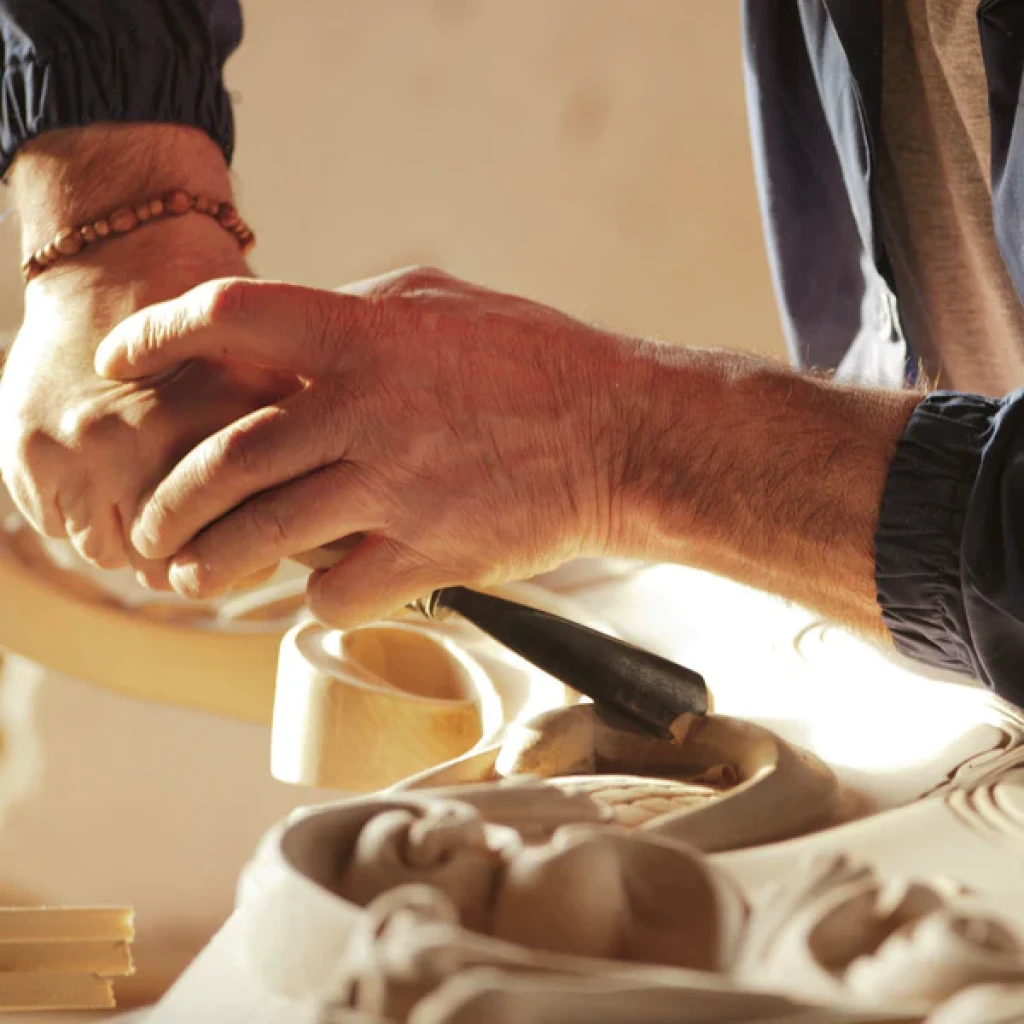
Stone with visible texture, carefully detailed timber, metalwork, custom furniture and layered natural fabrics create spaces that become richer when experienced closely. In the best mountain interiors, luxury is increasingly understood through material quality, proportion and craftsmanship, rather than through conspicuous decoration.
5. Privacy and Community Must Coexist
Perhaps the most interesting evolution is spatial rather than stylistic. Guests want somewhere completely private, but they also want restaurants, bars, spa experiences and beautifully designed social rooms available when desired. The strongest resorts allow guests to control that transition themselves.
The Hand Crafted Living Perspective
The chalet remains relevant because it represents something larger than a visual style. It offers shelter, warmth, gathering, material authenticity and a direct relationship with nature. The most successful contemporary resorts preserve those emotional qualities while quietly reinventing almost everything else.
How to Choose the Right Luxury Mountain Resort
There is no single definition of the ideal mountain escape. The right choice depends on whether the priority is design, wellness, skiing, privacy, culture, gastronomy or the ability to gather a larger family group under one roof.
For serene architectural restraint: Aman Le Mélézin offers one of the quietest and most composed interpretations of mountain luxury.
For art, colour and gastronomy: Cheval Blanc Courchevel combines residential warmth with contemporary art and exceptional dining.
For multigenerational resort living: Four Seasons Resort Megève provides generous accommodation, extensive services and a sophisticated social dimension.
For design enthusiasts: The Chedi Andermatt is compelling for its fusion of Swiss materials, Asian influenced spatial calm and Jean Michel Gathy’s architectural vision.
For wellness focused travellers: Six Senses Crans Montana and Lefay Resort & SPA Dolomiti place restoration at the centre of the experience.
For immersion in North American wilderness: One&Only Moonlight Basin combines cabin privacy with access to a complete resort environment.
For maximum residential privacy: Ultima Hotel Courchevel offers perhaps the purest chalet experience while retaining the infrastructure and service of a luxury resort.
What unites all eight is that the architecture does more than provide accommodation. Each property constructs a particular way of living in the mountains, whether through silence, fire, wellness, art, family gathering or proximity to wilderness.
That is ultimately what separates the most memorable luxury mountain resorts from properties that simply happen to be located at altitude. Their architecture creates a reason to remain indoors even when the landscape outside is extraordinary.
The Future of the Chalet Resort
The chalet continues to evolve because its essential qualities remain deeply relevant. In a world of increasingly standardised luxury, it offers something highly specific, a feeling of shelter, a tactile connection to materials, a human scale and a natural setting that influences everyday rituals.
Yet the future is unlikely to be defined by ever more elaborate versions of the traditional chalet. Instead, the strongest luxury mountain resorts are moving towards more thoughtful interpretations. Architecture is becoming quieter. Wellness is becoming more integrated. Private residences are becoming part of resort ecosystems. Interiors are allowing landscape and craft to do more of the visual work.
Most importantly, mountain luxury is becoming less concerned with display and more interested in how a place makes its guests feel. A fire after a day in the snow, timber warmed by evening light, a pool overlooking a winter forest, or a room designed around one extraordinary view can carry more emotional value than decoration for its own sake.
For architects, designers, developers and travellers alike, these eight resorts suggest that the most compelling mountain hospitality is not about escaping into fantasy. It is about creating a deeper relationship with place, one that turns the enduring idea of the chalet into a sophisticated expression of contemporary living.
Luxury Mountain Resorts: 8 Exceptional Retreats Redefining the Modern Chalet
Manage Consent
To provide the best experiences, we use technologies like cookies to store and/or access device information. Consenting to these technologies will allow us to process data such as browsing behavior or unique IDs on this site. Not consenting or withdrawing consent, may adversely affect certain features and functions.
Functional
Always active
The technical storage or access is strictly necessary for the legitimate purpose of enabling the use of a specific service explicitly requested by the subscriber or user, or for the sole purpose of carrying out the transmission of a communication over an electronic communications network.
Preferences
The technical storage or access is necessary for the legitimate purpose of storing preferences that are not requested by the subscriber or user.
Statistics
The technical storage or access that is used exclusively for statistical purposes.The technical storage or access that is used exclusively for anonymous statistical purposes. Without a subpoena, voluntary compliance on the part of your Internet Service Provider, or additional records from a third party, information stored or retrieved for this purpose alone cannot usually be used to identify you.
Marketing
The technical storage or access is required to create user profiles to send advertising, or to track the user on a website or across several websites for similar marketing purposes.