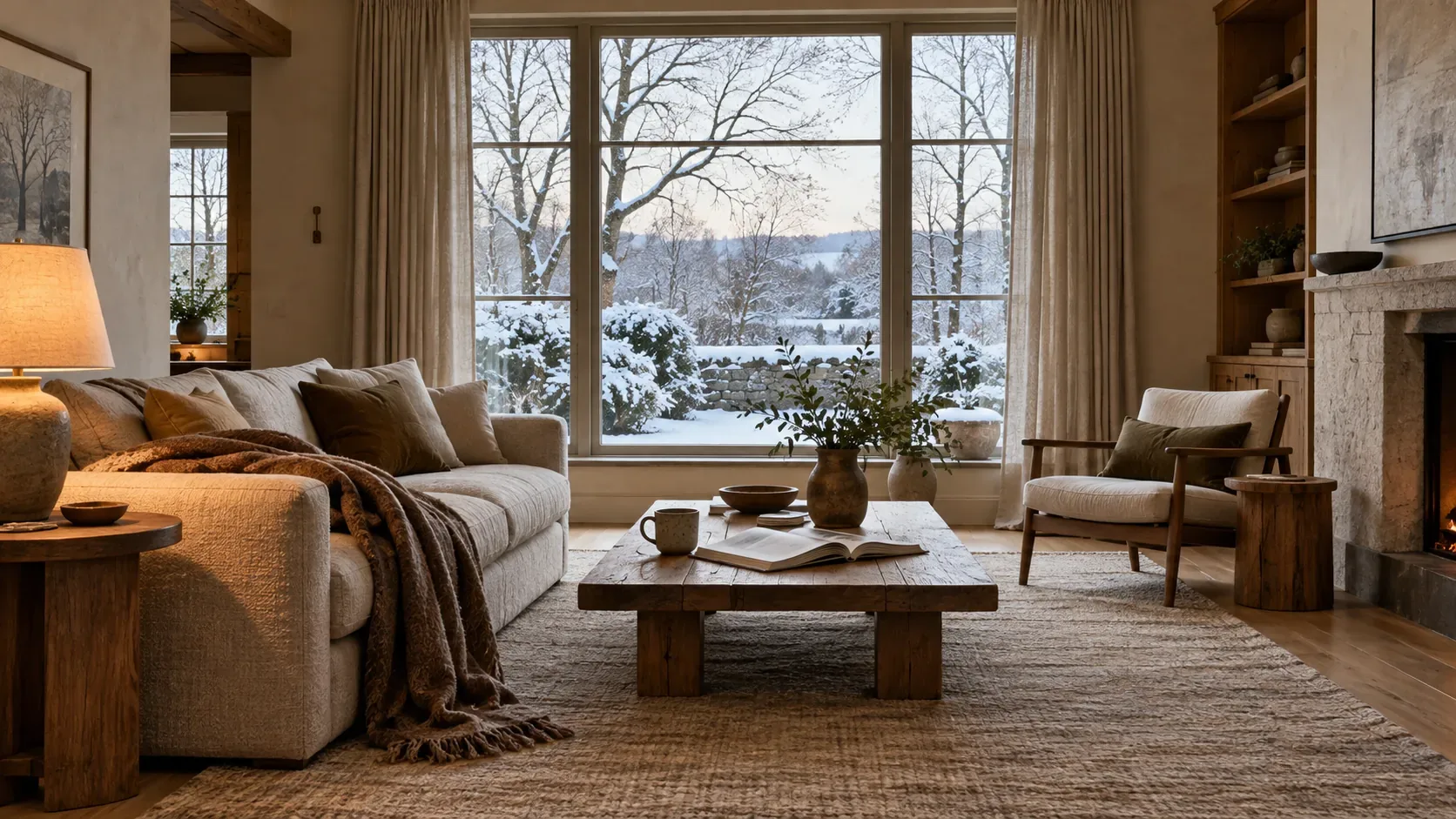
By late afternoon, the room has changed. Pale daylight slips across the floor, a table lamp catches the grain of an oak cabinet, and the chair beside the window becomes the most inviting place in the house. Winter makes us notice these small arrangements. It also reveals what a beautiful interior may lack: a comfortable seat, shelter from a draft, or enough light to read.
The strongest approach to homes winter design begins with that daily experience. Warmth involves the building itself, but also the scale of a room, the surfaces we touch, and the way furniture brings people together. A successful winter interior feels welcoming before anyone reaches for a blanket.
To create a cozy home for winter, address heat loss first, then shape comfortable seating areas, layer lighting, and introduce textiles where they serve a clear purpose. Choose materials and furniture that will remain useful beyond the season. The result should feel personal, practical, and quietly generous.
Begin with the Building, Then the Decoration
A deep sofa cannot compensate for a cold window behind it. Likewise, a wool rug offers little consolation when drafts cross the room at ankle height. Before choosing winter accessories, consider how the house holds warmth.
Australia’s government supported Your Home guide treats insulation, glazing, orientation, and thermal mass as connected elements of passive design. Their effectiveness depends on climate and on how they work together. This gives winter renovations a clear starting point: assess the whole building before investing in isolated improvements.
For an existing home, a professional assessment can help establish priorities. These may include repairing window seals, improving roof insulation, or resolving cold junctions between building elements. Coordinate airtightness improvements with appropriate ventilation, rather than simply sealing every opening.
Comfort also depends on nearby surfaces. Guidance from the US Department of Energy explains that cold glazing can make occupants feel uncomfortable even when the room’s air temperature seems adequate. Moving a reading chair away from a poorly performing window may therefore improve how that corner feels.
The architectural lesson is useful: spend carefully on the conditions that allow a room to work. Much of a comfortable home’s value lies beneath its finishes.
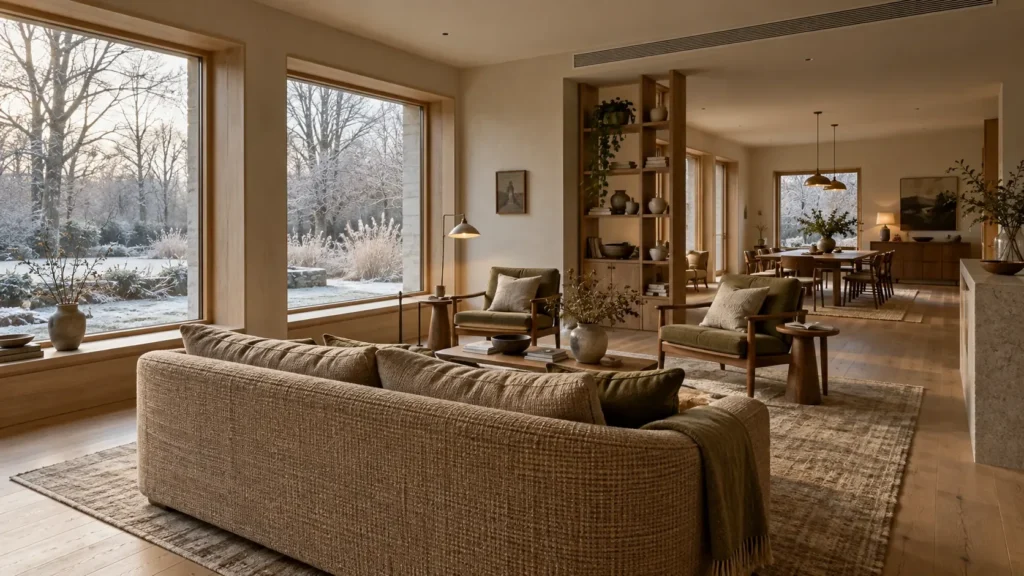
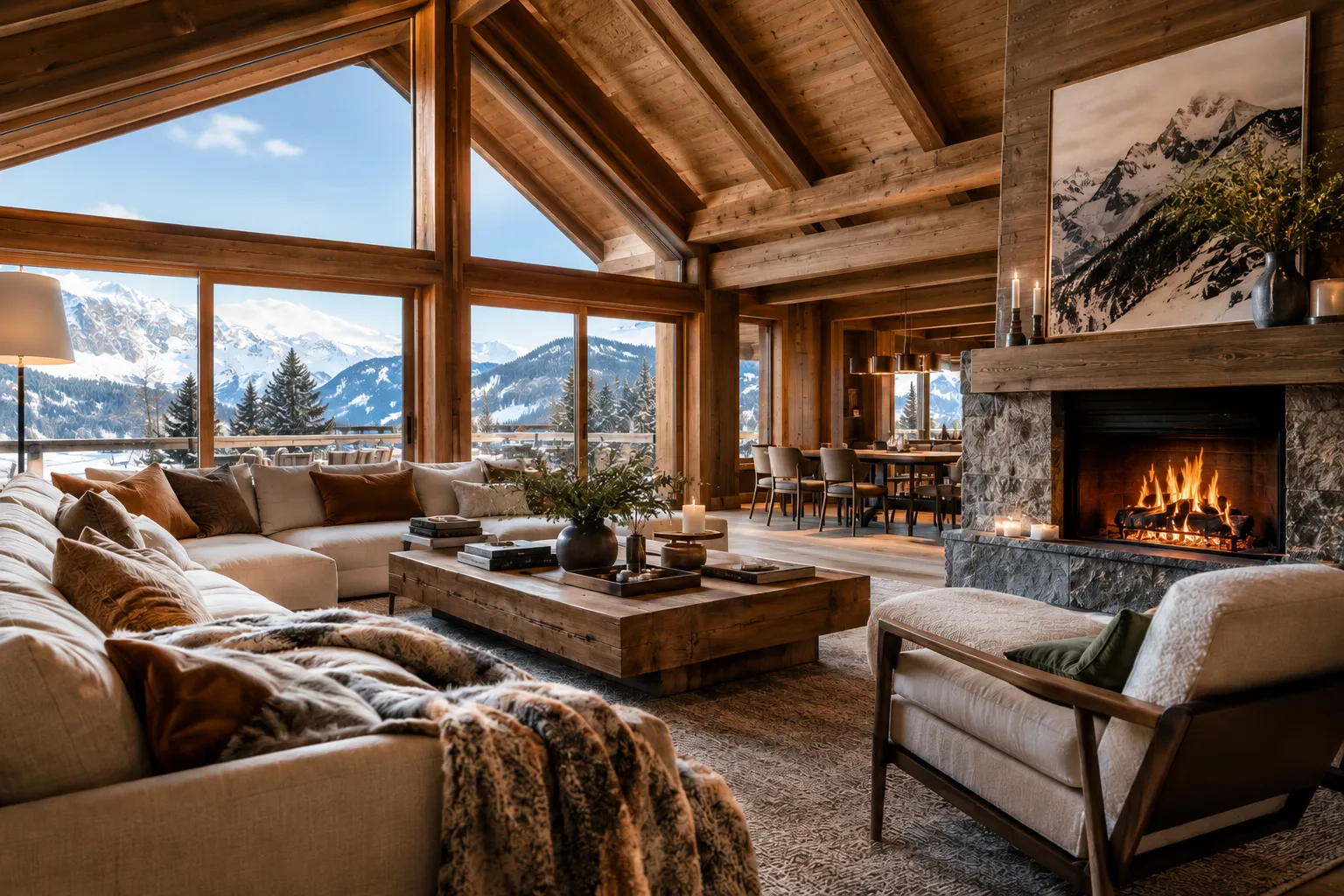
Closely grouped seating, accessible side tables, and clear walkways bring human scale to an open plan winter interior.
Give Winter Rooms a More Intimate Scale
Open plan interiors offer freedom, yet their furniture arrangements sometimes leave people sitting far apart. In winter, a large room often benefits from smaller, clearly defined places to gather.
Bring armchairs toward the sofa. Place a side table within easy reach of each seat. Use a sufficiently large rug to connect the principal pieces, while keeping circulation routes clear. These decisions establish a place to settle without requiring new walls.
A sofa with a visible back can define the edge of a sitting area. An open bookcase may suggest a boundary while preserving views and daylight. Neither creates meaningful thermal separation, but both can give an expansive room a more comfortable human scale.
Design Around the Actual Occupants
Very deep seating looks inviting in photographs, yet it does not suit every body or activity. Someone reading upright may prefer a shallower chair with supportive arms. A family watching films may value a generous sofa with washable covers.
Try furniture as you intend to use it. Can you stand up easily? Does the lamp illuminate the page? Where will a cup go?
These questions deserve as much attention as the silhouette. A room becomes welcoming when its details anticipate ordinary needs.
Use Textiles to Add Comfort and Quiet
Winter textiles work best when they respond to the architecture. A room with stone flooring, broad glazing, and plaster walls may benefit from a substantial rug and lined curtains. A compact room with upholstered furniture may need only one additional layer.
Rugs, curtains, and upholstery can soften reverberation, although their effect depends on material, construction, coverage, and placement. The aim is a room where conversation feels easy, with enough acoustic softness to balance hard surfaces.
Choose Texture with Restraint
Combine a few distinct textures: a close woven sofa fabric, a brushed wool throw, and a smooth timber table. Their differences become more legible when each has space around it. Too many heavily textured surfaces can make an interior feel restless.
Craftsmanship matters most where wear concentrates. Look at upholstery seams, cushion construction, rug edges, and curtain hems. Ask whether covers come off, whether cushions can be refilled, and whether the maker offers repairs.
For seating: choose upholstery suited to everyday use, including pets, children, and cleaning needs.
For floors: select a rug with an appropriate nonslip underlay and a pile that allows doors and chairs to move freely.
For windows: consider lined curtains with a close fit, keeping fabric clear of heaters and ventilation outlets.
For beds: use adjustable layers so occupants can respond to changing temperatures.
Natural fibers can offer appealing texture, but the label alone does not establish sustainability. Consider sourcing, processing, durability, care, and expected years of use. An existing blanket that still performs well deserves its place.
The Specialists in Bespoke
Turn your Designs into Reality with Nolita Harbour
A window has two roles in a winter interior: it connects the room to daylight and forms part of its thermal boundary. Thoughtful treatments accommodate both.
The US Department of Energy recommends opening curtains on sun facing windows to admit useful winter sunlight and closing them at night to reduce the chill from cold glazing. Its south facing guidance applies to the Northern Hemisphere; the useful orientation changes with location.
Allow curtains to stack clear of the glass where possible. Heavy fabric permanently covering part of a small window can diminish the daylight that makes a winter room pleasant.
For renovations, discuss solar access and summer shading together. Your Home’s passive heating guidance stresses that thermal mass needs suitable design and conditions to capture, store, and release useful heat. A stone floor does not automatically make a house warmer.
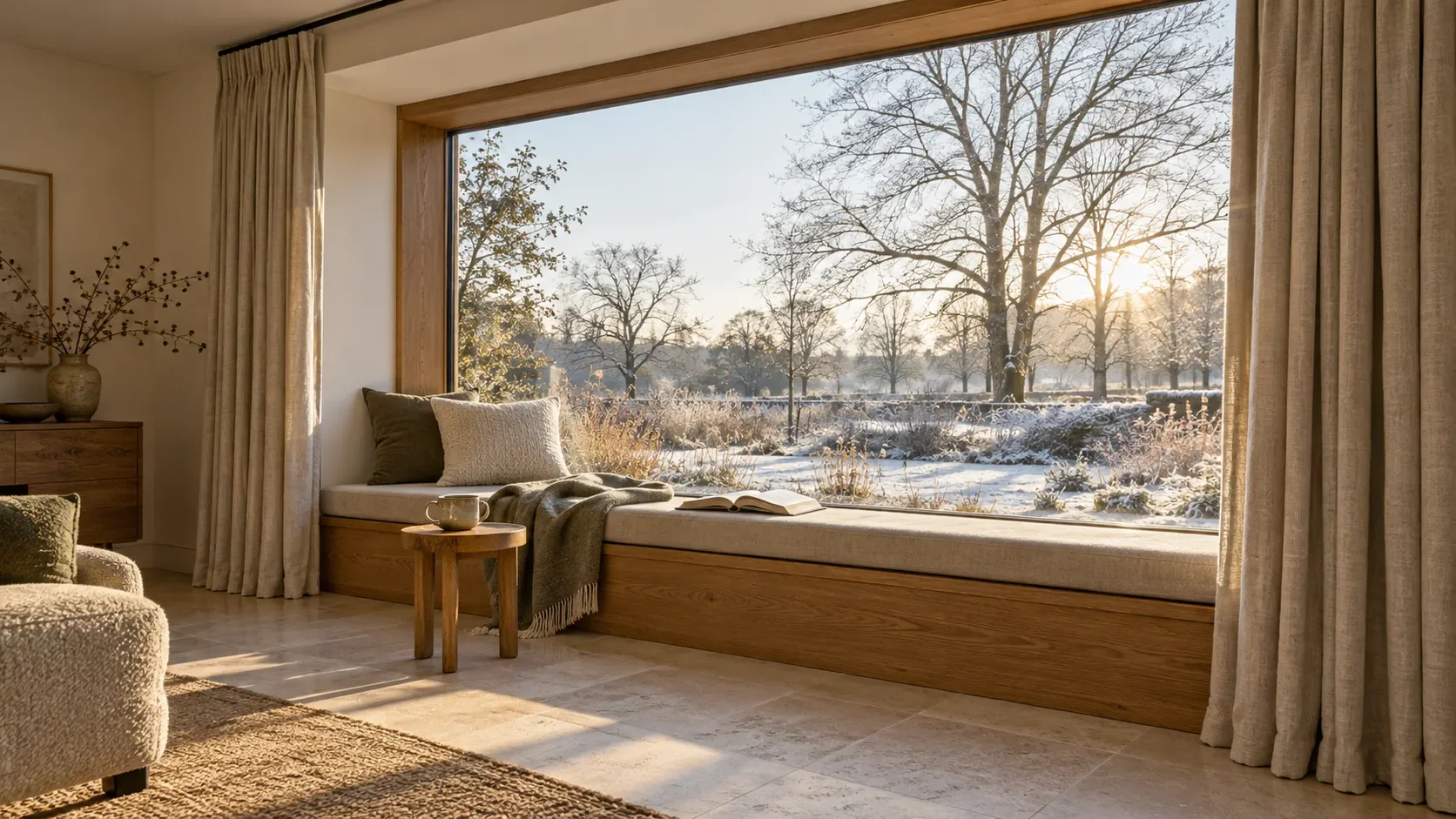
Within that framework, a window seat can become a valuable daily destination. Check glazing performance and drafts before committing to built in joinery. The view should invite someone to stay.
Curtains drawn clear of the glass welcome winter daylight into a quiet corner for reading and watching the garden.
Light the Places Where Life Happens
Winter lighting needs to support long evenings as well as practical tasks. A single bright ceiling fitting rarely handles both gracefully.
Start with activities. Provide directed light beside a reading chair, clear illumination over kitchen worktops, and softer light near seating. Then consider what remains in shadow. A gently lit wall or bookcase can give depth to a room without flooding every surface.
Warm white lamps around 2700K offer a useful starting point for relaxed living spaces. However, color temperature describes the appearance of light, not its brightness or its ability to render colors accurately. Test lamps against the actual fabrics, paint, and timber in the room.
Shades deserve equal attention. An exposed bulb at eye level can undermine an otherwise comfortable arrangement. Choose fittings that control glare, and check that dimmable lamps and controls work together.
Finally, keep switches understandable. Guests should be able to light a bedside table without learning the house’s technology. Ease belongs in the design brief.
Build a Palette with Depth, Not Seasonal Rules
A cozy winter home does not require brown walls or a beige sofa. Muted blue, olive, chalk, rust, and aubergine can all create compelling interiors. Their success depends on daylight, proportion, and neighboring materials.
In a room with limited natural light, pale walls may help preserve brightness. A deeper shade can suit a smaller sitting room intended mainly for evenings. Test generous paint samples through the day and under the lamps you actually use.
Material contrast gives the palette depth. Oak brings visible grain; brushed metal introduces a restrained reflection; ceramic adds variation at the scale of the hand. A repaired wooden table can provide more character than several newly purchased decorative objects.
For bespoke joinery, request access to concealed fittings and replaceable hardware. Specify finishes that suit the household’s willingness to maintain them. Long term value depends partly on whether an object can accommodate damage, repair, and changing use.
The most convincing rooms allow evidence of living to accumulate.
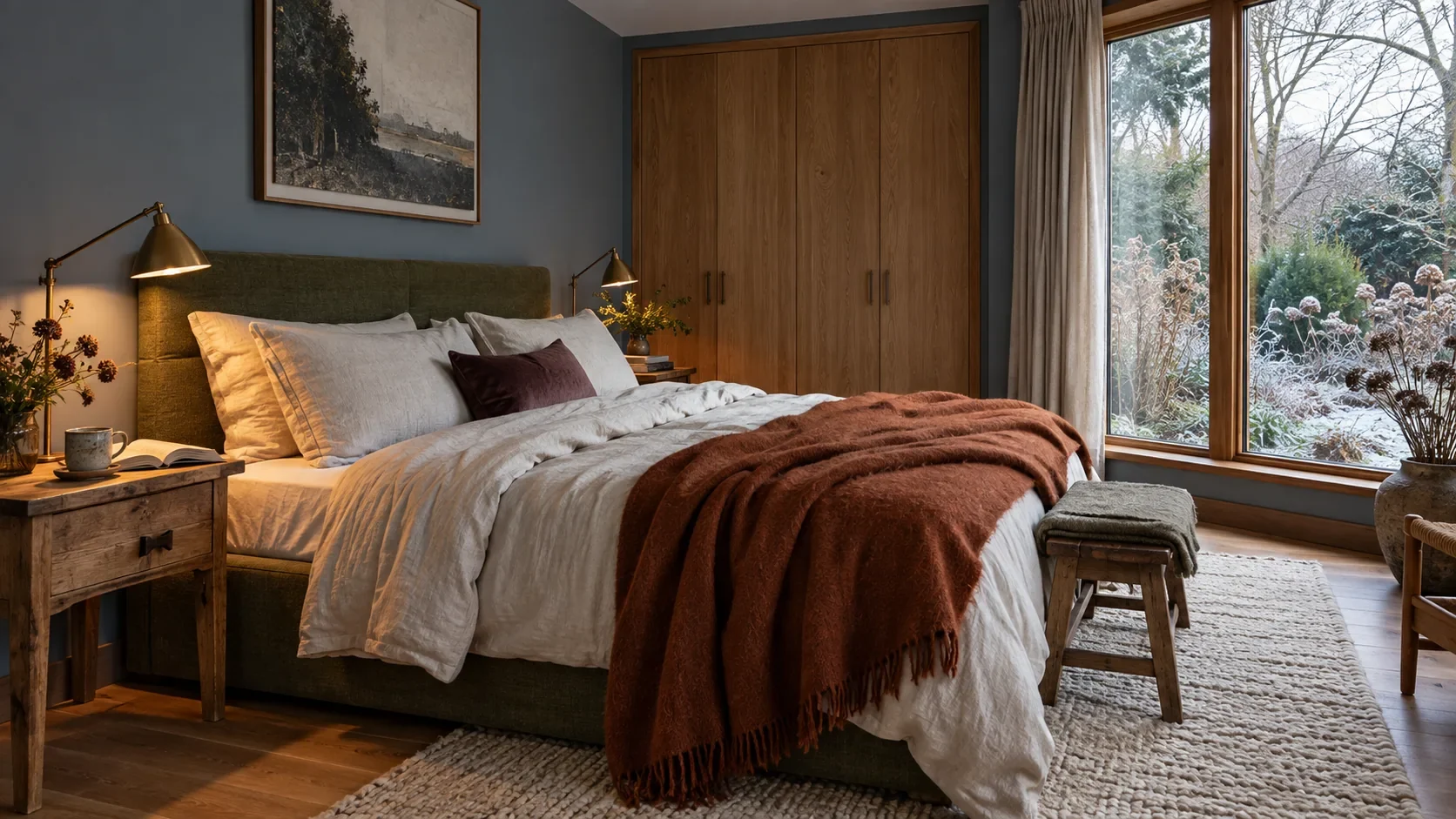
Muted colors, layered bedding, and warm reading lights create a restful bedroom connected to the winter garden.
Make Space for Winter Rituals
Seasonal comfort extends beyond the living room. A place to remove wet shoes, a bedside light that reaches the page, or a kitchen bench where someone can sit while dinner cooks can change the experience of the entire house.
A Practical Arrival
At the entrance, provide a durable mat, accessible hooks, and somewhere to sit. Plan for damp coats and footwear to dry rather than enclosing them immediately in an unventilated cabinet. Even a narrow hallway benefits from a clear sequence: arrive, put things down, take off shoes, move inside.
A Bedroom That Welcomes Rest
Keep bedding adaptable and bedside surfaces useful. A rug beside the bed can soften the first step of the morning. Position reading lights for each occupant, particularly when their routines differ.
A View Beyond the Glass
Winter also changes the garden’s contribution. Bark, evergreen structure, seedheads, and branches become more prominent when flowers recede. Consider those views from the seats people use most.
A modest arrangement of planting outside a window may enrich daily life more than an elaborate feature visible only from the lawn.
A Considered Order for Winter Improvements
Before buying anything, observe the house during an ordinary cold evening. Where does everyone gather? Which chair remains empty? What gets moved repeatedly?
Address building performance. Establish appropriate repairs, insulation, and ventilation priorities.
Rearrange what you own. Improve seating distances, access to tables, and clear walking routes.
Adjust lighting. Illuminate activities and soften glare before adding decorative fittings.
Add purposeful textiles. Introduce layers where they improve touch, acoustics, or everyday comfort.
Invest in longevity. Favor repairable furniture and materials whose care requirements suit your life.
A Home Worth Staying In
At the end of a winter evening, the quality of a room becomes quite specific. There is enough light to finish a chapter. The chair supports rather than swallows you. Someone can join the conversation without moving half the furniture.
These are modest tests for ambitious design. They also explain why certain homes feel so satisfying: their beauty holds up to use. As darkness settles outside, every well considered detail makes staying a little longer feel natural.
Luxury Mountain Resorts: 8 Exceptional Retreats Redefining the Modern Chalet
Manage Consent
To provide the best experiences, we use technologies like cookies to store and/or access device information. Consenting to these technologies will allow us to process data such as browsing behavior or unique IDs on this site. Not consenting or withdrawing consent, may adversely affect certain features and functions.
Functional
Always active
The technical storage or access is strictly necessary for the legitimate purpose of enabling the use of a specific service explicitly requested by the subscriber or user, or for the sole purpose of carrying out the transmission of a communication over an electronic communications network.
Preferences
The technical storage or access is necessary for the legitimate purpose of storing preferences that are not requested by the subscriber or user.
Statistics
The technical storage or access that is used exclusively for statistical purposes.The technical storage or access that is used exclusively for anonymous statistical purposes. Without a subpoena, voluntary compliance on the part of your Internet Service Provider, or additional records from a third party, information stored or retrieved for this purpose alone cannot usually be used to identify you.
Marketing
The technical storage or access is required to create user profiles to send advertising, or to track the user on a website or across several websites for similar marketing purposes.