
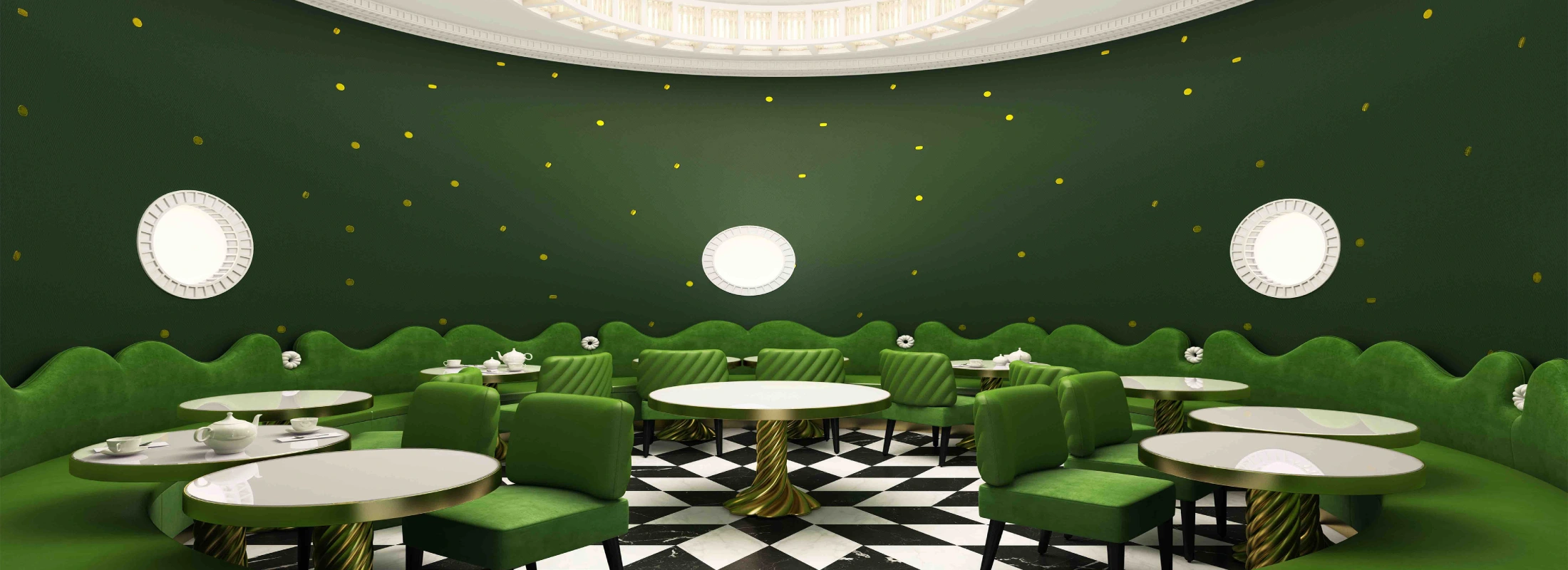
In contemporary interior design, few figures have reshaped the relationship between furniture, architecture, and craftsmanship as powerfully as India Mahdavi. Known internationally for her bold use of color, sculptural furniture, and playful spatial compositions, Mahdavi has built a distinctive design language that merges handmade furniture with architectural identity.
For interior designers, architects, and luxury furniture brands, Mahdavi’s work offers an important lesson: furniture is not simply decoration—it is an integral architectural element capable of shaping the character of a space.
This article explores how India Mahdavi’s handmade furniture philosophy has influenced global design culture, redefining how objects, materials, and architecture interact within contemporary interiors.
India Mahdavi: A Designer Between Cultures
Born in Tehran in 1962 to a Persian father and an Egyptian-English mother, India Mahdavi spent her childhood moving between the United States, Germany, and France. This multicultural upbringing deeply shaped her visual sensibility and approach to design.
Today, Mahdavi lives and works in Paris, where she founded her design studio in 1999. Her practice spans architecture, interior design, scenography, and furniture design—an interdisciplinary approach that allows her to develop holistic environments rather than isolated objects.
This cross-disciplinary mindset is central to her work. Instead of treating furniture as an afterthought, Mahdavi often designs custom pieces specifically for each project, allowing furniture to reinforce the architectural identity of the interior.
Furniture as Architecture
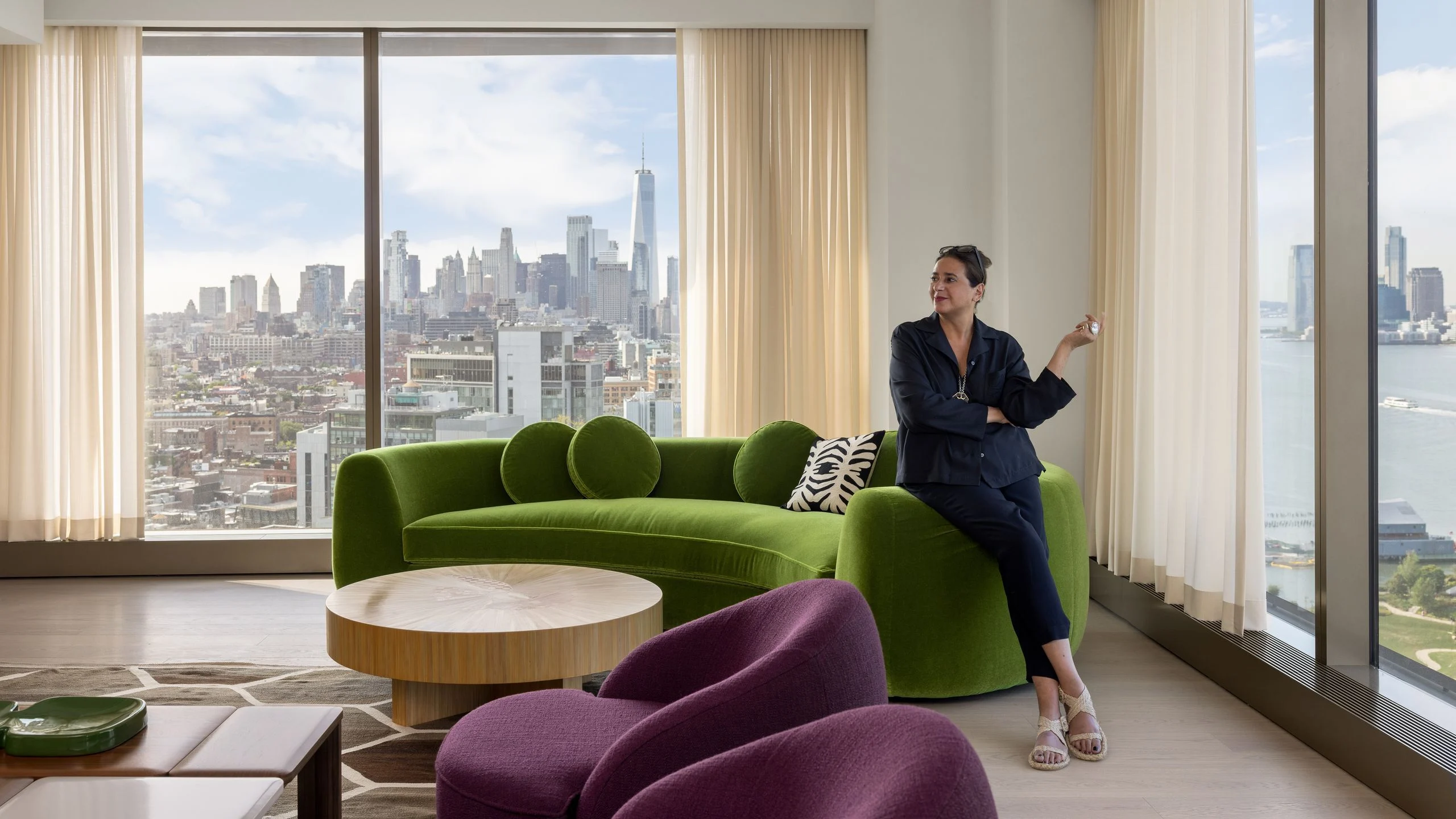
In Mahdavi’s design philosophy, furniture functions almost like a spatial device. Chairs, tables, and built-in elements are carefully designed to influence circulation, perception, and atmosphere within a room.
Her iconic Bishop stool, for example, resembles an oversized chess piece and works both as a sculptural object and a functional seat or table.
This approach reflects an architectural mindset:
- Furniture defines spatial zones
- Objects introduce rhythm and repetition
- Materials create tactile continuity across surfaces
For luxury design studios and furniture brands, this integration between object design and architectural space represents a powerful model for contemporary interiors.
Handmade Furniture and Material Craft
Another defining aspect of India Mahdavi’s work is her commitment to craftsmanship. Many of her furniture collections are produced by specialized workshops in France and Europe, emphasizing artisanal manufacturing methods.
Her projects frequently incorporate materials associated with traditional craft, including:
- Hand-finished wood
- Lacquered surfaces
- Ceramic and stone tiles
- Textile upholstery with intricate patterns
These materials allow her furniture to maintain a strong tactile presence within architectural environments.
For furniture brands, Mahdavi’s work demonstrates how handcrafted production can coexist with contemporary design aesthetics, creating pieces that feel both modern and timeless.
The Power of Color in Spatial Identity
Perhaps the most recognizable aspect of India Mahdavi’s work is her fearless use of color.
Often described as the “queen of color,” Mahdavi creates interiors defined by bold palettes, playful contrasts, and emotional warmth.
Color in her work operates at multiple levels:
Architectural color
Walls, ceilings, and floors become immersive color fields.
Furniture color
Chairs, stools, and tables act as sculptural accents within the space.
Material color
Ceramics, textiles, and lacquered surfaces introduce layered tones.
This strategy transforms color into a key architectural element rather than a decorative layer.
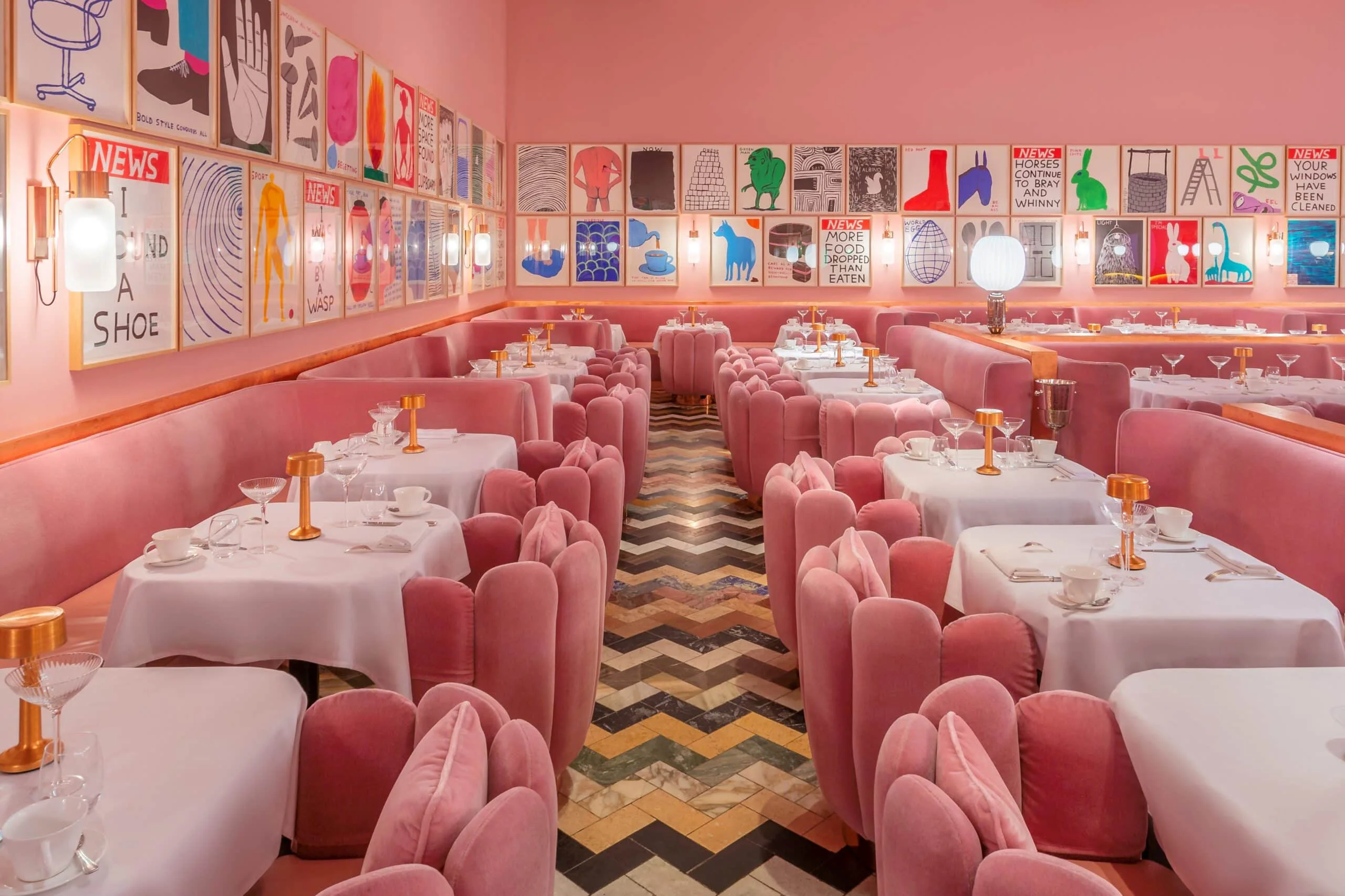
One of the most famous examples is the pink interior of the Gallery at Sketch in London, where custom furniture and monochromatic architecture create a cohesive spatial identity.
Hospitality Interiors and Global Influence
India Mahdavi’s influence is particularly visible in the hospitality sector. Her interiors for hotels, restaurants, and lounges around the world demonstrate how handmade furniture can define the atmosphere of public spaces.
Notable projects include hospitality venues in Paris, London, Mexico City, Miami, and Monaco.
In these environments, Mahdavi’s furniture designs often become the visual signature of the project. Curved banquettes, sculptural seating, and colorful surfaces create spaces that are both memorable and highly photogenic.
For luxury brands and hospitality designers, this approach illustrates how furniture design can contribute directly to a project’s brand identity.











