In contemporary luxury design, the boundary between furniture, sculpture, and architecture is increasingly fluid. Few designers embody this convergence more powerfully than Rick Owens. Known internationally for his avant-garde fashion, Owens has also developed a remarkable body of handcrafted furniture that merges brutalist aesthetics, artisanal craftsmanship, and artistic experimentation.
For interior designers, architects, luxury design studios, and furniture brands, Owens’ work represents a compelling example of how handmade furniture can function as architectural sculpture—transforming interiors into expressive spatial environments rather than merely functional spaces.
The Designer Behind the Sculptural Vision
Born in California and later establishing his studio in Paris, Rick Owens built his reputation through fashion collections that combine dark minimalism, architectural silhouettes, and unconventional materials. Over time, his creative universe expanded beyond garments to include furniture, interiors, and large-scale installations.
Owens introduced his furniture line in 2005, initially creating pieces for his own home environment before presenting them publicly through exhibitions and galleries.
From the beginning, the furniture reflected the same philosophy as his fashion: bold forms, dramatic proportions, and a strong connection to art history and architecture.
Today, Owens’ designs have been exhibited at institutions including the Musée d’Art Moderne de Paris and the Museum of Contemporary Art in Los Angeles, reinforcing their status as collectible design rather than traditional furniture.

Furniture as Sculpture
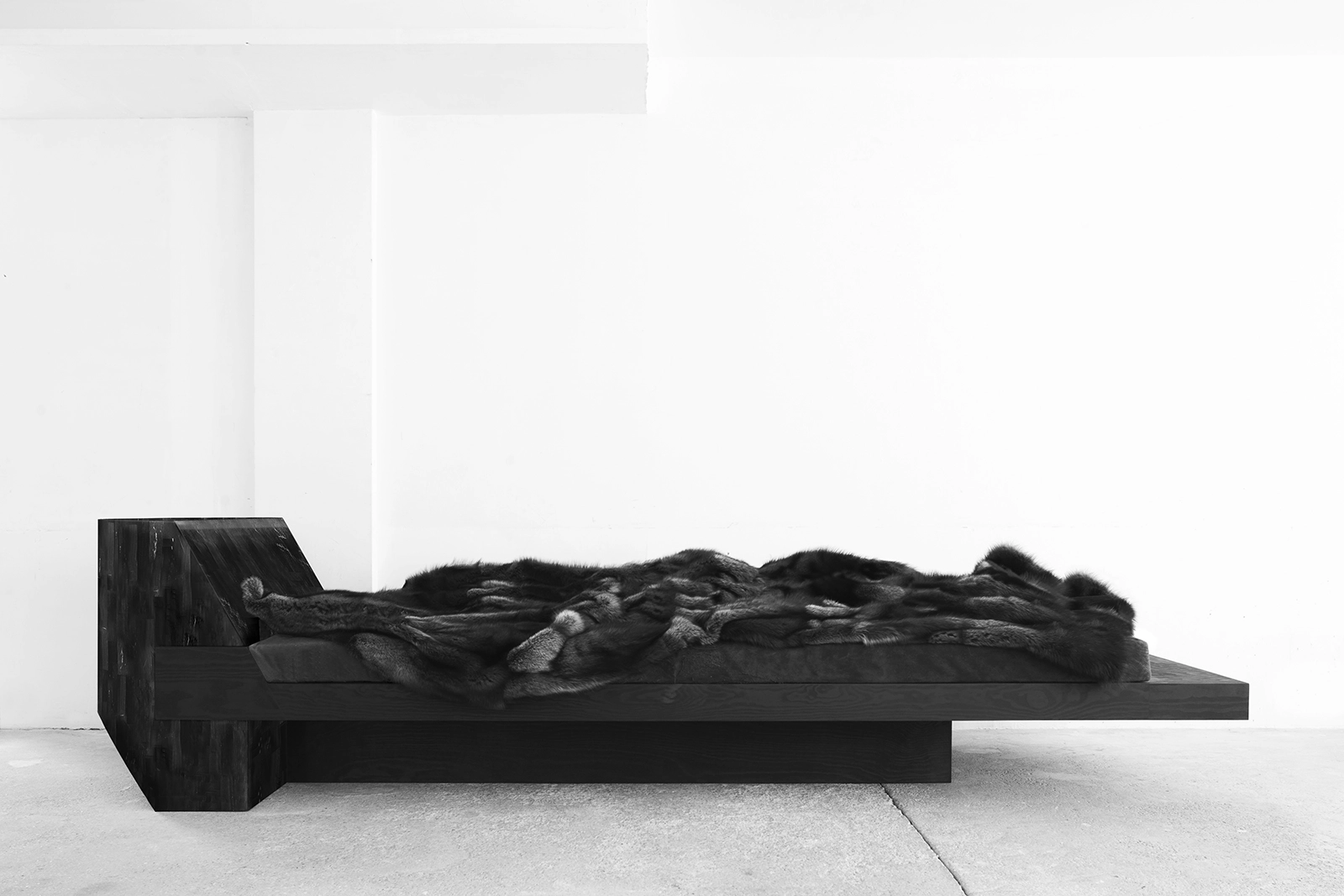
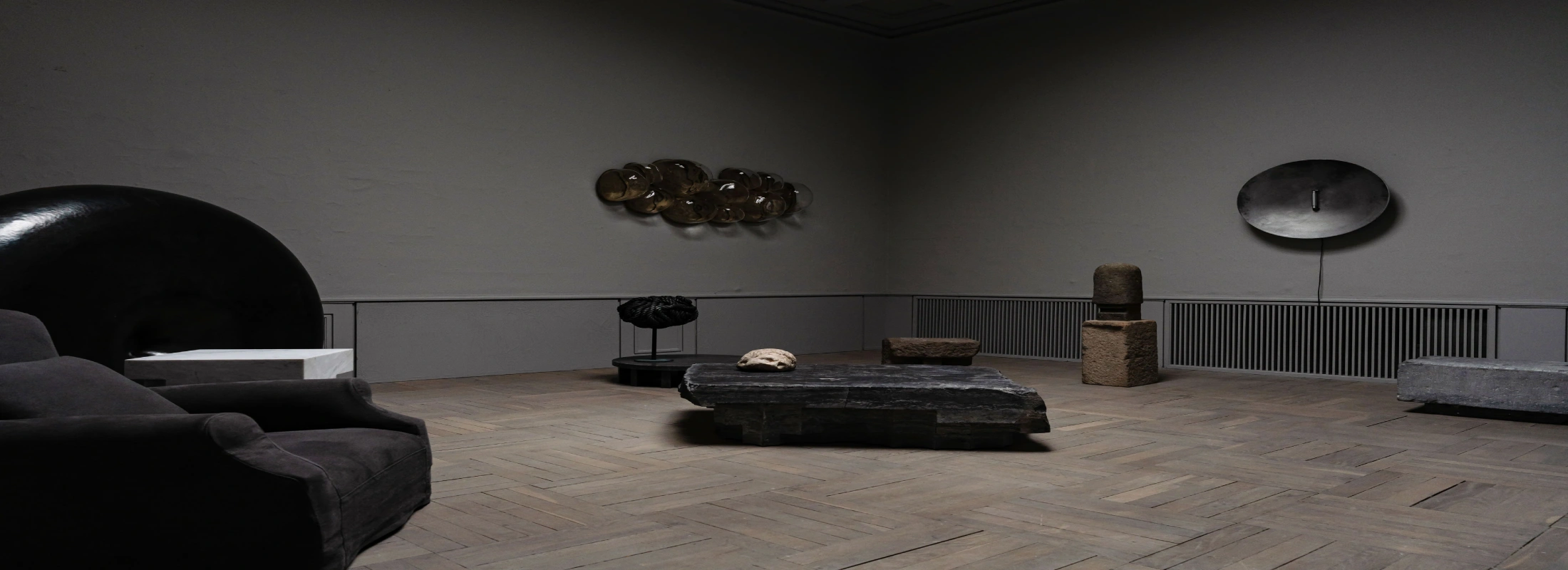
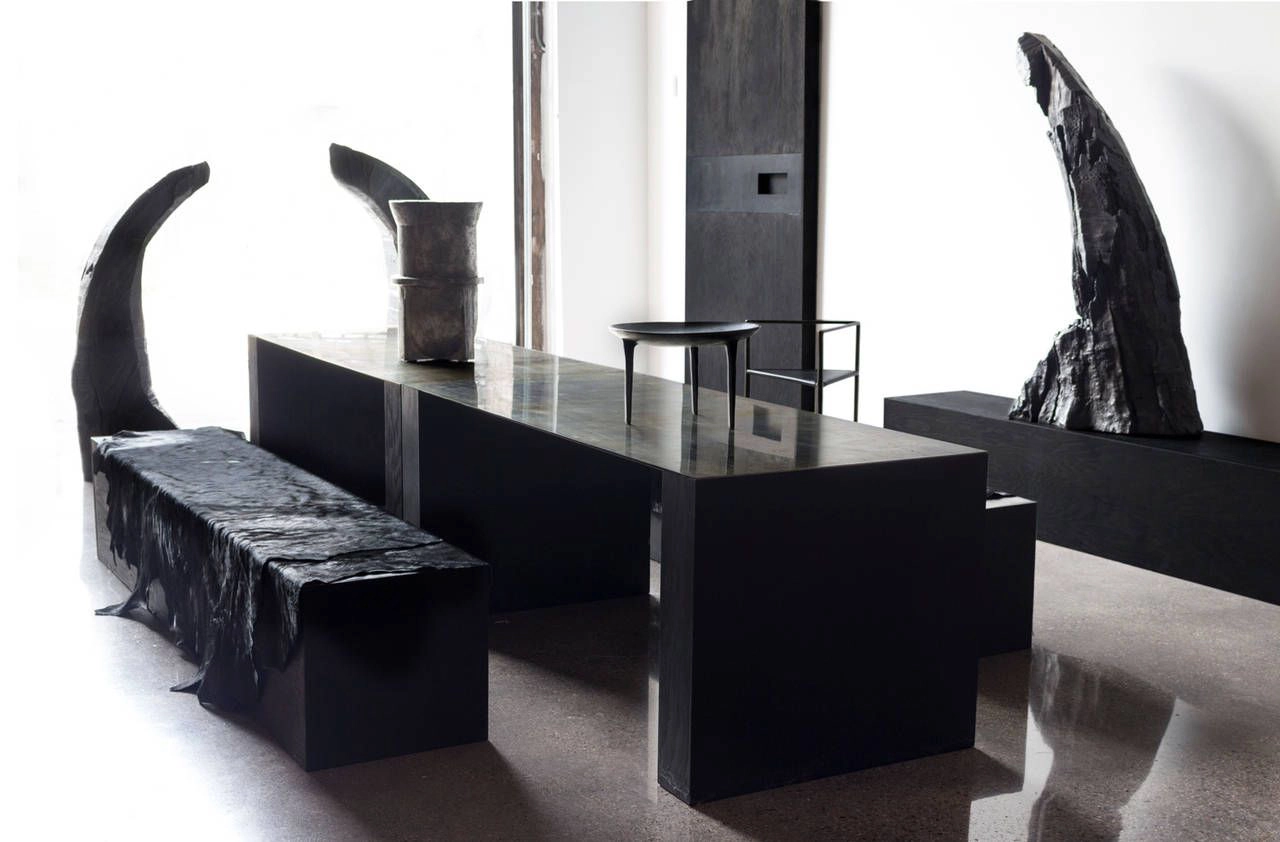
One of the defining characteristics of Rick Owens’ design language is his sculptural approach to furniture. Many of his pieces resemble monumental objects or architectural fragments rather than conventional household items.
His iconic works often feature:
- Geometric, monolithic forms
- Sharp, angular silhouettes
- Monumental proportions
- Minimal ornamentation
Owens frequently describes furniture as an extension of architecture, drawing inspiration from Brutalist structures, minimalist sculpture, and monumental stone forms.
Some pieces appear almost prehistoric—massive benches carved from stone or petrified wood that evoke ancient ritual spaces rather than modern living rooms.
For interior designers, these works demonstrate how furniture can act as a spatial anchor, structuring the visual hierarchy of an interior.
Raw Materials and Handmade Craftsmanship
At the core of Owens’ furniture is a commitment to authentic materials and artisanal production. His collections frequently incorporate unconventional and raw materials such as:
- Marble
- Alabaster
- Bronze
- Concrete
- Ox bone
- Petrified wood
- Raw plywood
- Antlers
These materials create a powerful visual contrast between organic textures and strict geometric forms.
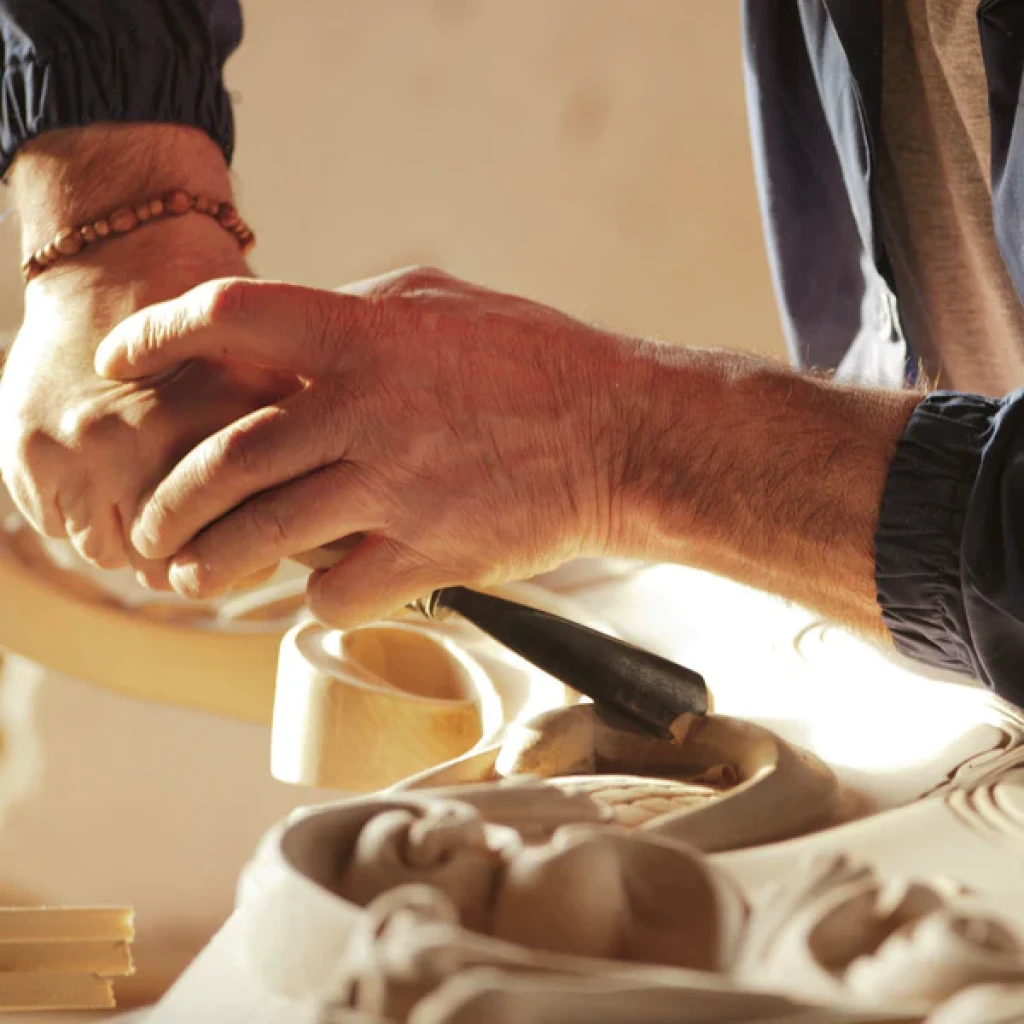
Unlike mass-produced furniture, many of Owens’ pieces are crafted by skilled artisans in limited editions. Italian workshops often produce the works using local materials and traditional fabrication techniques.
This handcrafted process aligns the collection with the collectible design movement, where furniture is treated as functional art.
Architectural Influences in Owens’ Design Language
Rick Owens’ furniture is deeply influenced by architecture and modern art.
Key references frequently cited in his work include:
- Minimalist sculptors such as Constantin Brâncuși
- Early modern furniture by designers like Eileen Gray
- Brutalist architecture and wartime bunker structures
These influences appear clearly in pieces such as the Prong Stool, which Owens described as resembling a carved stone boulder shaped by architectural geometry.
The result is furniture that feels both ancient and futuristic, combining primitive materiality with modernist spatial thinking.
Collaboration and the Role of Michèle Lamy
A crucial figure in Owens’ furniture development is his long-time collaborator and partner, Michèle Lamy.
The design process between Owens and Lamy reflects a hybrid artistic workflow:
- Owens sketches and conceptualizes the forms
- Lamy develops preliminary models
- Artisans fabricate the final pieces
Together, they refine proportions and materials before production, maintaining a strong connection between concept and craft.
This collaborative model mirrors the atelier tradition found in architecture and couture design.