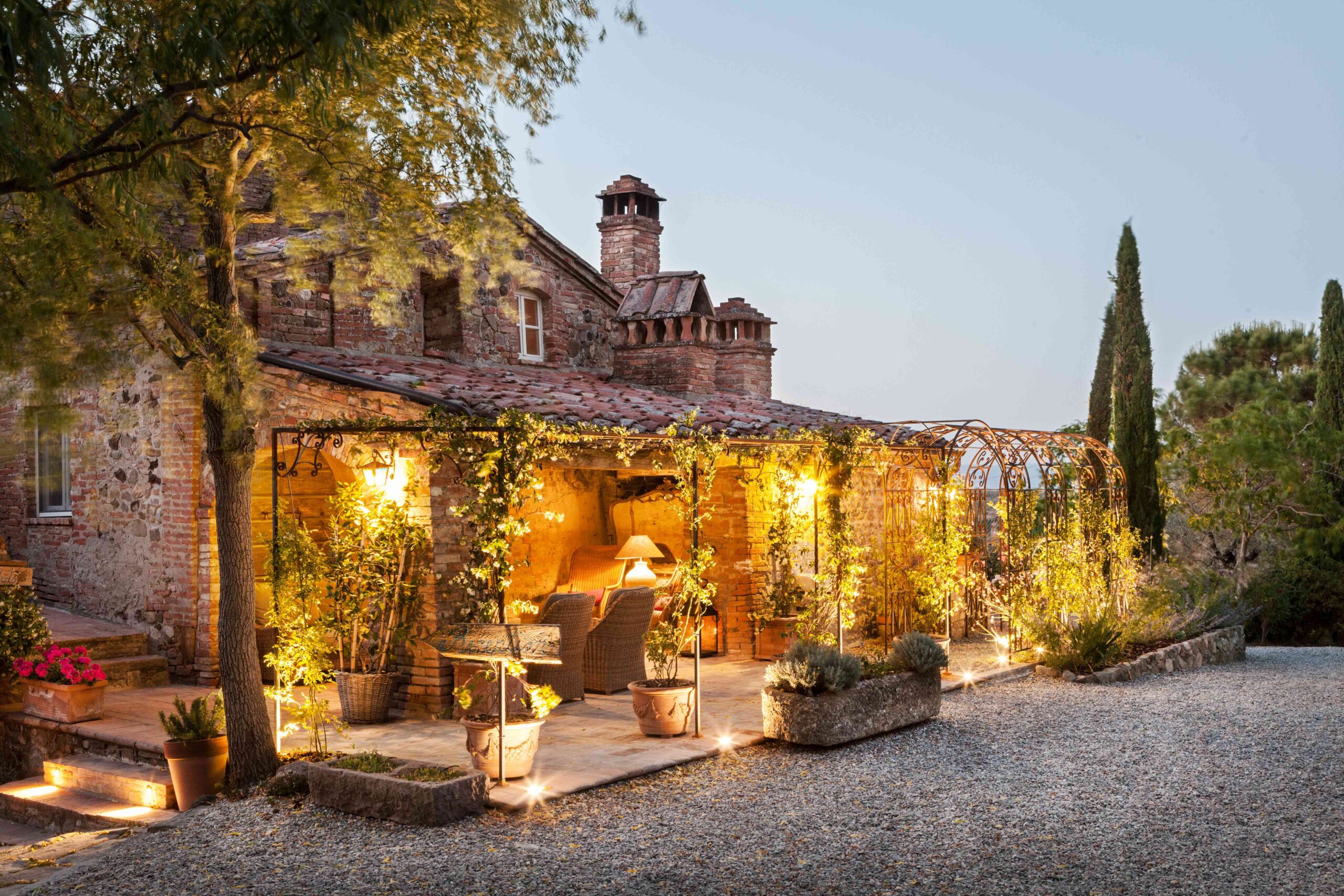
Few architectural styles capture the imagination of luxury homebuyers quite like Tuscan Villa Architecture. Rooted in centuries of Italian heritage yet widely embraced by contemporary designers, this architectural tradition continues to influence luxury real estate markets from California and Florida to the Mediterranean and the Middle East.
For interior designers, architects, and luxury furniture brands, Tuscan villas represent far more than a regional style—they embody a design philosophy where craftsmanship, natural materials, and landscape harmony converge into timeless residential experiences.
In today’s luxury real estate landscape, Tuscan-inspired estates are prized for their ability to combine old-world elegance with modern luxury, creating homes that feel both historic and contemporary.
The Origins of Tuscan Villa Architecture
Tuscan villas trace their origins to ancient Roman countryside estates and later evolved through Renaissance and Medici-era architectural traditions. These residences were originally built as rural retreats for aristocratic families, blending agricultural functionality with refined living spaces.
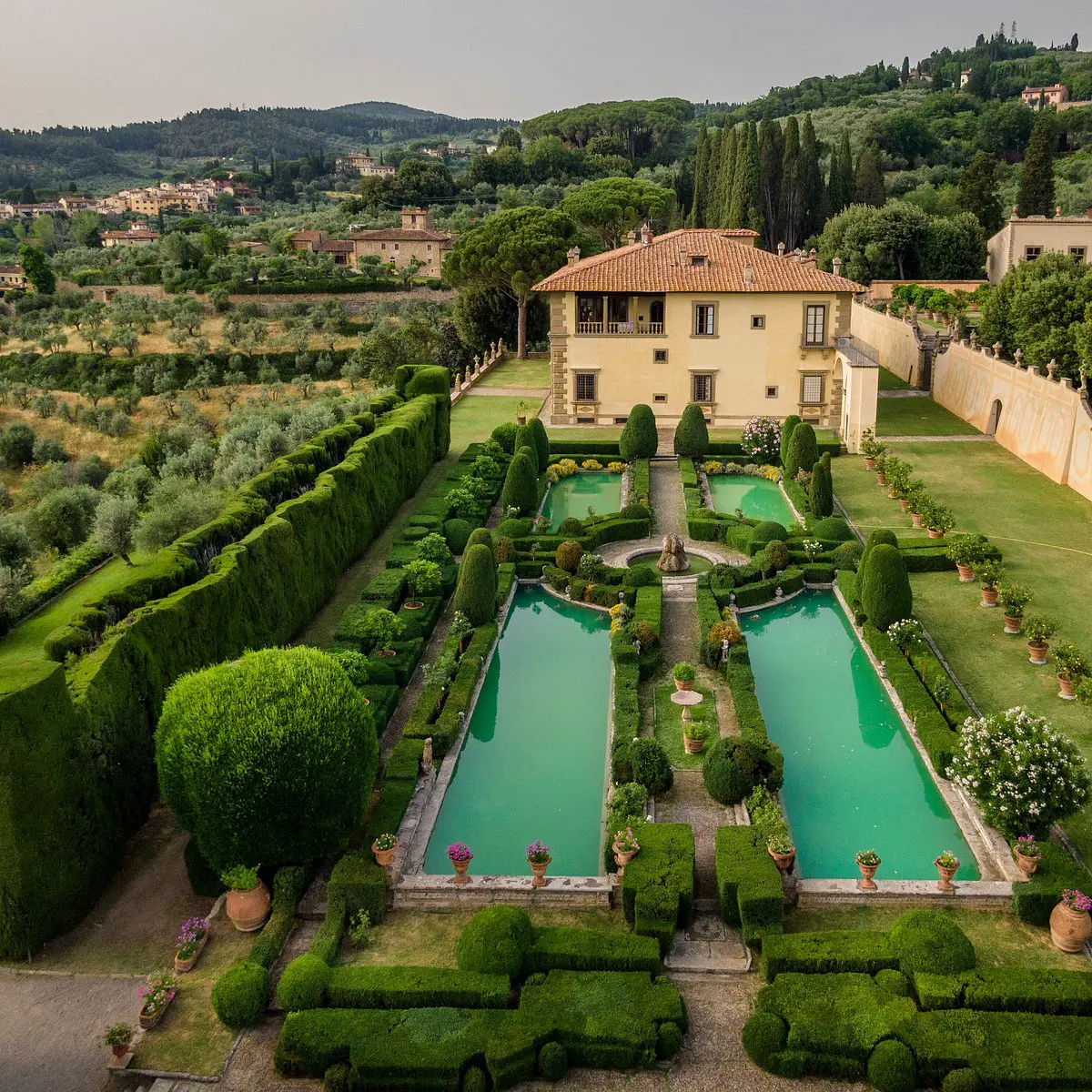
Historic estates such as Villa Gamberaia exemplify this evolution. Built in the early 17th century overlooking Florence, the villa became renowned for its masterfully designed gardens and harmonious relationship with the surrounding landscape, inspiring landscape architects worldwide.
Another example, Villa Salviatino, illustrates how Tuscan villas evolved from modest farmhouses into luxurious estates adorned with frescoes and elaborate interiors during the Renaissance period.
These historic properties established the architectural language that continues to define modern Tuscan-style luxury residences.
Defining Architectural Characteristics of Tuscan Villas
Tuscan Villa Architecture is recognizable through a distinctive set of architectural elements rooted in natural materials and Mediterranean lifestyle traditions.
Natural Stone and Stucco Facades
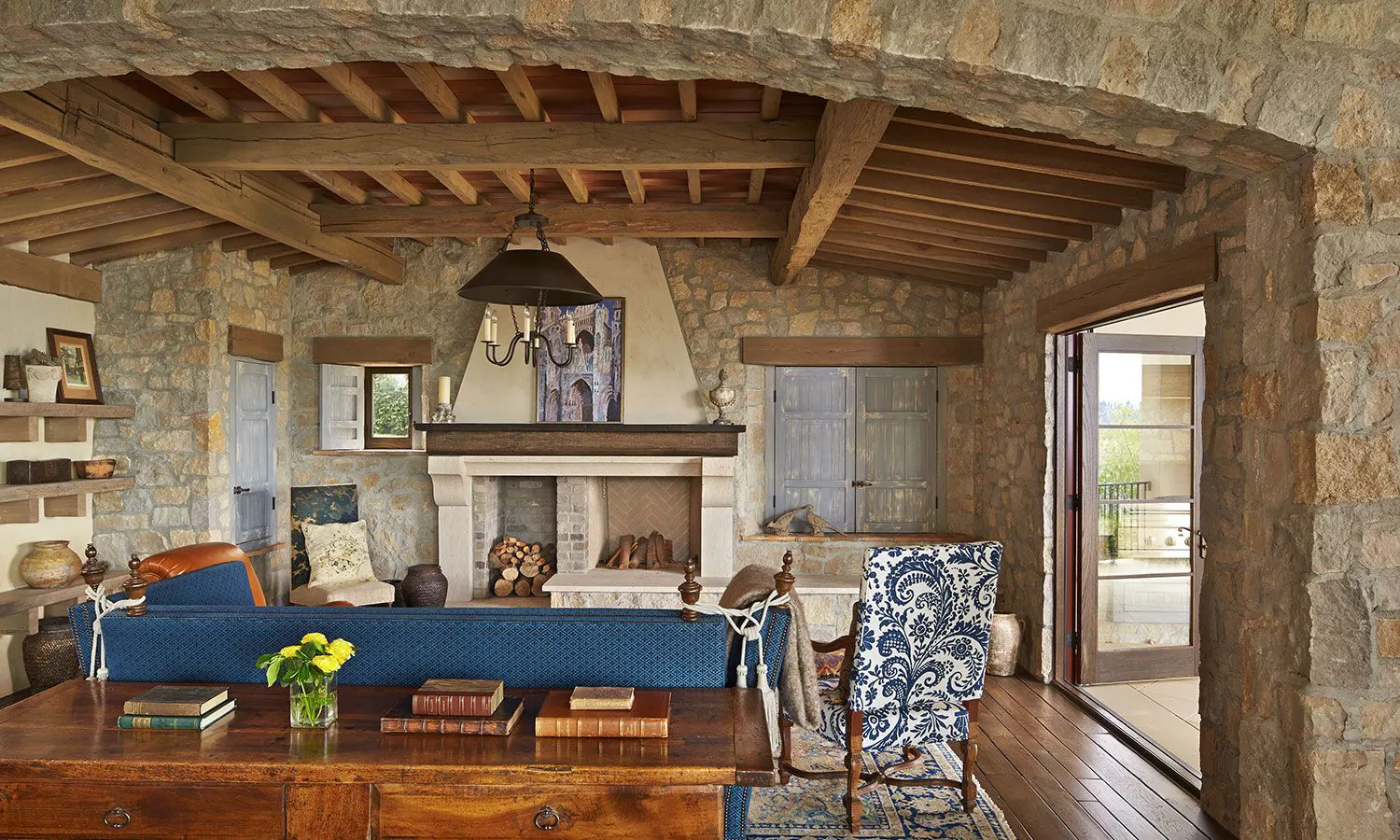
Local limestone, sandstone, and stucco walls define the exterior of most Tuscan villas. These materials were historically sourced from nearby quarries, ensuring durability while helping regulate interior temperatures during warm summers and cooler winters.
The weathered texture of stone facades creates a sense of authenticity and permanence—qualities highly valued in luxury real estate.
Terracotta Roofs and Earth-Toned Materials
One of the most iconic features of Tuscan homes is the terracotta tile roof, whose warm tones complement the surrounding landscape and age gracefully over time.
Interior materials echo the same natural palette, including:
- Terracotta flooring
- Travertine stone
- Lime-plaster walls
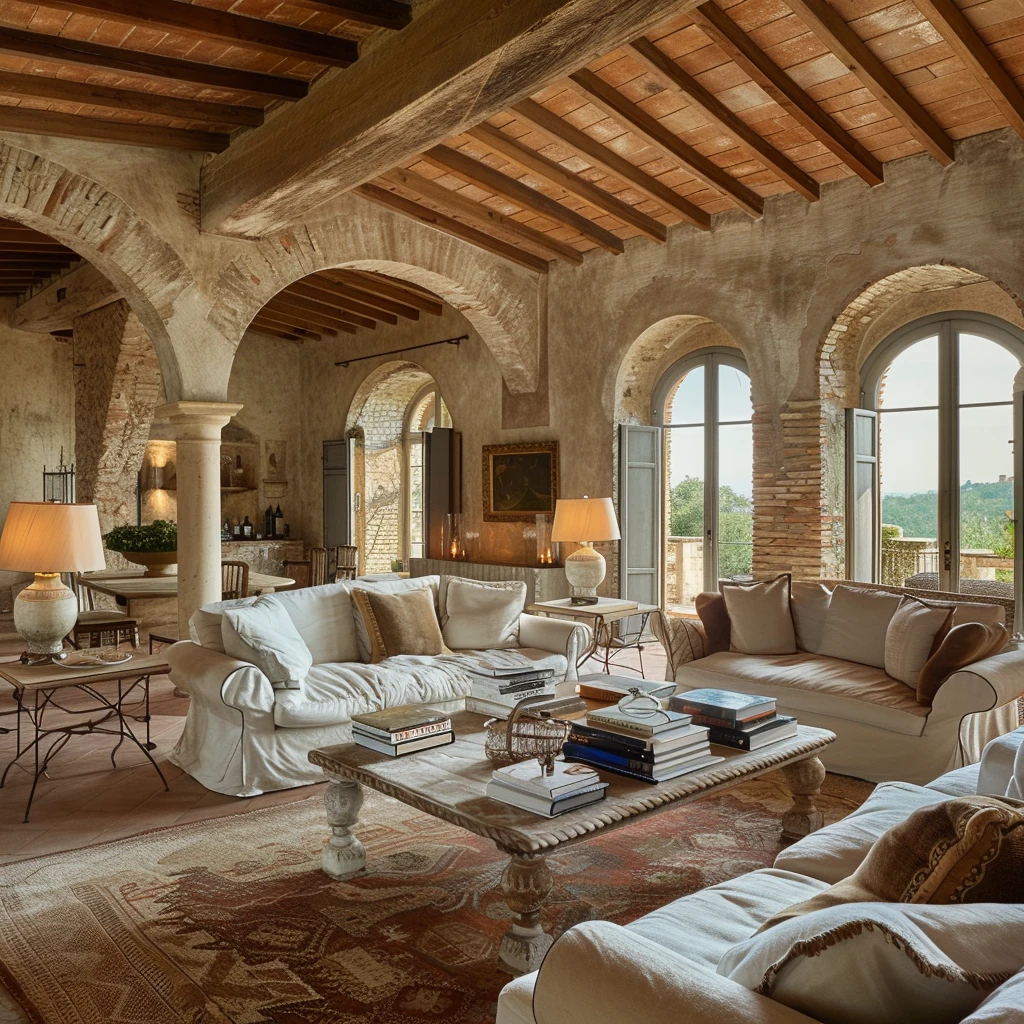
- Natural wood beams
These materials create interiors defined by warmth, texture, and timeless craftsmanship.
Arched Windows, Loggias, and Porticos
Arches are a signature element of Tuscan design, appearing in doorways, windows, and outdoor loggias. These curved openings soften the architecture while referencing classical Roman engineering traditions.
Loggias—covered outdoor terraces supported by columns—serve as shaded living spaces where residents dine, relax, and entertain. This integration of indoor and outdoor environments reflects the Mediterranean lifestyle embedded in Tuscan villa design.
Exposed Wooden Beams and Artisan Details
Tuscan villas frequently feature exposed wooden beams made from chestnut or cypress, adding rustic elegance and structural character to ceilings.
Additional artisan details include:
- Hand-forged wrought iron railings and lanterns
- Hand-painted frescoes and decorative borders
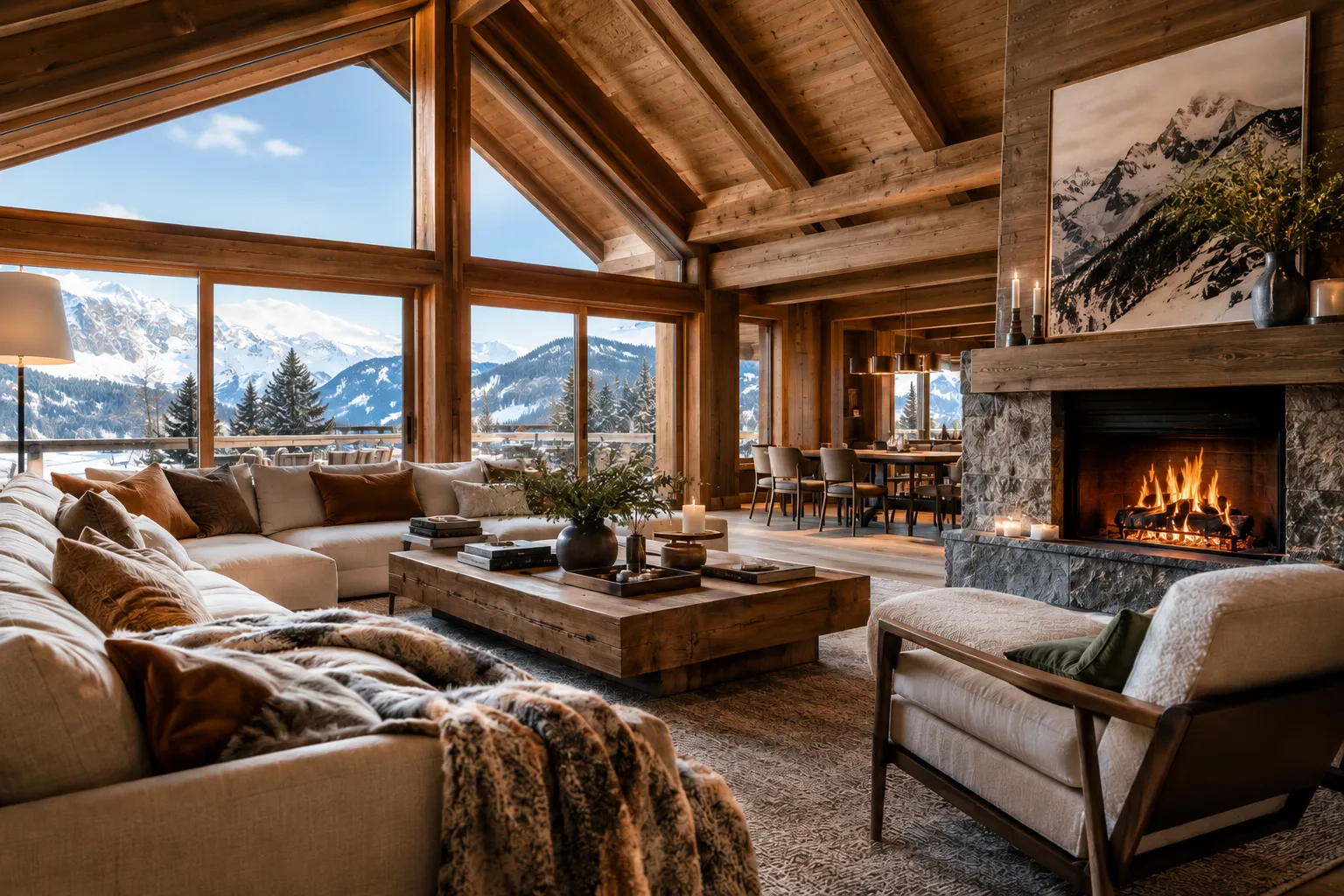
- Custom stone fireplaces
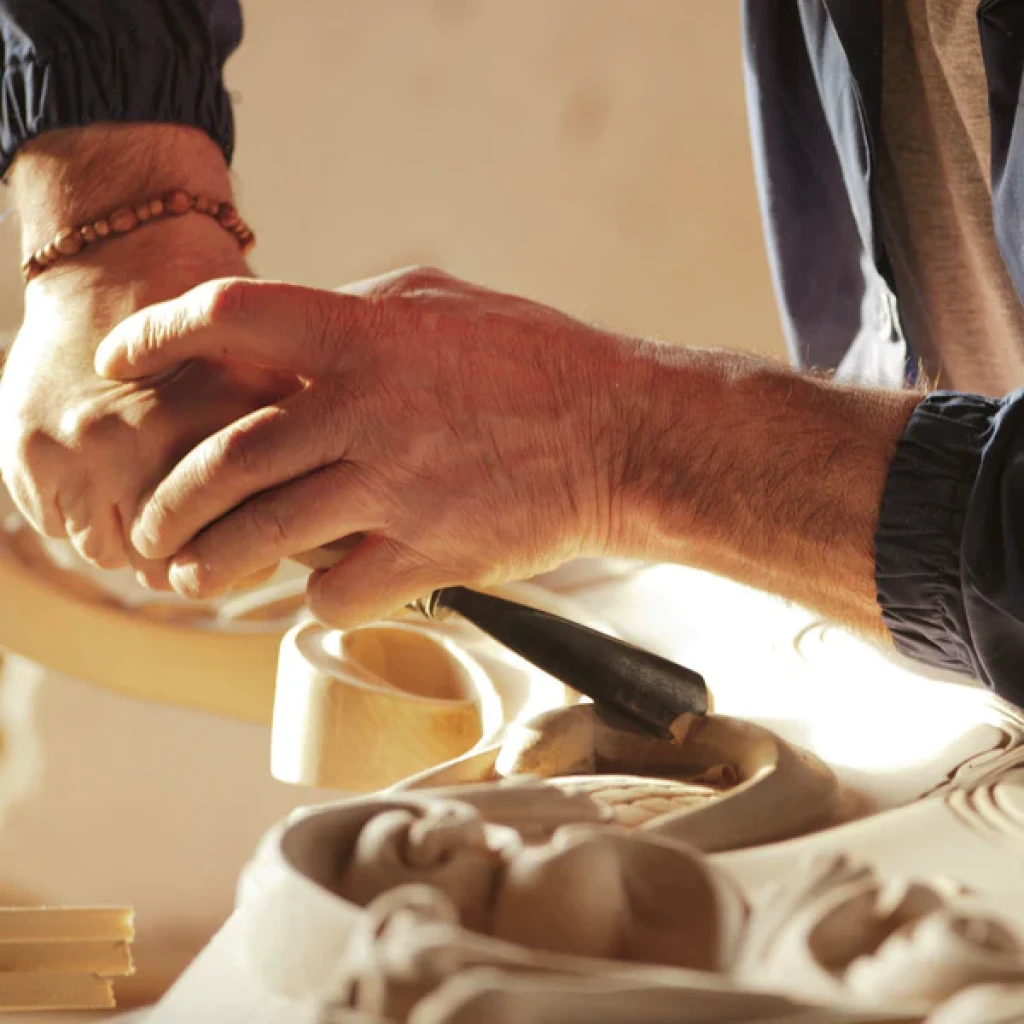
- Handcrafted cabinetry and furniture
These elements reinforce the handcrafted aesthetic that luxury designers continue to reinterpret today.
Interior Design Philosophy: Rustic Elegance Meets Luxury
Tuscan interiors balance rural simplicity with refined luxury, creating spaces that feel both comfortable and sophisticated.
Typical interior design characteristics include:
- Heavy wooden dining tables and carved cabinetry
- Linen or cotton upholstery in earthy tones
- Wrought iron chandeliers and lighting fixtures
- Stone fireplaces as architectural focal points
The color palette reflects the surrounding Tuscan countryside: ochre, burnt sienna, olive green, warm terracotta, and soft golden hues.
For interior designers and furniture brands, this environment offers a natural showcase for artisan furniture, heritage textiles, and handcrafted décor.
The Landscape: Architecture Integrated with Nature
Landscape design plays an equally important role in Tuscan villa architecture.
Typical estates include:
- Cypress-lined driveways
- Olive groves and vineyards
- Geometric Renaissance gardens
- Stone fountains and courtyards
Courtyards often serve as the heart of the property, featuring fountains, herb gardens, and shaded seating areas designed for gatherings and outdoor living.
This seamless relationship between architecture and landscape continues to inspire contemporary luxury estate design worldwide.