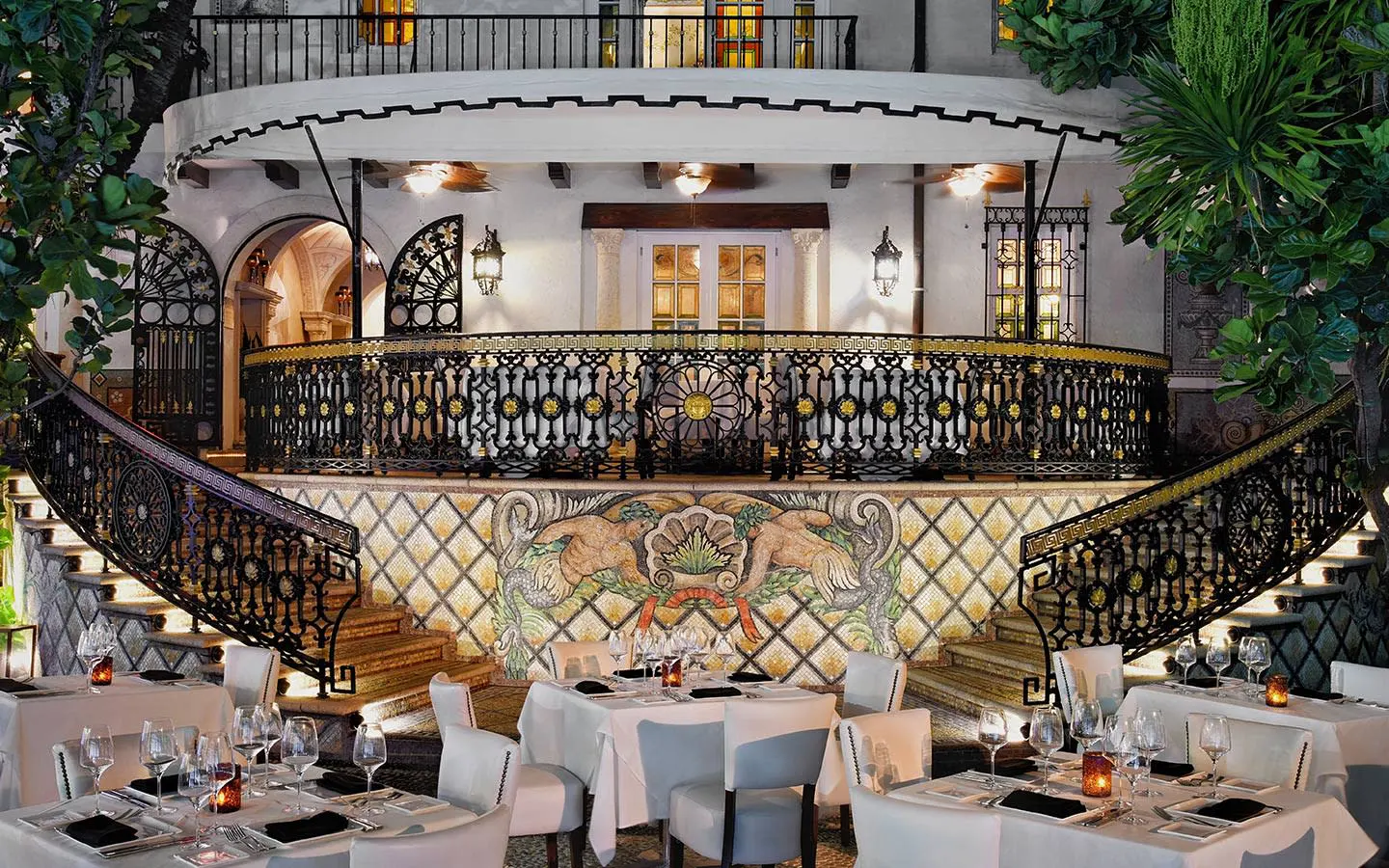
Few properties embody the fusion of architecture, fashion, and interior design like Villa Casa Casuarina. Once the private residence of Gianni Versace, this extraordinary estate stands today as one of the most influential case studies in high-end, immersive interior design.
For interior designers, architects, and luxury furniture brands, Villa Casa Casuarina offers more than inspiration—it reveals how narrative, craftsmanship, and spatial drama can elevate a property into a globally recognized design icon.
The Origins of Villa Casa Casuarina
Built in 1930 by architect Alden Freeman, the villa draws heavily from Mediterranean Revival architecture. Freeman took direct inspiration from the Alcázar of Seville, translating European grandeur into the vibrant context of Miami Beach.
When Gianni Versace acquired the property in 1992, he reimagined it completely. He expanded the estate, introduced new architectural elements, and infused every surface with a bold, unmistakable aesthetic. His intervention didn’t erase the past—it amplified it through a contemporary, fashion-driven lens.
A Masterclass in Maximalist Interior Design
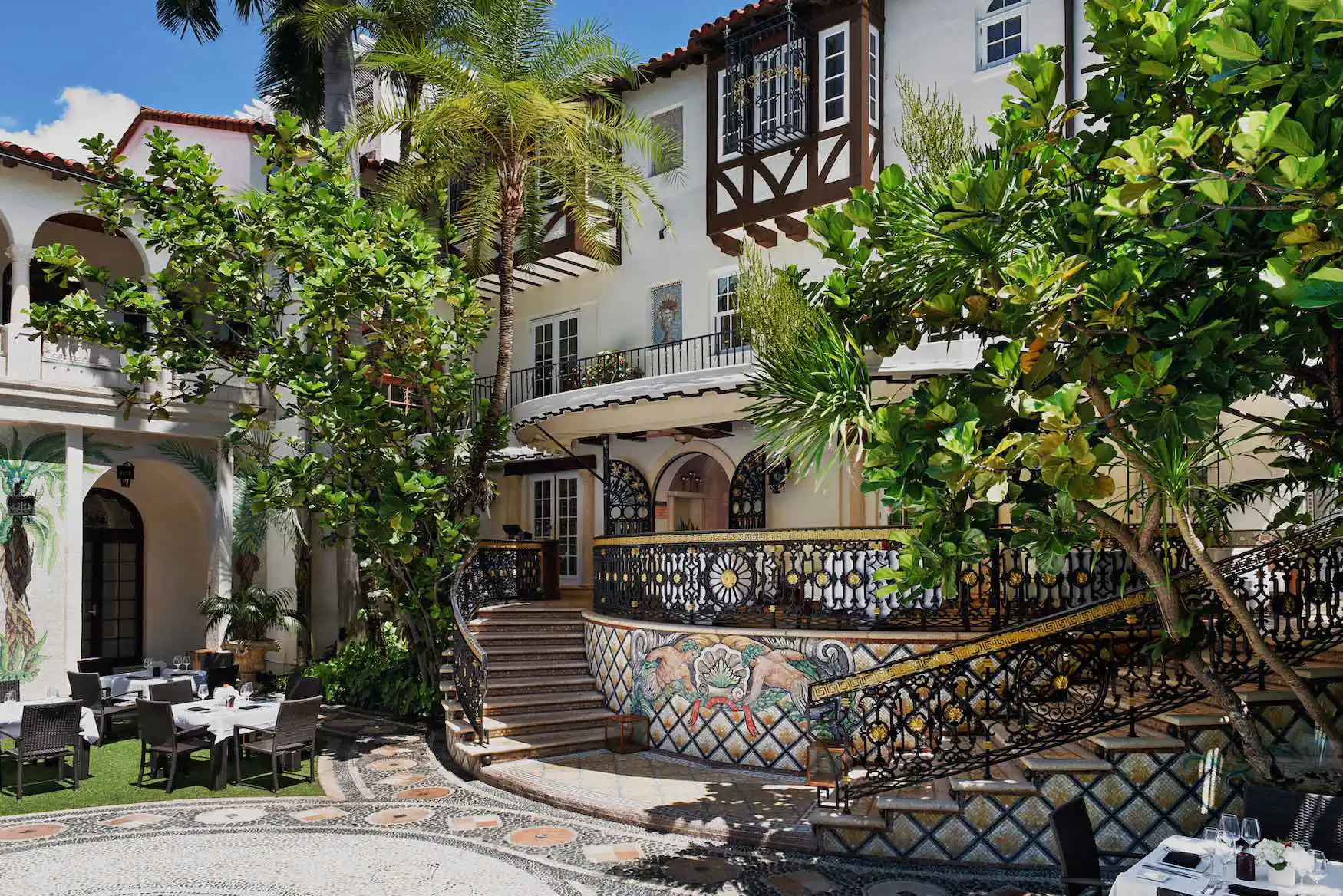
Villa Casa Casuarina defines maximalism with precision and discipline. Every interior space layers materials, patterns, and symbolic references without losing coherence.
Materials and Craftsmanship
The villa showcases an uncompromising commitment to artisanal quality:
- Hand-cut mosaics with gold inlays
- Marble flooring with intricate geometric compositions
- Fresco-style ceilings and ornamental plasterwork
Versace sourced materials from across Europe and relied on master artisans to execute his vision. Each detail reinforces exclusivity and permanence—two pillars of luxury design.
Color, Texture, and Visual Hierarchy
Despite its richness, the villa never feels chaotic. Designers can observe how visual hierarchy controls complexity:
- Bold colors anchor focal points rather than dominate entire rooms
- Repeating motifs create rhythm across spaces
- Contrasting finishes—matte, polished, textured—add depth
This approach demonstrates how to design layered interiors that remain legible and intentional.
The Iconic Mosaic Pool: Where Landscape Meets Identity
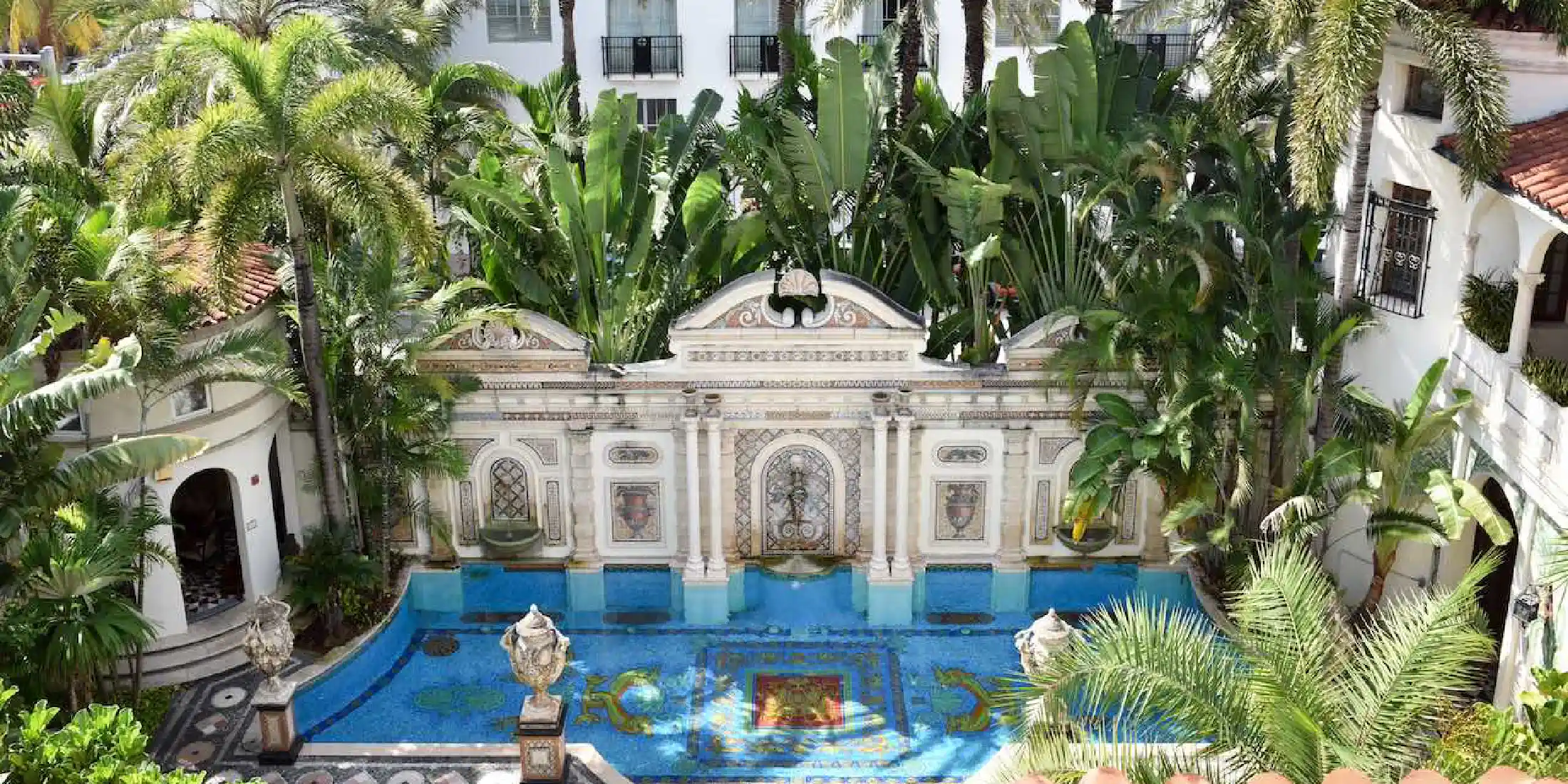
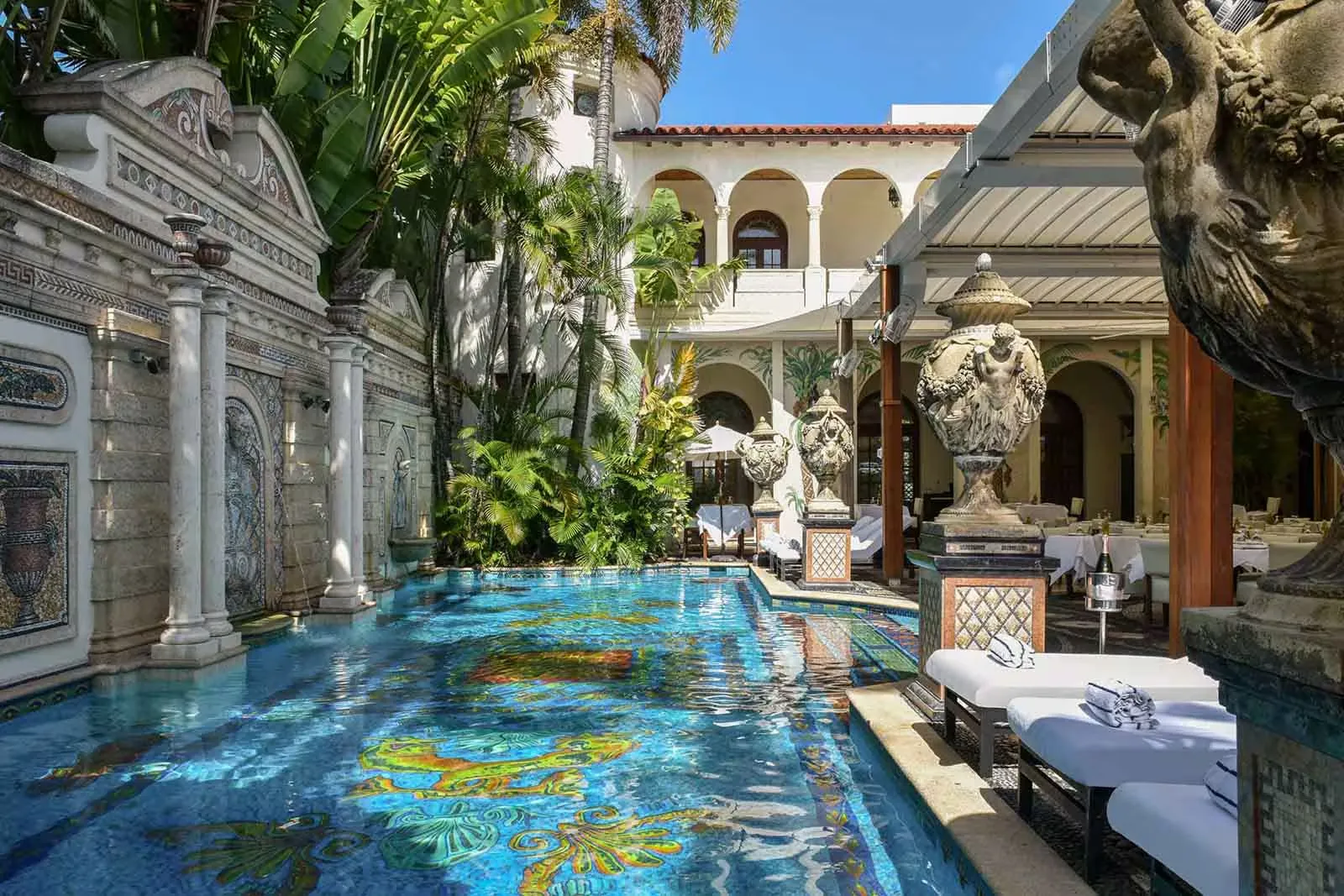
At the heart of Villa Casa Casuarina lies its legendary mosaic pool—a defining feature that merges outdoor design, art, and architecture.
Composed of thousands of hand-laid tiles, including gold-accented pieces, the pool reflects Versace’s fascination with classical mythology and symbolism. The Medusa motif appears again, reinforcing a visual narrative that extends throughout the property.
For outdoor designers, this space offers a critical lesson: landscape elements should not act as secondary features. When designed with intention, they become the centerpiece of the entire project.
Spatial Experience and Sensory Design
Villa Casa Casuarina does not rely solely on visual impact—it engages all senses. The spatial experience unfolds gradually, revealing layers of detail as you move through the property.
- Courtyards introduce natural light and ventilation while creating moments of pause
- Water features enhance acoustics and atmosphere
- Textural contrasts invite tactile interaction
Architects and designers can study how movement through space becomes part of the design narrative. Each transition feels deliberate, guiding users from intimacy to grandeur and back again.