Scandinavian design has long been admired for its ability to make simplicity feel deeply considered. Yet its enduring influence has little to do with pale palettes or minimalist rooms. At its heart is a more lasting philosophy, one that places function, material honesty, craftsmanship, and human experience at the centre of design. It is this philosophy that continues to give Nordic interiors relevance far beyond the region in which they originated.
Within this broader conversation, Oslo Design Fair offers an interesting lens through which to understand where Scandinavian design is heading. Taking place from 31 August to 2 September 2026 at NOVA Spektrum in Lillestrøm, the fair brings together the design, furniture, interior, architecture, and craft industries, creating a setting where established ideas meet emerging perspectives.
For architects, interior designers, and homeowners looking beyond short-lived trends, its significance lies in what it reveals about the evolution of Nordic thinking. Scandinavian craftsmanship is no longer simply a regional aesthetic reference. It has become part of a wider international conversation about how contemporary spaces can be more thoughtful, tactile, and enduring.
Oslo Design Fair Details
For professionals planning a visit, the essential information for the 2026 edition is currently confirmed by the organisers. Oslo Design Fair takes place at NOVA Spektrum in Lillestrøm, bringing together the design and interior industries in a professional setting where product discovery, emerging ideas, and industry exchange come together.
Event: Oslo Design Fair
Edition: Oslo Design Fair 2026
Date: 31 August to 2 September 2026
Location: NOVA Spektrum, Lillestrøm, Norway
Opening hours: Monday, 10:00 to 18:00; Tuesday, 10:00 to 18:00; Wednesday, 10:00 to 16:00
Frequency: Twice annually
Next announced edition: No later edition has been officially announced on the current Oslo Design Fair website.
The fair brings together the design, furniture, interior, architecture, and craft industries, creating a professional environment in which established companies and emerging voices can meet. Its relevance extends beyond product presentation, offering visitors an opportunity to observe how materials, aesthetics, commercial priorities, and new ideas are developing across the wider design landscape.
For an international audience, this makes Oslo Design Fair particularly interesting as a point of reference. Rather than treating Scandinavian design as a fixed visual language, the fair provides a setting in which its principles can be seen evolving through contemporary products, new brands, craftsmanship, and changing approaches to everyday living.
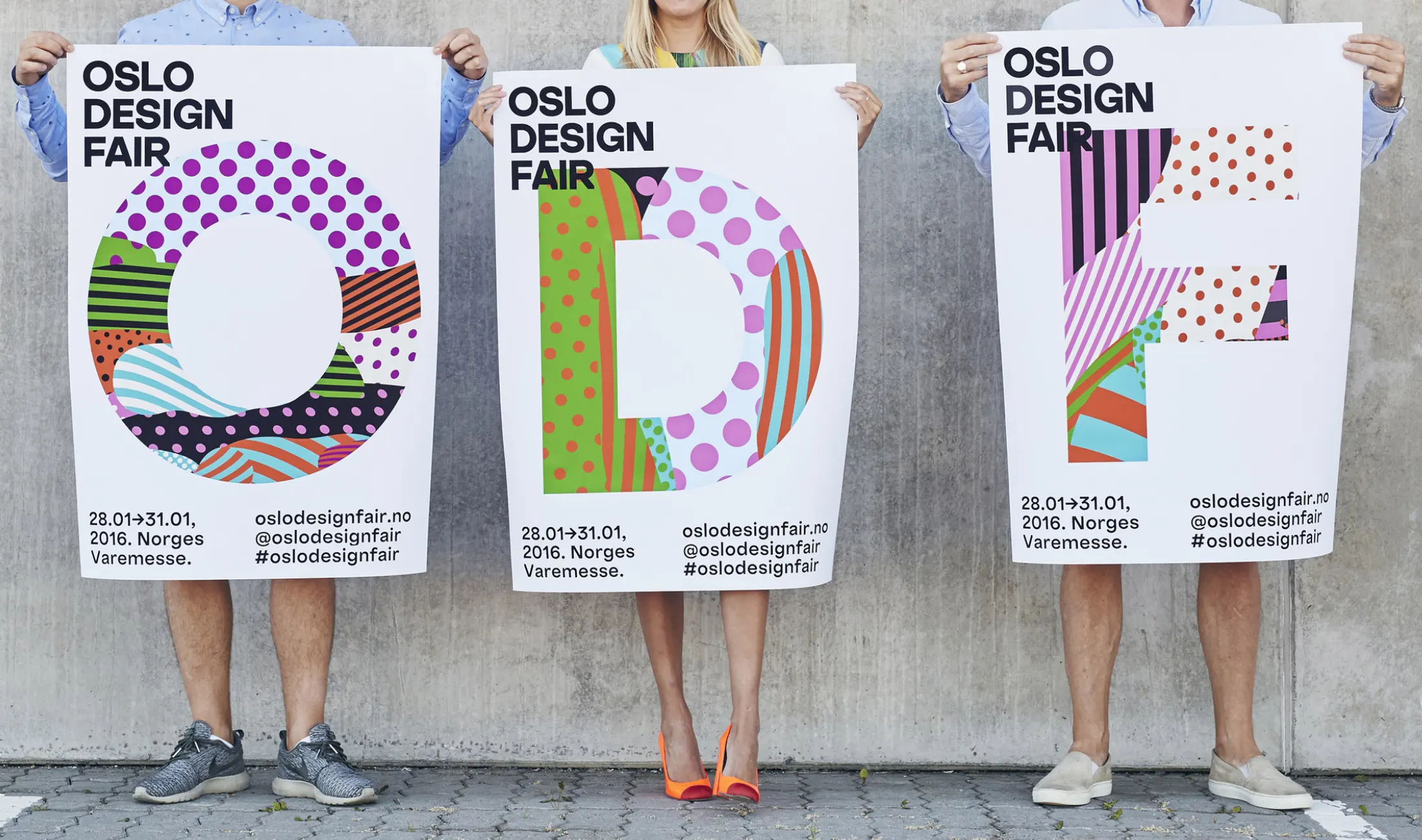
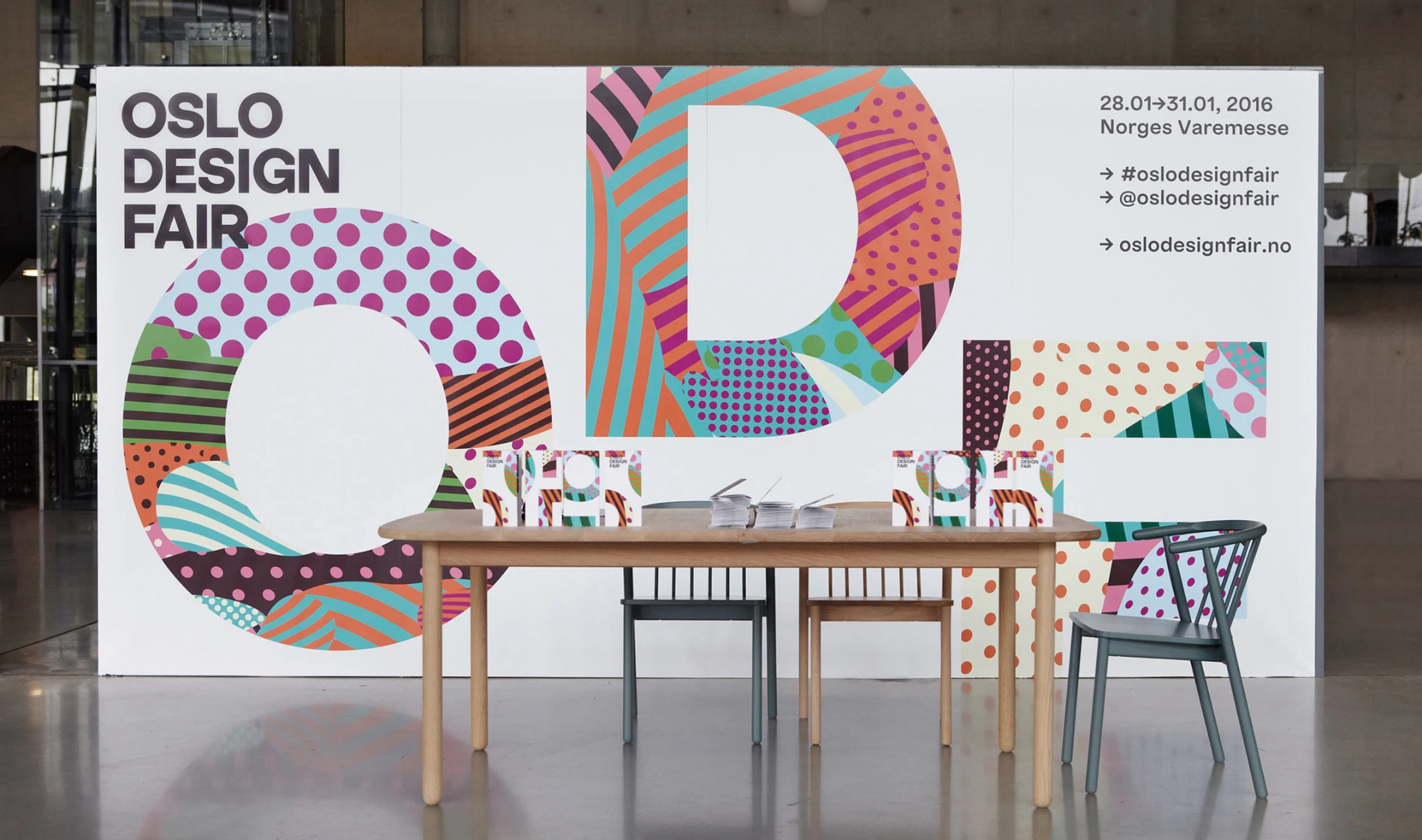
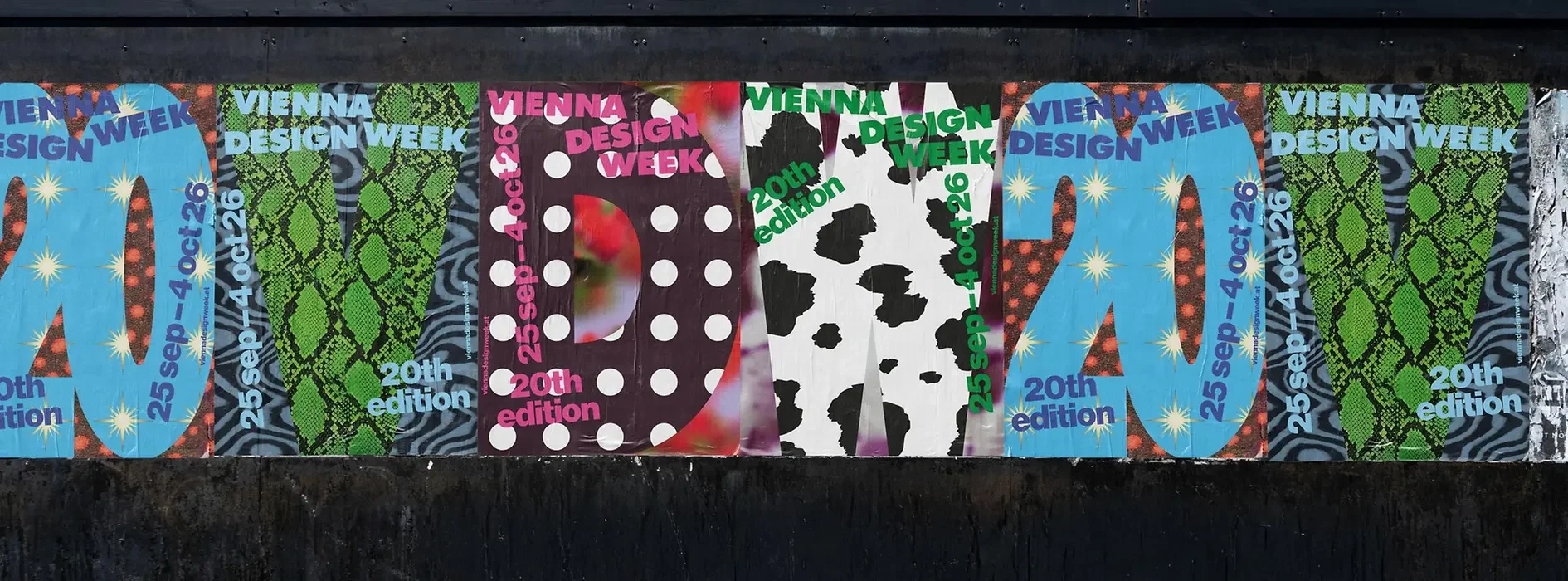
Oslo Design Fair’s colourful visual identity and exhibition materials. Photo source: Birgit Fauske, Einar Aslaksen & Calle Ruth.
The Global Influence of Scandinavian Design
The international appeal of Scandinavian design has never depended on decoration alone. Its strength comes from an understanding of how objects and spaces should support everyday life, balancing function with proportion, comfort, light, materiality, and a sense of connection to the surroundings.
These principles continue to influence interiors far beyond Northern Europe because they can adapt to different cultures and ways of living. Their enduring relevance can be seen in four defining qualities:
Function with intention: objects serve a purpose without unnecessary complexity, allowing practicality and beauty to coexist.
Material honesty: wood, stone, wool, linen, and other natural materials express their inherent qualities rather than being concealed.
Human-centred spaces: comfort, proportion, natural light, and everyday rituals remain central to the design process.
Longevity over novelty: quality and timelessness take precedence over short-lived visual trends.
For contemporary design, this philosophy remains particularly relevant. As interiors move away from constant visual change, Scandinavian design demonstrates how restraint can coexist with warmth, personality, and sophistication.
Scandinavian design is less a visual formula than a way of thinking about how objects, materials, and spaces should support a life well lived.
Beyond Minimalism: A Warmer Scandinavian Interior
The familiar image of Scandinavian interiors, clean lines, neutral colours, and restrained decoration, represents only part of the Nordic design story. Contemporary interpretations are becoming richer, introducing more texture, craftsmanship, colour, and individuality while maintaining their sense of balance.
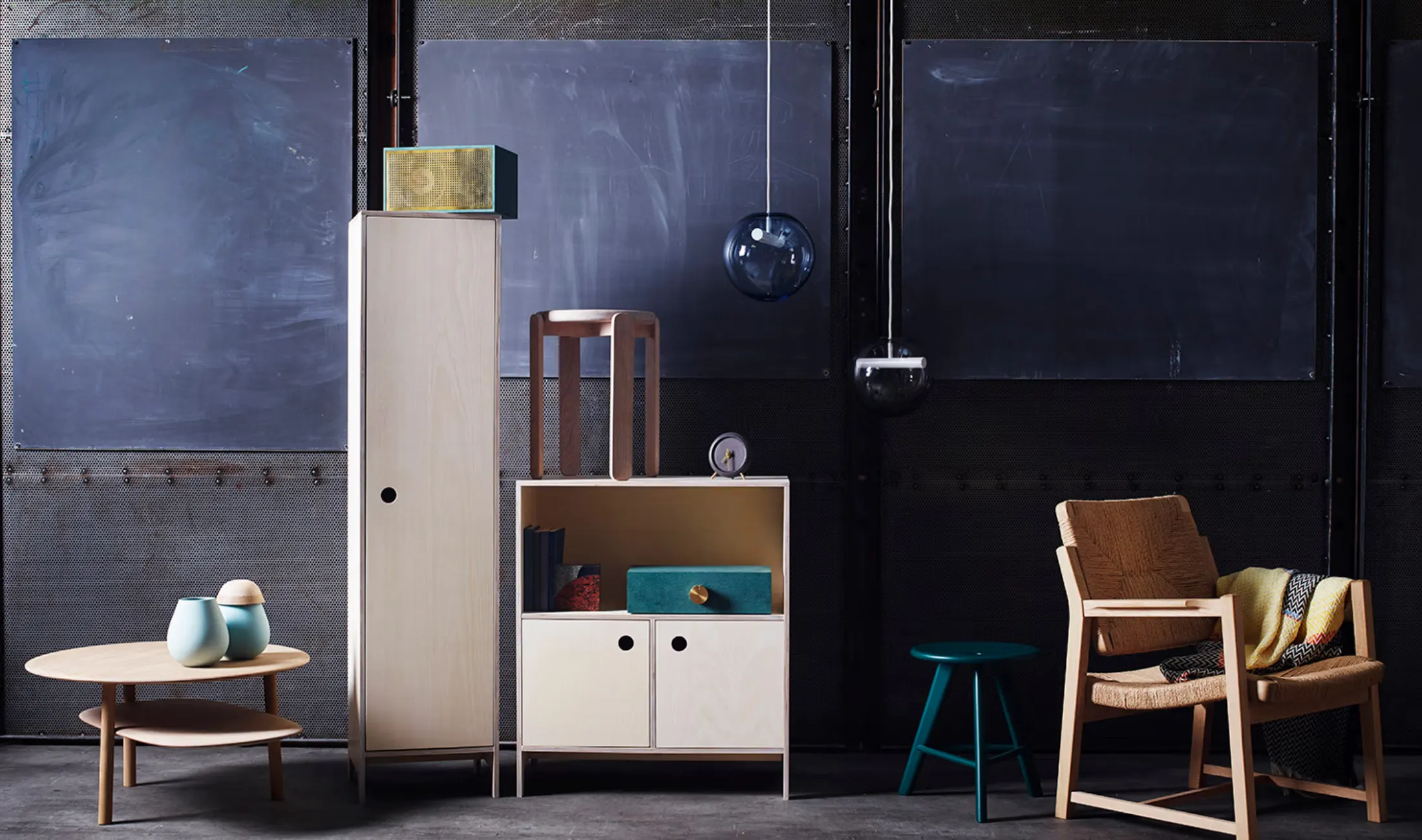
100% Norway exhibition at Oslo Design Fair. Photo source: Siren Lauvdal.
A more tactile approach to simplicity
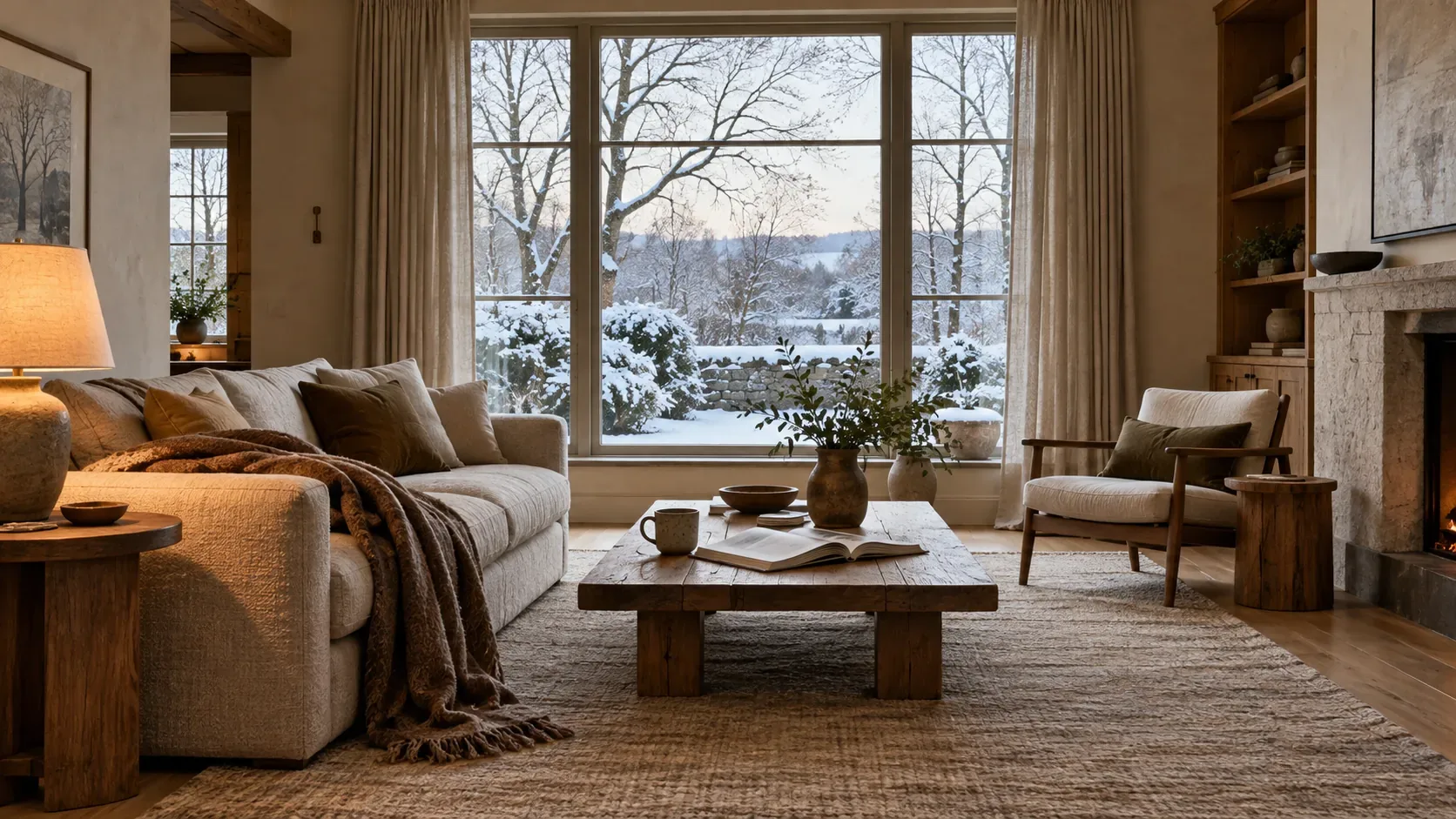
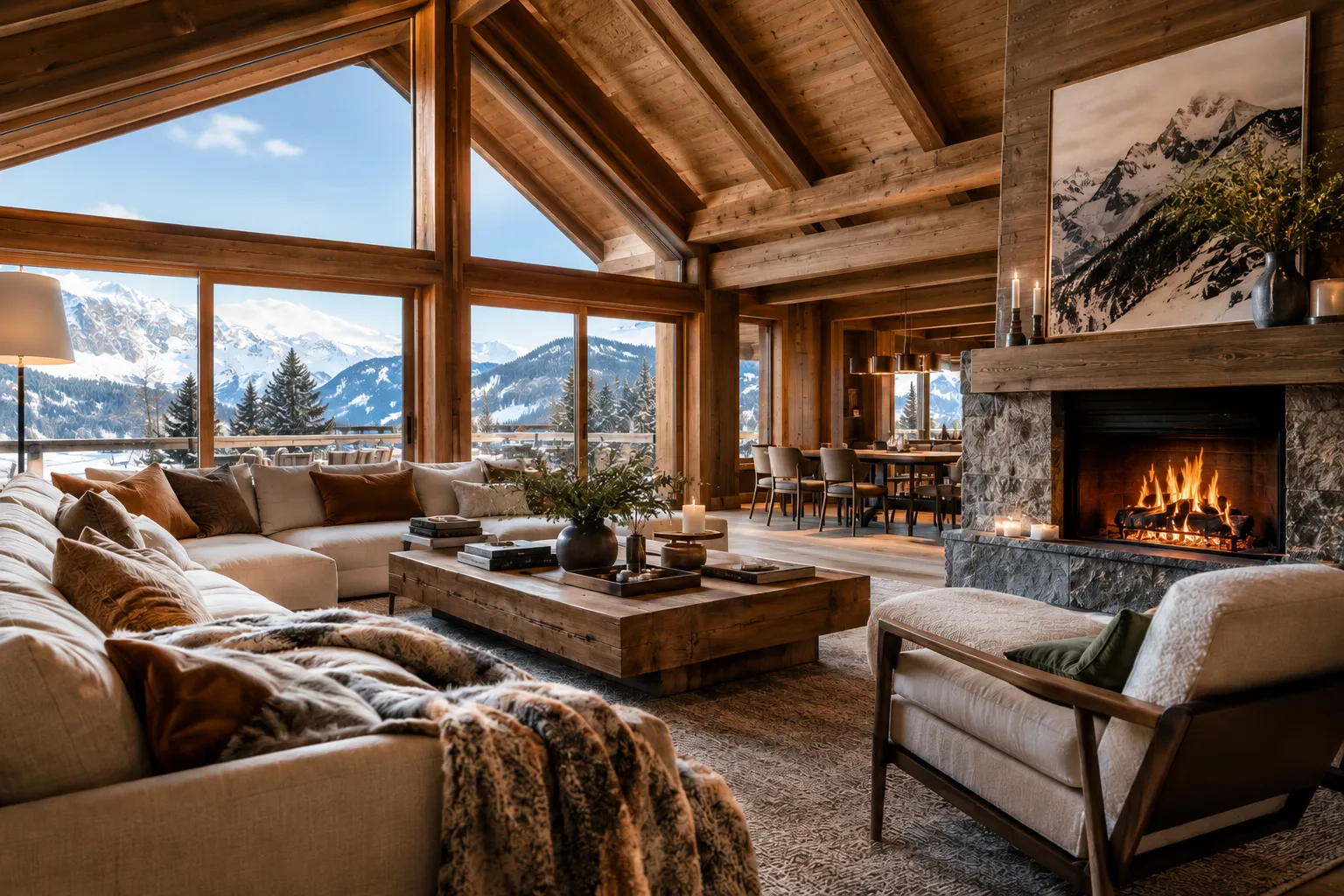
Natural timber, woven textiles, handmade ceramics, stone, and softly upholstered forms bring depth to restrained spaces. Rather than relying on decoration, designers increasingly allow materiality itself to become part of the architecture of the room.
Natural textures: wood, stone, wool, and linen create warmth and depth.
Handmade details: ceramics and crafted objects introduce individuality.
Soft contrasts: upholstery, textiles, and subtle colour add character while preserving calm.
The result is a more personal interpretation of Nordic simplicity. Instead of removing everything unnecessary, designers are becoming more selective about what deserves attention.
Scandinavian simplicity is increasingly less about removing everything unnecessary and more about choosing fewer things that are genuinely worth keeping.
For luxury interiors, this distinction is particularly relevant. Restraint does not have to mean minimalism. It can mean giving carefully chosen materials and objects enough space to be appreciated, allowing their texture, construction, and character to shape the atmosphere of a room.
Craftsmanship as a New Definition of Luxury
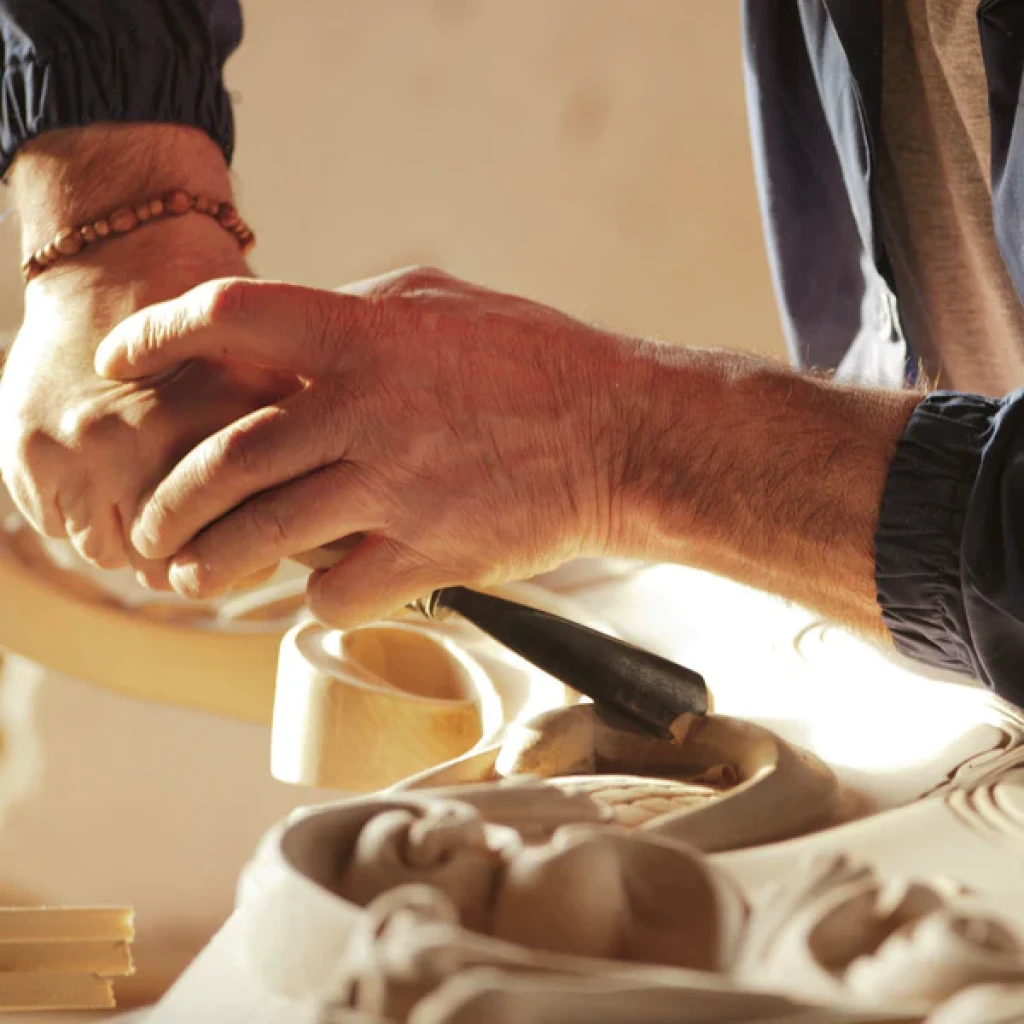
One of the strongest connections between Scandinavian design and contemporary luxury is the renewed importance of craftsmanship. In an industry where products can be manufactured rapidly and replaced just as quickly, time, expertise, and human involvement have become increasingly valuable.
A thoughtfully produced furniture collection communicates the skill and knowledge behind the finished object. Craftsmanship can be expressed through proportion, construction, joinery, finishing, and the way a material is handled.
Time and expertise become part of the value.
Natural materials reveal their character and individuality.
Quality construction gives objects greater longevity.
For luxury interiors, this shifts attention away from how much a space contains and towards the quality and intention behind what has been chosen. Bespoke furniture makes this particularly clear, with custom pieces responding to the proportions, materials, and everyday rituals of the space they inhabit.
Craftsmanship turns furniture from an object of decoration into an integral part of the experience of a space.
The Specialists in Bespoke
Turn your Designs into Reality with Nolita Harbour
The Material Language of Scandinavian Furniture Design
Materials are central to the Nordic approach because they shape both the visual and sensory experience of an interior. Wood remains particularly important, but its appeal goes beyond creating a recognisably Scandinavian aesthetic.
The grain of timber, softness of wool, weight of stone, and texture of linen can make a restrained space feel rich in detail.
Why natural materials continue to matter
The renewed interest in natural materials also reflects growing attention to sustainability and longevity. Designers and homeowners are increasingly considering where an object comes from, how it was made, and whether it can remain valuable beyond a particular trend.
Timber brings warmth, organic movement, and a connection to nature.
Stone adds weight and permanence through its natural variation.
Wool and linen introduce softness, comfort, and tactile depth.
Ceramics bring subtle irregularities and the individuality of handmade objects.
Brushed or patinated metals create contrast while maintaining a restrained palette.
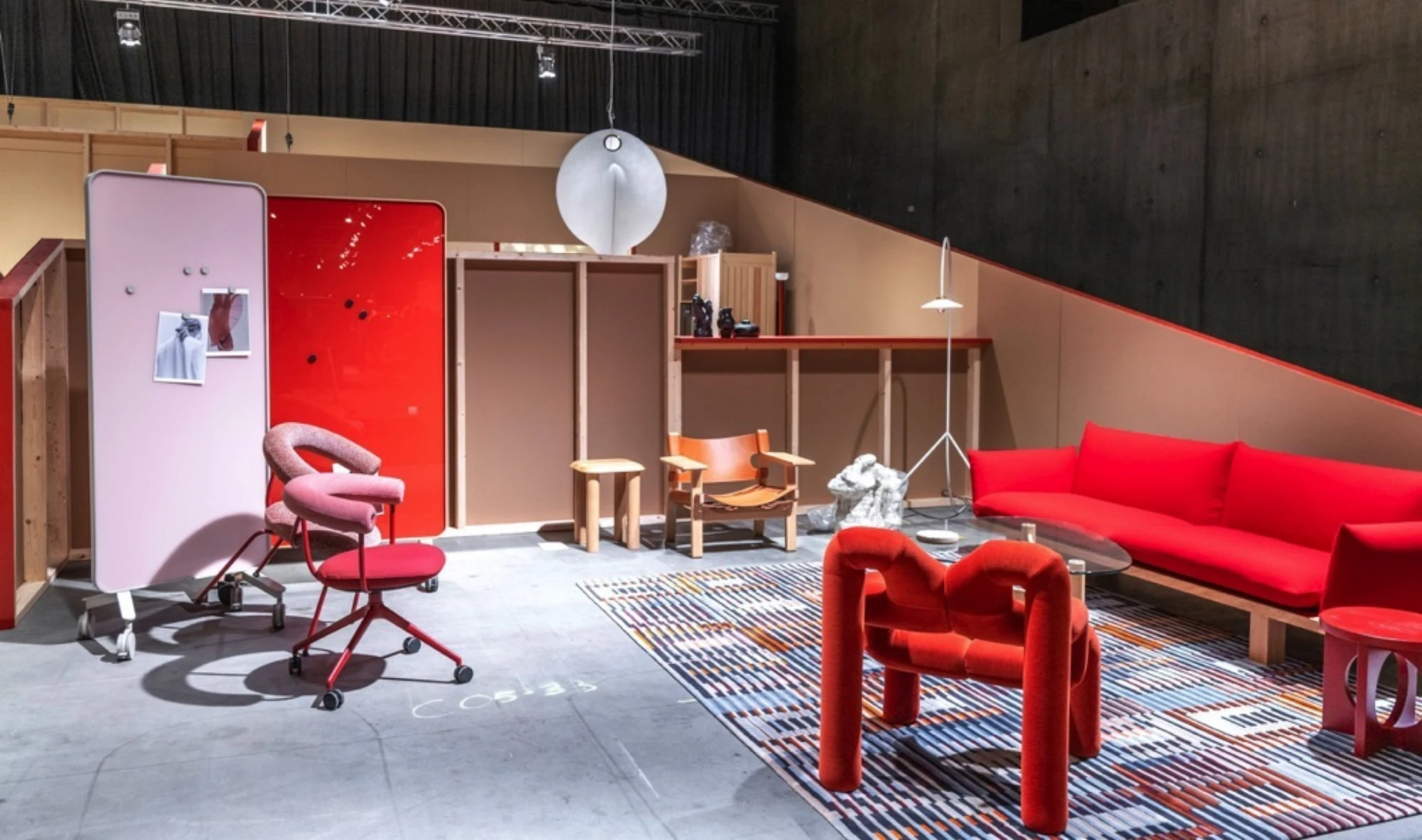
Oslo Design Fair exhibition, designed by A-Lab and curated by Kirsten Visdal. Photo source: Espen Grønli.
In this context, Scandinavian furniture design offers an alternative to disposable aesthetics. Its emphasis on durable materials and considered construction encourages a slower relationship with objects, based on use and appreciation rather than constant replacement.
Material authenticity is therefore becoming an important part of contemporary luxury. A natural surface does not need to be spectacular to be beautiful. Its appeal can emerge gradually, through touch, ageing, patina, and everyday use.
Talks and Programme
The Oslo Design Fair programme adds another dimension to the 2026 edition, bringing together designers, interior specialists, artists, and creative businesses for conversations and live presentations at NOVA Spektrum.
Alongside product discovery and emerging brands, the programme offers a closer look at how design connects with everyday life, craftsmanship, retail, and creative practice. The current programme includes the following sessions:
How Will We Decorate Our Dream Homes in 2027?
Tone Kroken and Benedicte Wessel-Holst — Interiørrådet
How will our homes change in the years ahead? Interior designer and stylist Tone Kroken and journalist Benedicte Wessel-Holst, hosts of the Norwegian design podcast Interiørrådet, explore what may shape the way we decorate and live in 2027. Their work brings together interior advice, industry knowledge, and practical ideas for contemporary homes.
Chocolate as Craft: More Than a Gift
Iris Martinsen Aune and Eivind Aune — Jentene på Tunet
This conversation explores chocolate as a product of craftsmanship, quality, and care. Iris and Eivind Aune are the founders of Jentene på Tunet, a Norwegian artisanal chocolate brand created from Eivind’s family farm in Selbu. Their story connects entrepreneurship and sustainability with traditional craft and the value of carefully made products.
An Informal Conversation with Experts: The Store of the Future
Helena Stolpe Karlsen and Heidi Madelen Ruud Nhonzi — Kaspara Home Styling & Interior
What will make people leave their screens and visit physical stores in the future? Helena Stolpe Karlsen and Heidi Madelen Ruud Nhonzi of Kaspara Home Styling & Interior discuss how tactile materials, colour, lighting, and carefully designed environments can shape the future of retail.
Ceramic artist and designer Marthine Fredrikke Spinnangr presents a live sculptural performance exploring the relationship between body, hand, and clay. Working at the intersection of art and design, her material-led practice draws inspiration from nature, organic forms, and the movement of the ocean.
The programme is scheduled to take place at NOVA Spektrum from 31 August to 2 September 2026. As the programme develops, visitors should check the official Oslo Design Fair programme for the latest session information.
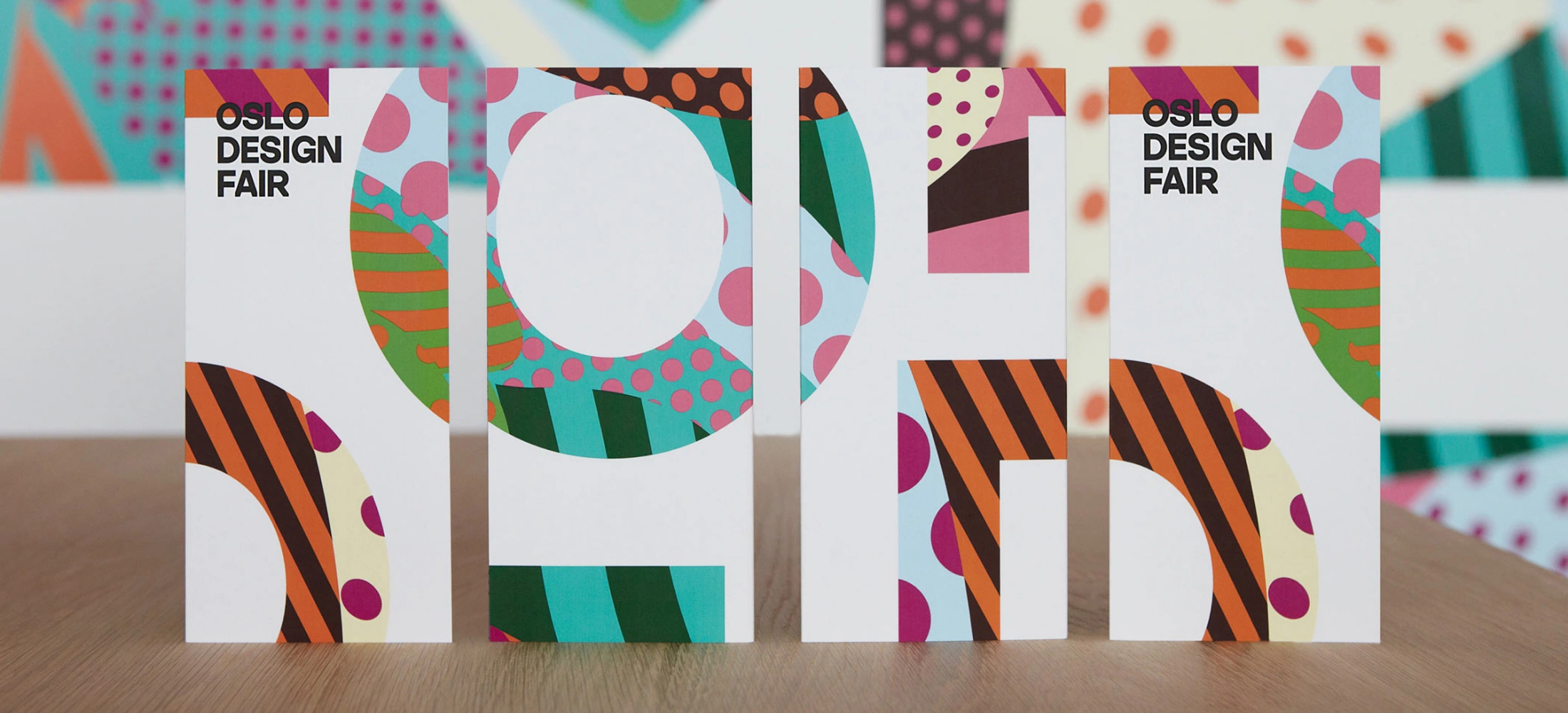
Oslo Design Fair entrance table displaying event flyers and colourful visual identity. Photo source: Birgit Fauske, Einar Aslaksen & Calle Ruth.
Exhibitors at Oslo Design Fair 2026
Oslo Design Fair 2026 brings together exhibitors across furniture, interiors, textiles, lifestyle, wellbeing, and design. The following brands offer a glimpse of the variety visitors can discover at this year’s fair.
Bokhari
Bokhari develops and produces textiles, gifts, and promotional products that combine quality, heritage, and social responsibility. At Oslo Design Fair, the company will present its Bunadsveska™ alongside merchandising solutions and new products.
Nolita Harbour in Associative Design – The Best of Portugal
Nolita Harbour will be presented as part of Associative Design – The Best of Portugal, a curated group showcasing Portuguese furniture, lighting, and material design at Oslo Design Fair 2026. As one of the brands featured within the collective stand, Nolita Harbour will present handcrafted and custom-made furniture for luxury interiors, highlighting Portuguese craftsmanship, noble materials, and contemporary design.
Living & Dining
Living & Dining represents international lifestyle, interior, and gift brands in the Norwegian market. Its presentation includes products from brands such as Ichendorf Milano, spanning tableware, glassware, textiles, lighting, decoration, and gifts.
Florinda / KRIS
KRIS works across fragrance, clothing and accessories, as well as health, wellbeing, and spa products, bringing a broader lifestyle perspective to the fair.
Jentene på Tunet
Jentene på Tunet is a Norwegian artisanal chocolate brand producing handmade chocolates and confectionery. The award-winning brand brings craftsmanship and carefully made products into the wider lifestyle offering of Oslo Design Fair.
Terrigeno
Terrigeno supplies natural wellbeing and lifestyle products from European and international brands. The company also develops private-label products, corporate gifts, and customised solutions.
Why Scandinavian Craftsmanship Matters to Luxury Interiors
The influence of Scandinavian craftsmanship becomes particularly relevant to luxury interiors, where exclusivity is increasingly expressed through quality, authenticity, materiality, and longevity rather than excess.
For architects and interior designers, Scandinavian principles offer a clear reminder that luxury can emerge through thoughtful proportions, natural materials, craftsmanship, and furniture designed around everyday life.
Choose fewer, stronger pieces with lasting relevance.
Let materials create atmosphere through texture, grain, and tactility.
Invest in craftsmanship where construction and detail improve the experience of a space.
Design for longevity, allowing furniture and materials to age gracefully.
The enduring lesson of Scandinavian design is not that interiors should look Nordic. It is that the things we live with should have a reason to exist, and enough quality to remain with us.
Oslo Design Fair provides a timely setting for considering this shift. As luxury becomes increasingly connected to authenticity and lasting value, craftsmanship, material integrity, and thoughtful design are becoming forms of luxury in their own right.
Perhaps this is why Scandinavian furniture design continues to feel so relevant. Its greatest contribution is not a visual formula to reproduce, but a philosophy to reinterpret, combining contemporary design with traditional knowledge, beauty with purpose, and innovation with longevity.
Luxury Mountain Resorts: 8 Exceptional Retreats Redefining the Modern Chalet
Manage Consent
To provide the best experiences, we use technologies like cookies to store and/or access device information. Consenting to these technologies will allow us to process data such as browsing behavior or unique IDs on this site. Not consenting or withdrawing consent, may adversely affect certain features and functions.
Functional
Always active
The technical storage or access is strictly necessary for the legitimate purpose of enabling the use of a specific service explicitly requested by the subscriber or user, or for the sole purpose of carrying out the transmission of a communication over an electronic communications network.
Preferences
The technical storage or access is necessary for the legitimate purpose of storing preferences that are not requested by the subscriber or user.
Statistics
The technical storage or access that is used exclusively for statistical purposes.The technical storage or access that is used exclusively for anonymous statistical purposes. Without a subpoena, voluntary compliance on the part of your Internet Service Provider, or additional records from a third party, information stored or retrieved for this purpose alone cannot usually be used to identify you.
Marketing
The technical storage or access is required to create user profiles to send advertising, or to track the user on a website or across several websites for similar marketing purposes.