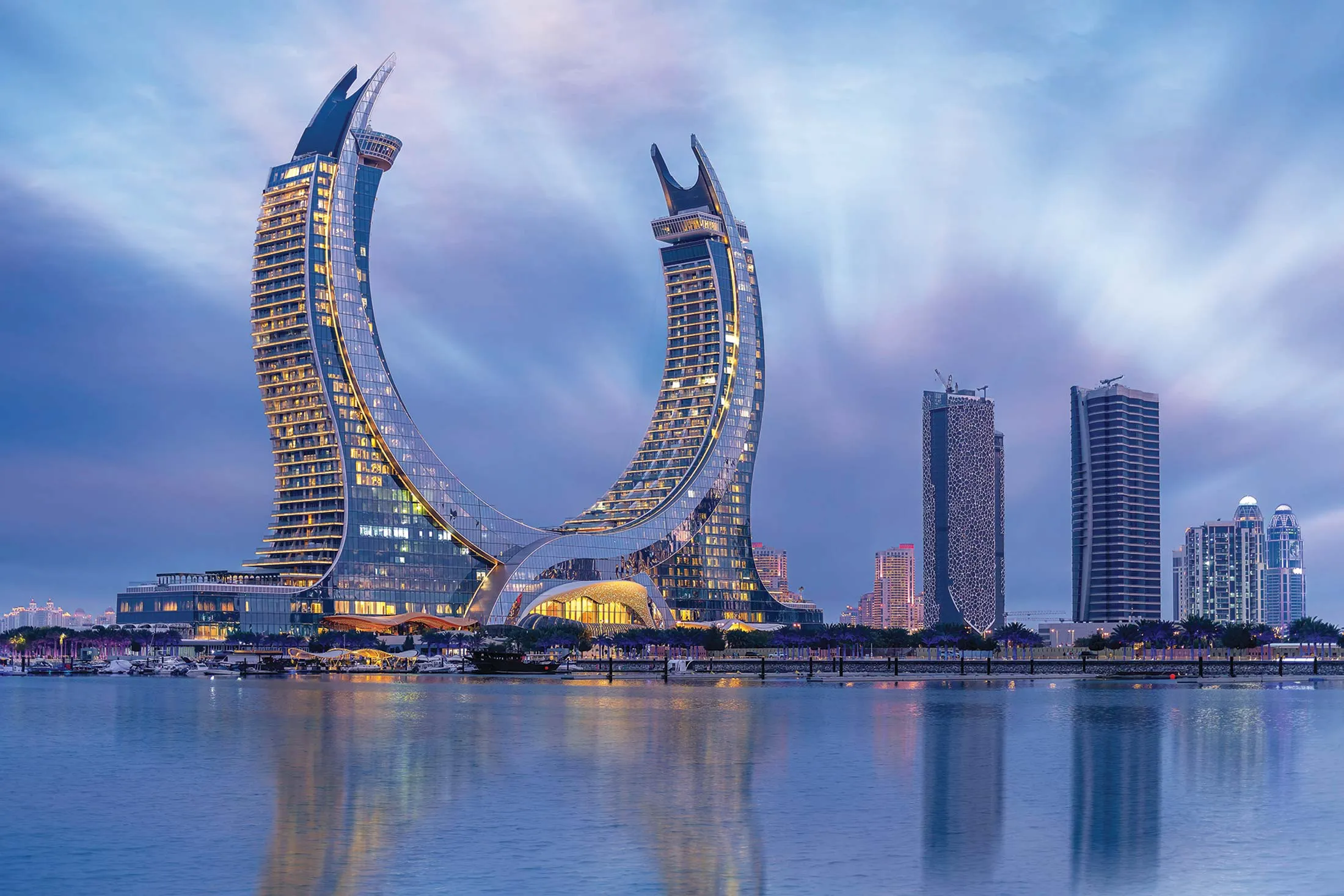
Doha, the capital of Qatar, stands at the intersection of enduring heritage and cutting-edge innovation. Over the past decade, the city has experienced an unprecedented cultural boom, fundamentally transforming its architectural landscape and altering perceptions of Middle Eastern luxury design on the global stage. A new design language, often referred to as “Gulf Minimalism,” is emerging, one that seamlessly blends minimalist aesthetics, opulent materials, and a deep reverence for cultural identity. For international professionals and high-net-worth individuals, Doha architecture now epitomizes a unique fusion of restraint and grandeur, making Qatar an exemplary reference point in the contemporary luxury canon.
The Emergence of Gulf Minimalism
Gulf Minimalism describes a distinctive approach that refines Middle Eastern extravagance through minimalist sensibilities. Rather than shedding cultural identity, this movement distills the essence of Qatari heritage into pure forms, sculpted spaces, and meticulously curated details. At the heart of this evolution lies the ambition to achieve timelessness, a quality that resonates deeply with discerning architects, designers, and connoisseurs of design-driven living.
Origins in Doha’s Rapid Urban Transformation
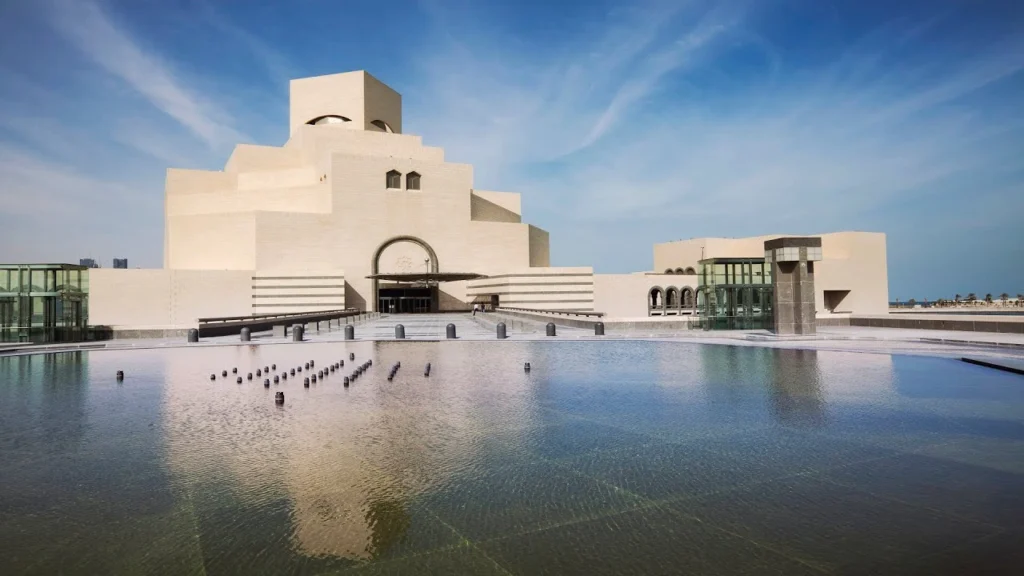
The transformation of Doha architecture coincides with Qatar’s meteoric rise as a global cultural destination. International art fairs, world-class museums (like the Museum of Islamic Art by I.M. Pei and the National Museum of Qatar by Jean Nouvel), and landmark developments along the Corniche have catalyzed an urban reinvention. Yet, behind the gleaming facades is a design philosophy grounded in:
Local Context: Sensitivity to Qatar’s climatic conditions, geography, and urban scale.
Cultural Resonance: References to vernacular motifs, Islamic geometry, and traditional Qatari crafts.
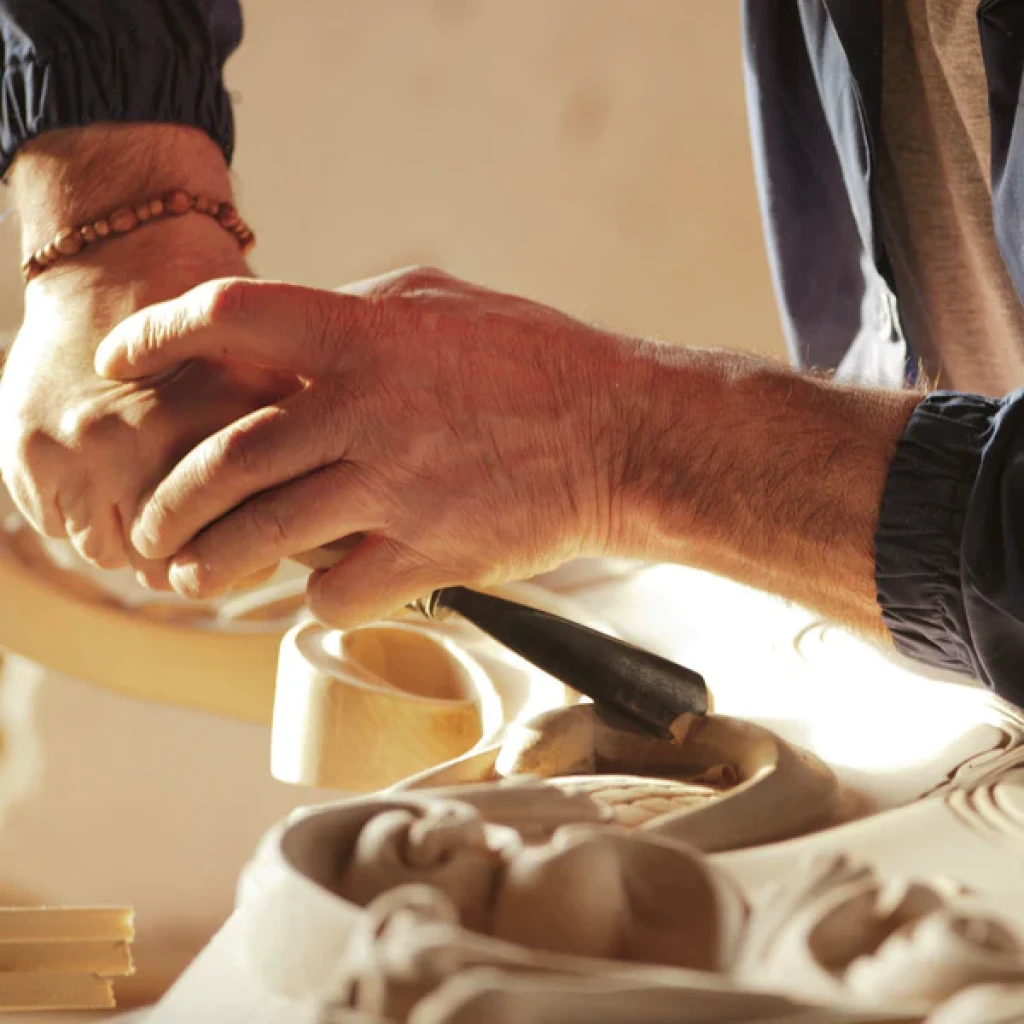
Material Expression: The celebration of raw materials, limestone, travertine, brass, and handwoven textiles, anchoring minimalism in tangible luxury.
Why Minimalism Appeals to Middle Eastern Luxury Interiors
Minimalism, at first glance, appears at odds with traditional Middle Eastern luxury interiors, famed for their ornate details and lavish flourishes. However, in Doha, restraint and richness coexist. The pared-back visual language sees the reduction of clutter and excess, yet cultivates opulence through custom artisan finishes, expansive scale, and intuitive spatial flow.
Key to this appeal is the notion of luxury as space, light, and serenity. Vast glass walls invite the desert sun; high ceilings evoke openness; and monochromatic palettes are enhanced by the subtle shimmer of gold leaf or the geometric shadow play of mashrabiya screens.
Case Studies: Redefining Doha Architecture
Landmark Projects Shaping Qatar’s Aesthetic
Several seminal buildings epitomize the new direction in Doha architecture, harmonizing Qatari identity with international design trends:
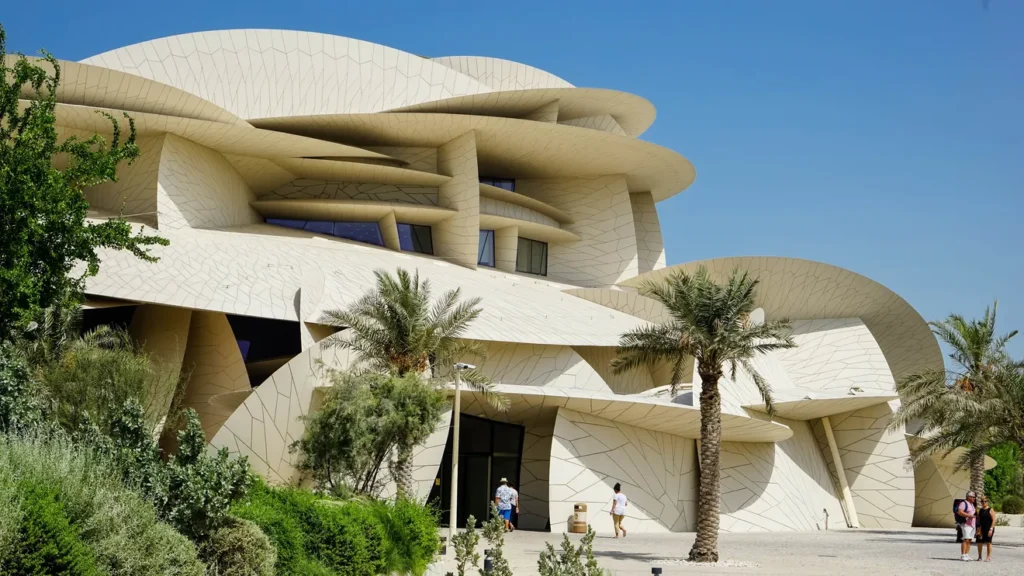
National Museum of Qatar: Jean Nouvel’s “desert rose” structure employs interlocking discs reminiscent of local mineral formations, framing immersive spaces with minimal surface embellishment but profound cultural symbolism.
Museum of Islamic Art: I.M. Pei distills centuries of Islamic architectural language into crystalline forms, harnessing sharp angles, voids, and filtered light to create a sense of ascetic grandeur.
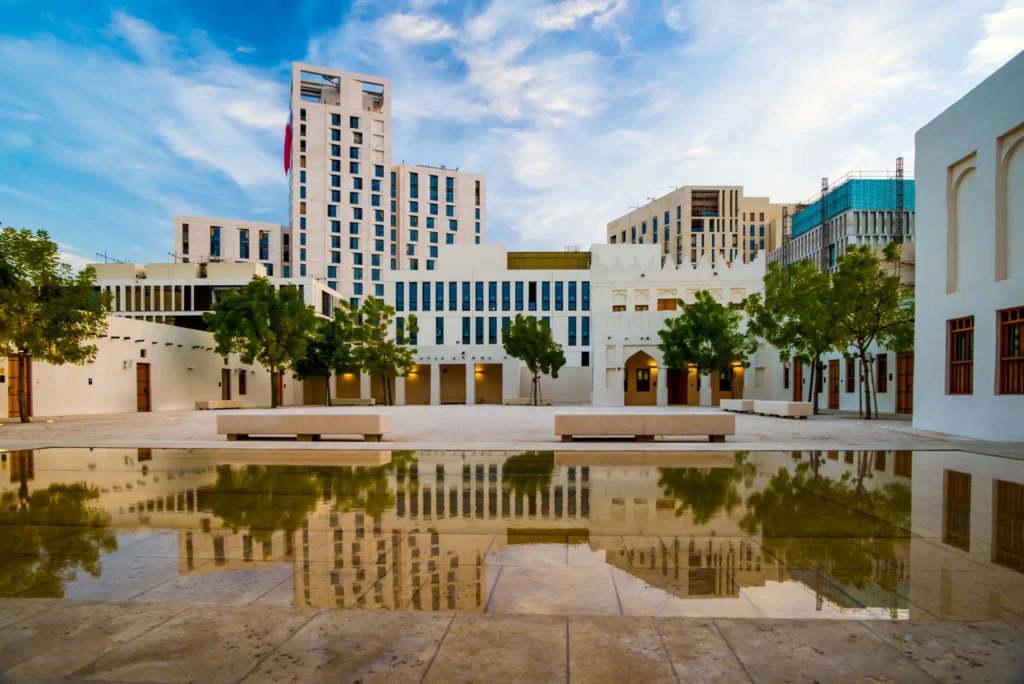
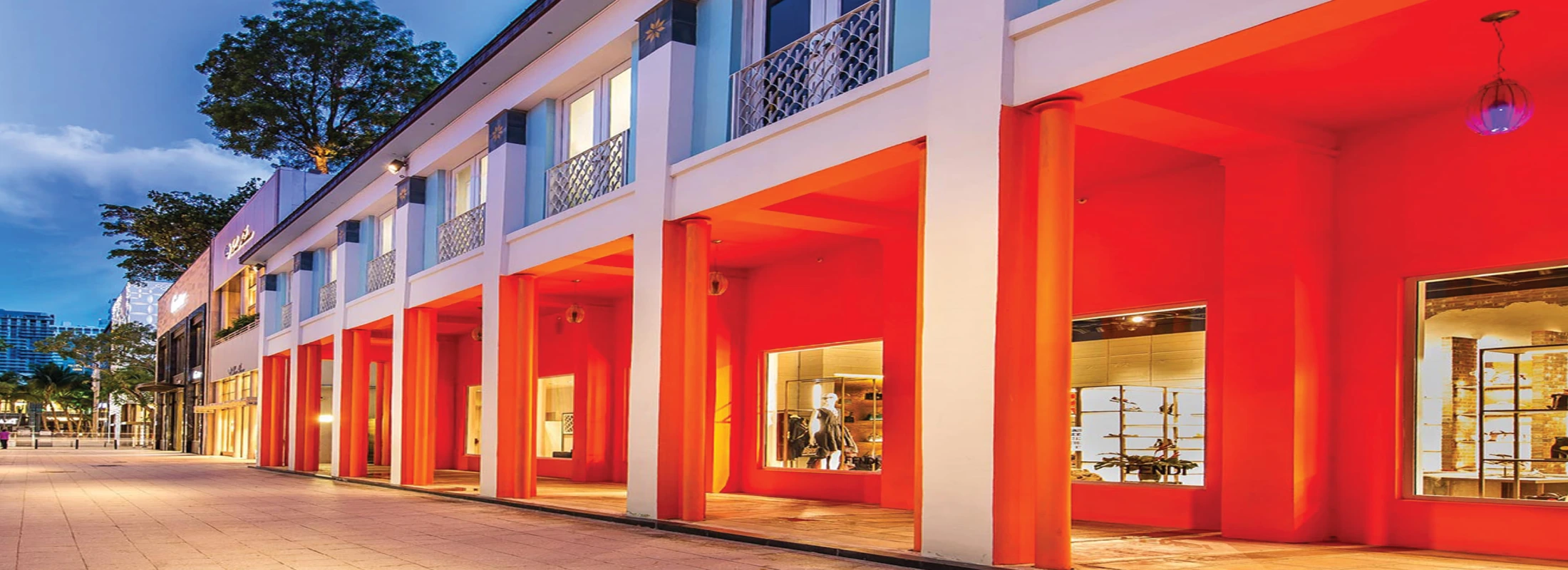
Msheireb Downtown Doha: The world’s first sustainable downtown regeneration project, this district fuses contemporary ecological principles with Qatari architectural motifs: colonnaded walkways, inner courtyards, and intricate shade structures rendered in a minimalist palette.
Private Residences and Hospitality: The Quiet Power of Bespoke Luxury
Middle Eastern luxury interiors within Doha’s residences and hotels have evolved alongside public architecture. Luxury villas in The Pearl, Katara, and Lusail draw from Gulf Minimalism by favoring open-plan layouts, serene color stories, and artisan-crafted focal points. Notable private designers and international studios have redefined opulence as:
-
Tailored, one-of-a-kind furnishings crafted by local artisans
-
Understated, museum-quality art collections integrated into living spaces
-
Perfumed gardens, shaded courtyards, and water features that evoke traditional majlis hospitality in a contemporary idiom