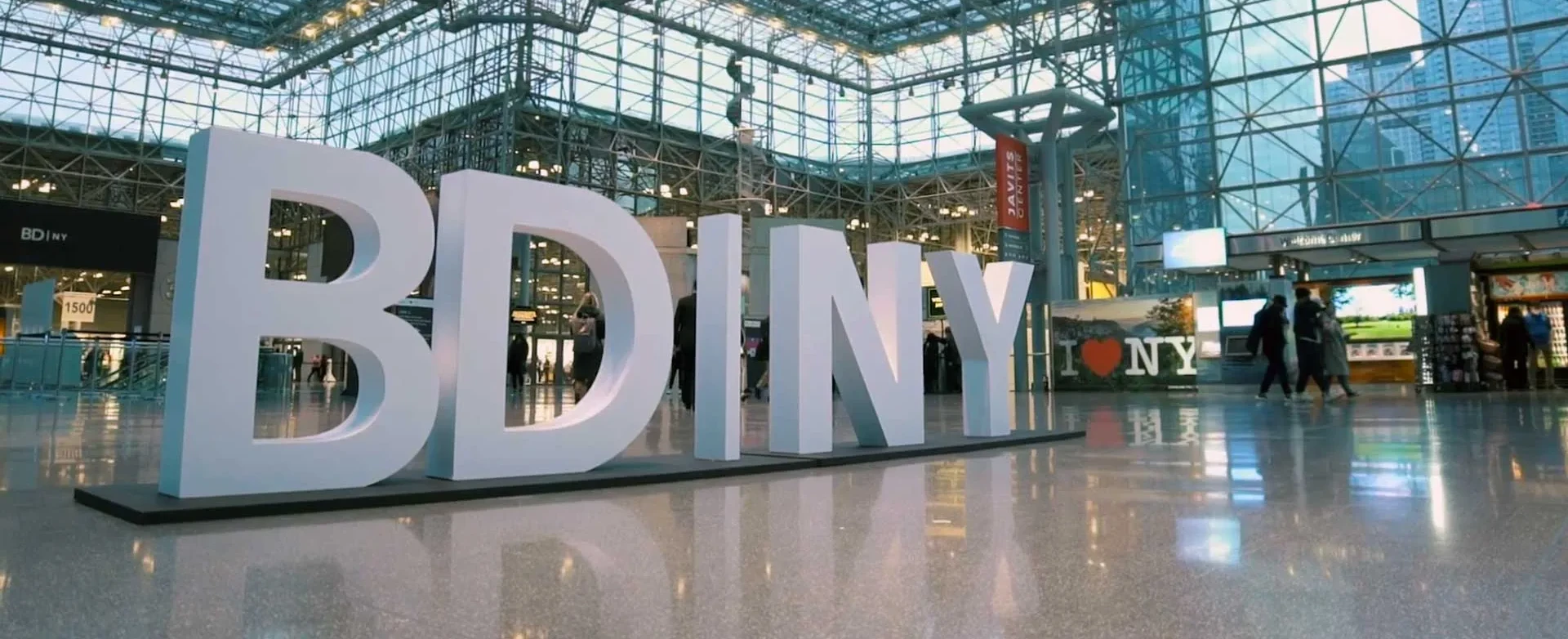
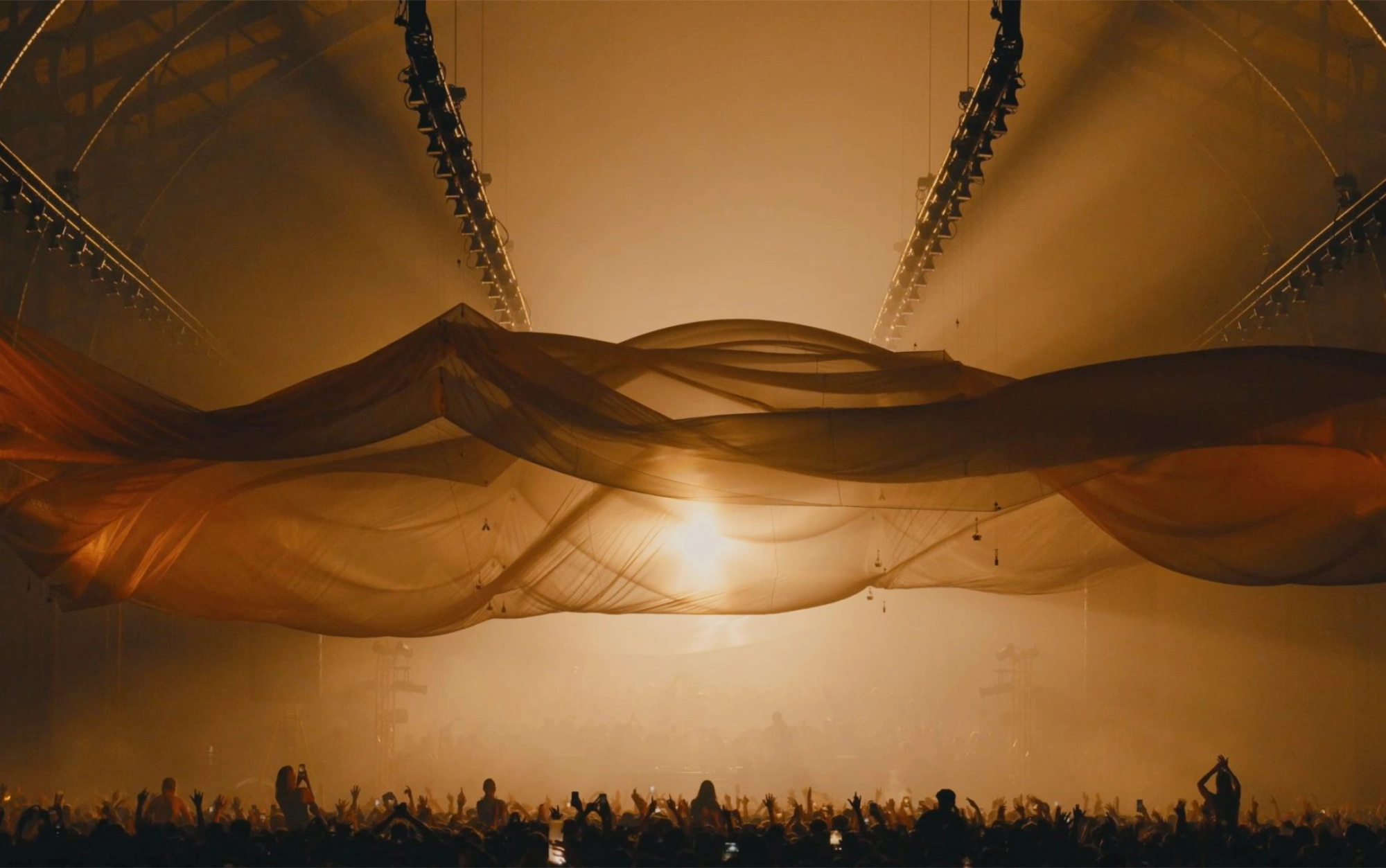
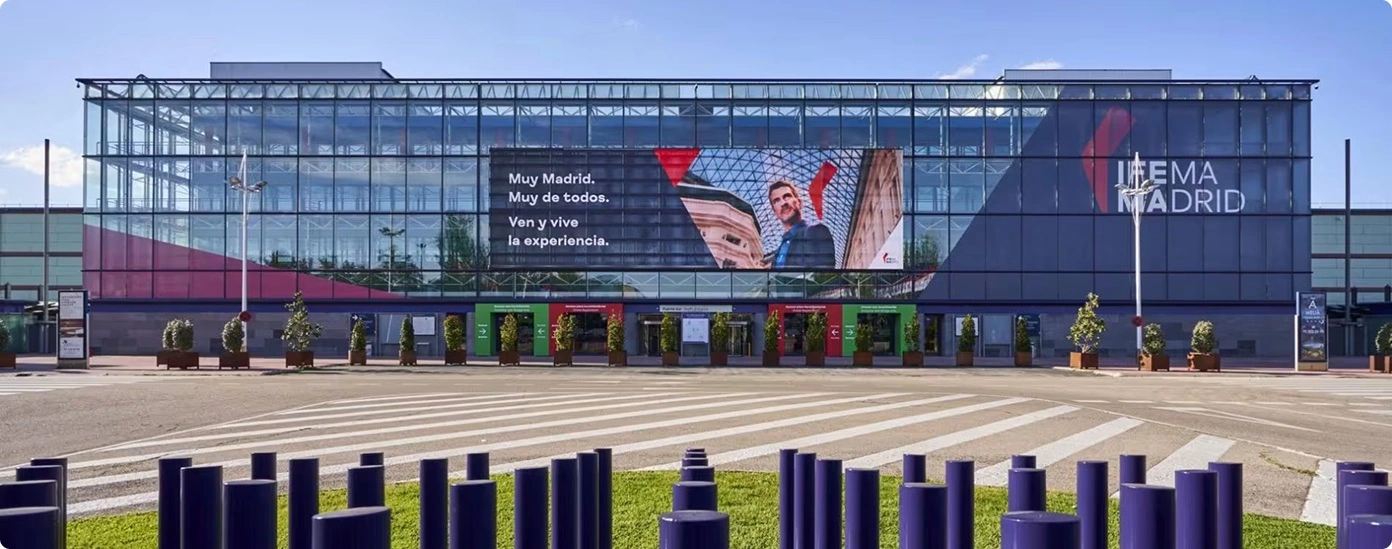
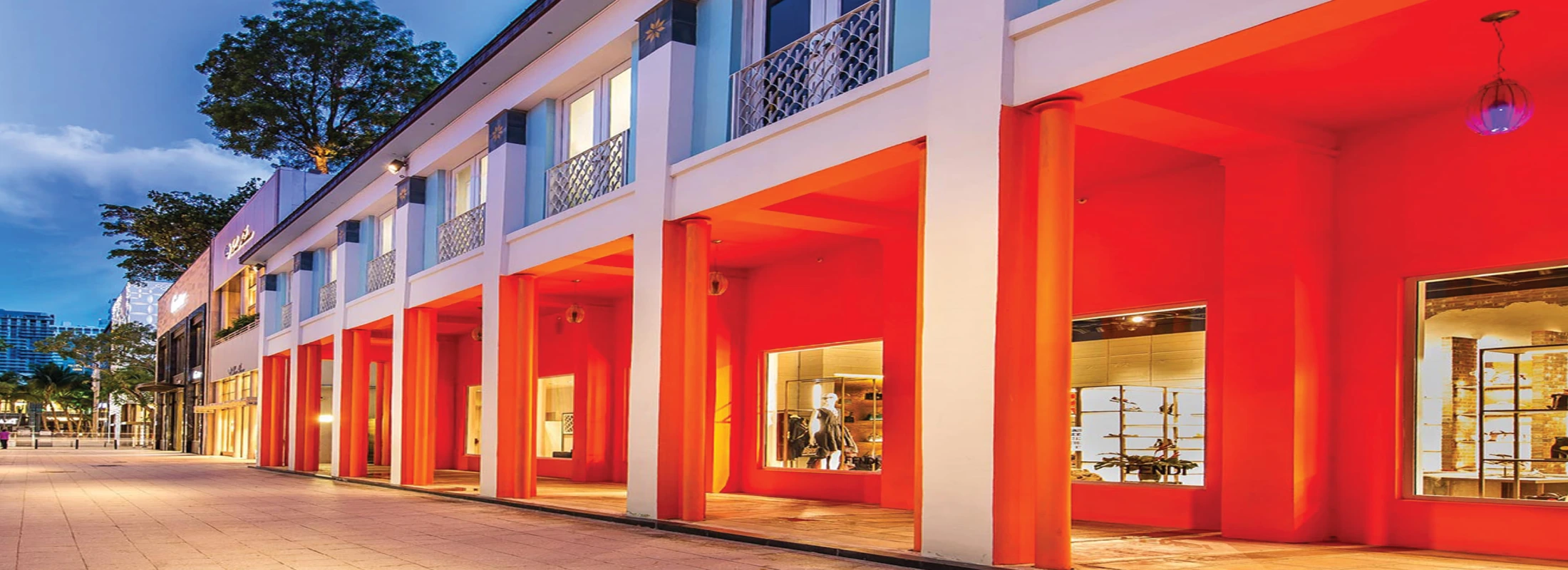
What makes a hotel worth remembering? Sometimes, it is the comfort of a thoughtfully designed chair, the atmosphere of a restaurant, or a terrace that encourages guests to linger. Boutique Design New York, known as BDNY, brings these details into focus. Returning to Manhattan on November 8–9, 2026, this annual event connects hospitality professionals with the products, people, and ideas that help distinctive places take shape. Moreover, its combination of exhibitions and discussions gives visitors a practical reason to look beyond appearances. For professionals exploring international trade fairs, BDNY offers a focused setting for discovery, while Mediterrazza’s planned participation brings outdoor living into the conversation.
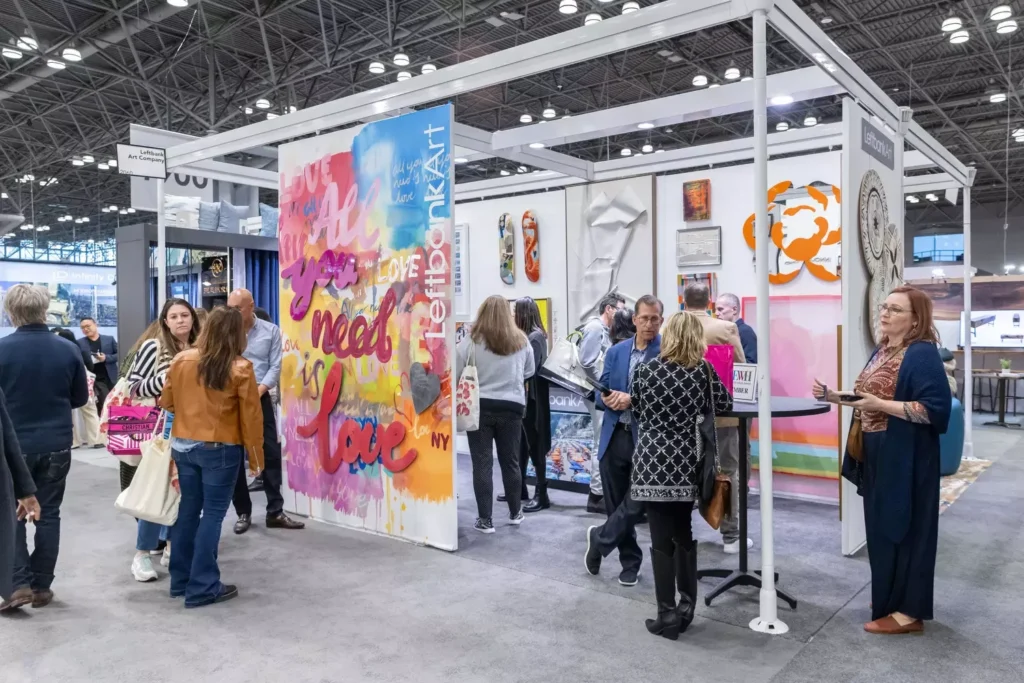
Leftbank Art brings color and creativity to BDNY 2026, captivating visitors with bold contemporary works and expressive design. Image courtesy of BDNY.
Boutique Design New York Details
Boutique Design New York is a hospitality trade fair and conference that connects designers, architects, purchasing professionals, hotel owners, developers, and manufacturers. In particular, it serves teams creating boutique hotels, restaurants, and other environments where design directly shapes the guest experience. As a result, this annual event combines creative discovery with practical sourcing and professional education.
Trade show name: Boutique Design New York, commonly abbreviated as BDNY.
Edition: BDNY 2026. The official materials reviewed identify the event by year; a numbered edition has not been independently verified for this article.
Dates: Sunday, November 8, and Monday, November 9, 2026.
Venue: Jacob K. Javits Convention Center, 429 11th Avenue, New York, NY 10001.
Trade fair opening hours: 10:00 a.m. to 5:00 p.m. on both days, local New York time.
Next announced edition: November 8–9, 2026. Dates for the following 2027 edition were not confirmed in the official materials reviewed.
The organizer confirms the exhibition dates and hours on its About and Hours page. However, conference sessions and separately ticketed gatherings may follow different schedules. Therefore, visitors should check each activity individually when planning their time at this annual event.
What to confirm before traveling
This preview reflects official information reviewed on September 30, 2026. Programs, speaker assignments, and availability can change before the exhibition opens. Consequently, anyone comparing trade fairs or arranging international travel should revisit the current agenda and registration terms before making final bookings.
In addition, distinguish a confirmed event detail from a general planning suggestion. The dates and opening hours above come from the organizer. By contrast, the sourcing questions and itinerary recommendations throughout this article offer editorial guidance for making a visit more productive.
Why BDNY Matters Among International Trade Fairs
The value of trade fairs lies partly in what a screen cannot communicate. For example, a photograph can describe a chair’s silhouette, but it cannot reveal the support of its backrest or the feel of its upholstery. Similarly, a digital sample cannot fully explain how a surface responds to changing light.
BDNY offers an opportunity to investigate those details within a hospitality context. Moreover, this annual event connects product discovery with discussions about the decisions behind completed spaces. Visitors can therefore approach the exhibition with both creative ambition and practical questions.
Where design intent meets everyday use
A hotel interior must create a strong first impression while supporting daily life. Guests need comfortable seating, intuitive circulation, useful lighting, and a sense of welcome. Meanwhile, operating teams need furniture and finishes that support cleaning, maintenance, and replacement.
For that reason, productive conversations at trade fairs often begin after the initial visual attraction. How does a finish respond to frequent cleaning? Can a manufacturer replace an individual component? Furthermore, will a custom dimension affect production time or introduce additional approvals?
These questions help turn inspiration into a credible specification. At the same time, comparing suppliers reveals different approaches to the same brief. One solution may prioritize flexibility, whereas another may offer stronger material character. Ultimately, the right choice depends on the property’s identity and operational needs.
Relevance beyond boutique hotels
Hospitality also offers useful lessons for residential designers and private clients working through professional teams. For instance, a carefully planned suite can suggest better bedroom lighting. Likewise, a welcoming hotel lounge can demonstrate how furniture placement supports conversation without sacrificing privacy.
However, translating those lessons requires judgment. A private residence and a commercial property do not share identical requirements. Specialized trade fairs allow visitors to explore these differences directly with the people who design, manufacture, purchase, and operate.
Previous edition context: understanding the scale
According to BDNY’s official exhibitor information, the 2025 edition recorded 16,104 total attendees, 10,857 preregistered qualified attendees, and representation from 53 countries. Importantly, these are distinct measures rather than interchangeable visitor totals. They provide context for the previous annual event, not a forecast for 2026.
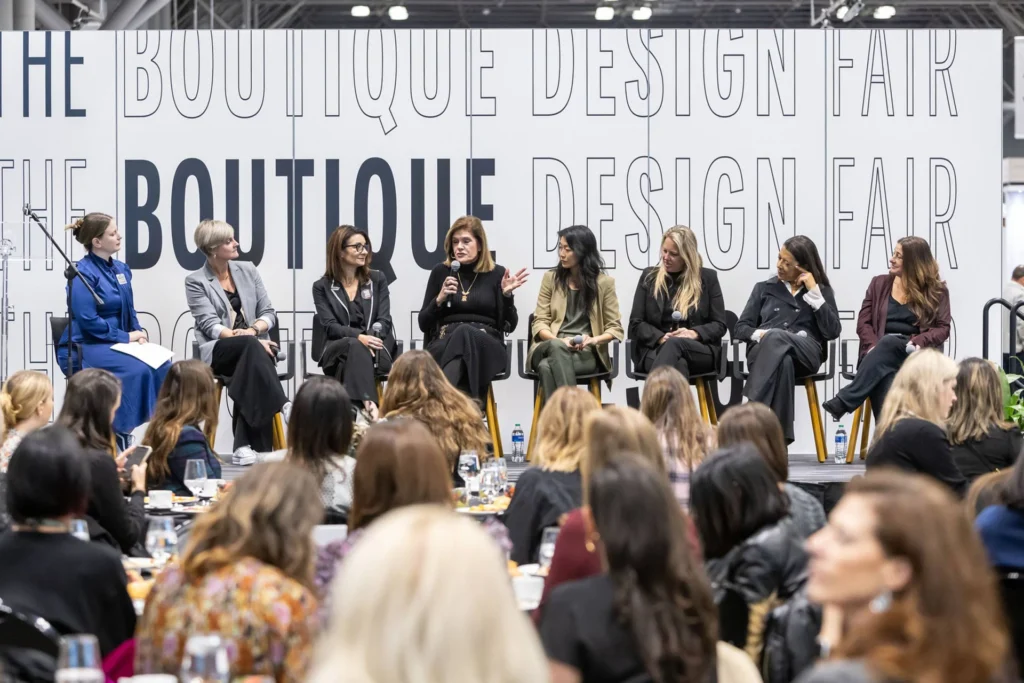
Design visionaries exchange ideas on innovation and hospitality at the Boutique Design Fair, BDNY 2025, New York. Image courtesy of Sleeper Magazine.
The most useful discovery at an annual event may be a better question: how will this object, material, or space serve the people who use it every day?
Meet the Speakers
The published 2026 program brings together professionals from architecture, interiors, hotel brands, and development. Accordingly, the following selection introduces speakers whose announced sessions connect directly with the themes explored below. This is a curated selection, not the complete roster. For further updates, consult the official BDNY speaker directory.
Christian Schnyder, Beleco
Christian Schnyder, principal of Beleco, appears in the accelerated hotel delivery discussion. His participation adds an interior design perspective to a session that also considers development and procurement. Consequently, visitors can examine how creative decisions interact with schedules and project coordination.
Anna Peretz, Sonesta Hotels
Anna Peretz, director of architecture, design, and construction at Sonesta Hotels, also joins the fast track hotel session. Her role connects the discussion to a hotel company’s design and construction priorities. In addition, that perspective helps frame the annual event around implementation as well as inspiration.
Chris Sommers, Harken Interiors
Chris Sommers, partner and cofounder of Harken Interiors, features in the discussion on design quality and budget. For teams facing difficult specification choices, the subject offers a useful starting point. In particular, it encourages closer consideration of where investment will have the greatest impact.
Kai Uwe Bergmann, BIG
Kai Uwe Bergmann, partner at BIG, Bjarke Ingels Group, leads a session exploring hospitality through international projects. His contribution broadens the conversation from individual objects to architecture, landscape, and destination experience. As a result, architects can connect detailed sourcing with larger spatial questions.
Alison Sobeck, Marriott
Alison Sobeck, director of interior design for the United States and Canada at Marriott, appears in the Women Leaders in Hospitality Breakfast lineup. Meanwhile, the gathering places leadership and professional exchange alongside the exhibition program. It therefore offers another dimension to the annual event.
Boutique Design New York Talks and Program
The announced agenda gives this annual event a practical emphasis through discussions of delivery, budgets, leadership, and hospitality experience. However, visitors should treat the following selection as a planning guide rather than a fixed timetable. All times are local to New York; reconfirm session details before attending.
Accelerated hotel delivery: connecting design and execution
Sunday, November 8, 11:00 a.m. to noon, Main Stage. The fast track hotel session examines how teams can coordinate design, procurement, and fabrication to shorten delivery schedules. Listed participants include Christian Schnyder of Beleco, Anna Peretz of Sonesta Hotels, and Dane Patunoff of KHP Capital Partners.
The organizer lists one CEU credit and conference pass access. Therefore, review the official session details before choosing a registration category.
For design teams, the useful question is where earlier coordination can prevent later compromise. For example, bring a specific concern about sample approval, custom production, or installation sequencing. Concrete questions can make discussions at trade fairs more relevant to an active project.
Design quality within a defined budget
Sunday, November 8, 1:00 to 1:45 p.m., One Night Only, booth 255. The session “Does Great Design Need a Big Budget?” includes Chris Sommers of Harken Interiors. Its published outline considers how material choices and focused investment can create memorable environments.
This theme also provides a useful lens for exploring the exhibition. Rather than giving every specification equal attention, identify the elements that guests experience most directly. For instance, a comfortable seat or well positioned light may justify greater investment than a decorative feature with limited practical value.
Consequently, trade fairs become places to test priorities, not simply discover products. Comparing alternatives in person helps distinguish a meaningful improvement from an expensive change that contributes little to the overall experience.
Hospitality through an international architectural lens
Sunday, November 8, 3:30 to 4:30 p.m., Main Stage.Kai Uwe Bergmann of BIG presents an international exploration of hospitality connecting architecture with food, nature, culture, and travel. The official listing specifies conference pass access and one CEU credit.
For The Handcrafted Living, the editorial interest lies in the relationship between place and experience. A destination gains depth when architecture responds thoughtfully to its surroundings. Similarly, an interior becomes more convincing when its materials and details support a clear sense of place.
These ideas offer a useful measure for evaluating discoveries at the annual event. Instead of asking only whether a product looks appealing, consider whether it belongs within the story of the project.
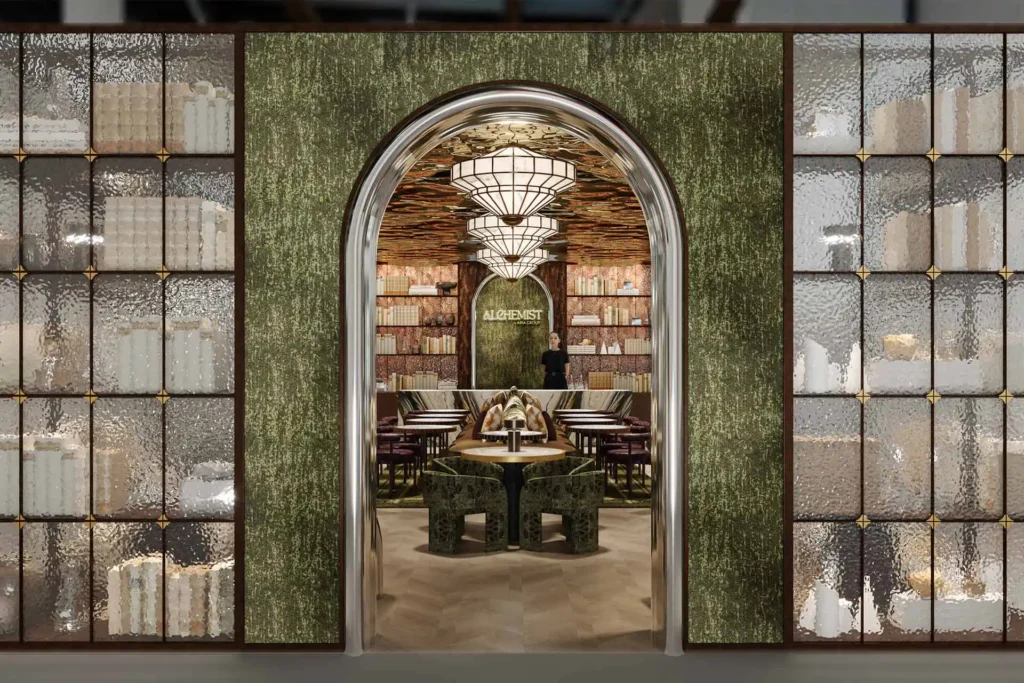
The Alchemist Bar installation at BDNY 2025 blends craftsmanship and imagination, offering a sensory journey through design and hospitality. Image courtesy of Sleeper Magazine.
Women Leaders in Hospitality Breakfast
Monday, November 9, 9:00 to 10:30 a.m., River Pavilion. The announced lineup includes Alison Sobeck of Marriott, Jaclyn Moser of Harken Interiors, and Kiko Singh of DLR Group, among other participants.
A separate special event ticket is required and includes a seated breakfast. Accordingly, check the official breakfast listing for availability and the complete lineup.
Connect the program with your project needs
A crowded schedule can reduce the value of trade fairs. Therefore, select discussions that address current questions, then allow time to investigate those ideas with exhibitors. In this way, the conference and exhibition become complementary parts of the same visit.
Mediterrazza and the Outdoor Hospitality Experience
Mediterrazza will participate in Boutique Design New York 2026, according to information supplied to The Handcrafted Living for this preview. However, an independently verified booth number and exhibition product list were not available at the time of writing. Visitors should therefore confirm those details directly with the brand before arranging a meeting.
The relevance of Mediterrazza to this annual event rests on its focus on outdoor furniture for residential and hospitality settings. Its published offering includes seating, dining furniture, sunbeds, and parasols. In addition, the brand describes bespoke development involving dimensions, materials, and finishes.
These details describe the company’s general offering. They do not confirm which products Mediterrazza will display at BDNY. Nevertheless, they establish a relevant starting point for conversations about terraces, poolside environments, and outdoor dining.
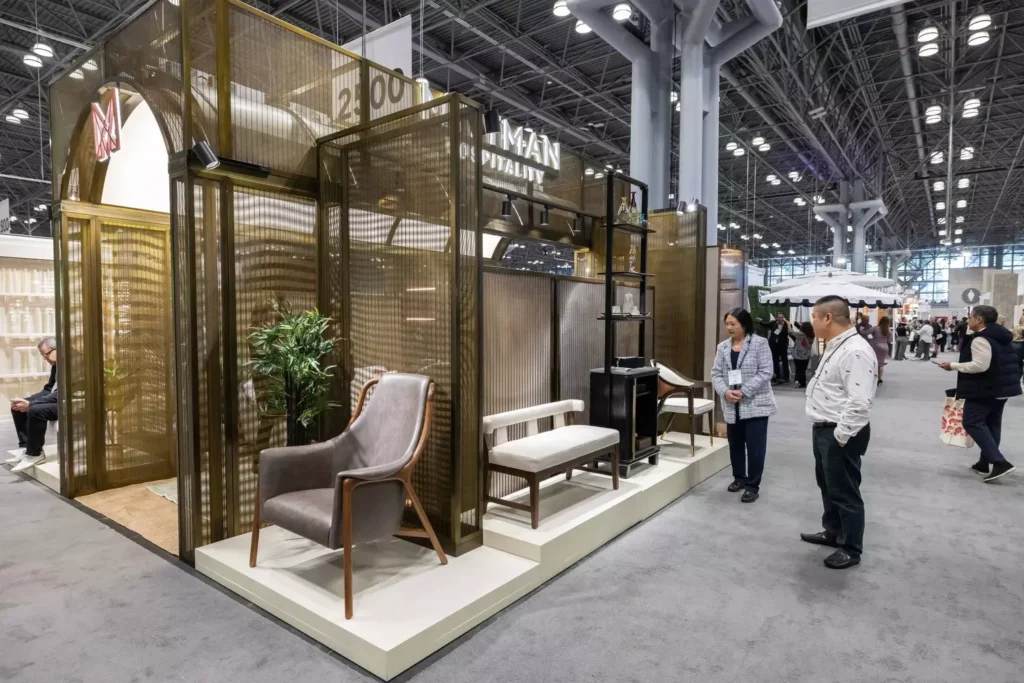
IMAN Hospitality presents refined furniture and design innovation at BDNY 2026, blending elegance and functionality for the modern hospitality space. Image courtesy of BDNY.
Consider the terrace as part of the whole property
An outdoor space deserves the same clarity of purpose as an interior room. For example, a terrace for morning coffee requires different furniture relationships from an evening dining area. Likewise, a poolside setting must accommodate movement, privacy, shade, and everyday service.
Mediterrazza’s participation creates an opportunity to explore these questions within the wider hospitality conversation. At trade fairs, products often appear as individual objects. However, the more useful exercise is to imagine how they will function together throughout a typical day.
Consider a dining chair alongside its table, the available circulation space, and the surface beneath it. Then assess a lounge arrangement from both the guest’s viewpoint and the service route. As a result, visual judgments become more closely connected to practical use.
Questions to bring to a Mediterrazza meeting
A concise project brief will make discussions at this annual event more productive. First, identify the location, intended use, approximate quantities, and installation period. Next, investigate the product specific details that could affect suitability.
Exposure: Which materials and finishes suit the project’s sun, rain, humidity, or coastal conditions?
Maintenance: What cleaning routines and seasonal storage does each proposed item require?
Customization: Which changes are possible, and how will they affect approvals, cost, and delivery?
Documentation: What testing, warranty, and commercial use information supports the specification?
Long term care: Can the supplier provide replacement cushions, covers, or components?
These questions do not assume that every product offers identical capabilities. Instead, they help establish suitability before a team commits. The same approach applies across trade fairs, particularly when an attractive display makes it easy to overlook unanswered technical questions.
Outdoor luxury begins with the experience of being there: a comfortable seat, useful shade, enough space to move, and materials that suit the setting.
How to Register for Boutique Design New York
Registration for BDNY 2026 is open. Begin with the organizer’s registration and pricing page, which links to the official booking process. Before proceeding, check your professional category because eligibility and prices depend on the registration type.
Registering as a visitor
First, establish your purpose. Decide whether you need exhibition access, accredited conference sessions, or both.
Next, choose the appropriate pass. Compare its dates and inclusions with your intended itinerary.
Provide accurate professional details. Select the category that reflects your role and prepare credentials if requested.
Then add separate activities where necessary. Do not assume a conference pass includes every breakfast or special event.
Finally, review the terms before payment. Save your confirmation and follow the organizer’s badge instructions.
For the main qualifying professional category, published advance prices through October 14 are $205 for a two day Trade Fair Pass, $330 for a two day Full Conference Pass, and $255 for a One Day Conference Pass.
From October 15, standard prices increase to $305, $530, and $405 respectively. Meanwhile, early bird pricing ended on August 31. Therefore, verify your category, current rate, and checkout total before purchasing admission to the annual event.
Registering as an exhibitor
Companies wishing to exhibit should use the official Exhibit and Inquire page. An attendee registration does not secure exhibition space. Instead, contact the sales team to discuss suitability, available locations, participation costs, and contractual requirements.
Before making an inquiry, prepare a concise presentation of your products and their hospitality relevance. In addition, establish who will manage logistics, installation, staffing, and follow up. Trade fairs require coordinated planning well beyond the appearance of a stand.
A universal final exhibitor application deadline was not confirmed in the materials reviewed. Consequently, ask about remaining availability and the deadlines that apply to your agreement. After acceptance, consult the Exhibitor Resource Center for operational guidance.
Who should consider attending?
This annual event primarily serves professionals involved in hospitality design and delivery. In particular, architects, interior designers, purchasing teams, developers, and hotel representatives form its core audience. Manufacturers, however, should investigate exhibition opportunities and supplier registration rules rather than assuming buyer category access.
Tips before registering
First, build a realistic budget that includes accommodation, transportation, and optional activities. Then compare the value of a one day visit with two days of access. International visitors should also allow enough time to organize travel documentation independently of event registration.
How to Make Your Visit More Valuable
Successful visits to trade fairs begin with a clear brief. For example, identify three outcomes: a shortlist of outdoor suppliers, a guestroom lighting solution, and a better understanding of procurement timing. These priorities give the annual event structure while leaving room for discovery.
Balance scheduled meetings with open exploration
Arrange conversations that require preparation, especially when discussing custom work. However, leave gaps between appointments so that you can compare alternatives or follow an unexpected lead. An overly rigid itinerary can make a promising discovery difficult to explore.
Use the official exhibitor list and floor plan to group visits efficiently. Similarly, verify Mediterrazza’s booth location directly once available. Avoid relying on a previous edition’s layout when planning meetings for this annual event.
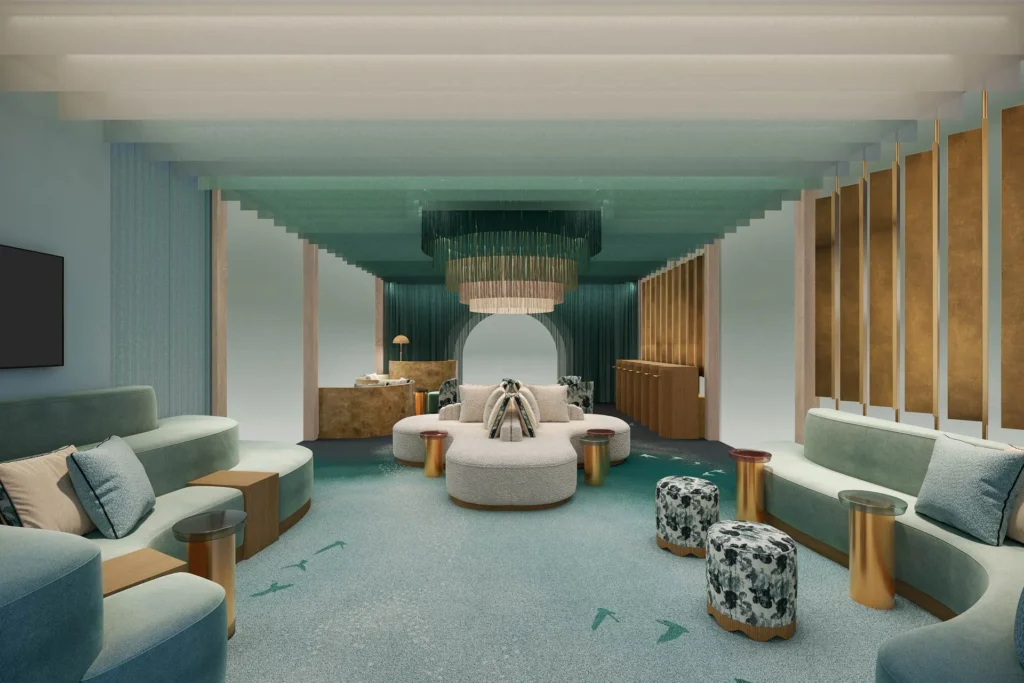
The BDNY 2024 hospitality lounge concept merges sculptural design and serene color palettes to redefine modern luxury. Image courtesy of Sleeper Magazine.
Record decisions, not just images
Photographs help recall a product, but useful notes explain why it matters. Therefore, record the intended application, relevant dimensions, available finishes, and next step. Also, ask permission before photographing displays or proprietary details.
After each conversation, separate confirmed information from items that need written follow up. For instance, a verbal estimate is not a final quotation. Likewise, an appealing sample does not establish availability for a specific quantity or installation date.
Turn the visit into a working shortlist
After returning, organize discoveries into three groups: ready for further specification, promising but incomplete, and unsuitable for the current brief. This approach helps trade fairs produce practical outcomes instead of an archive of unused inspiration.
Next, request missing documents from priority suppliers and assign a decision date. Finally, share relevant findings with colleagues who could not attend. In this way, the annual event contributes to the team’s work rather than remaining an individual experience.
Frequently Asked Questions
When and where does BDNY 2026 take place?
BDNY takes place November 8–9, 2026, at the Javits Center in New York. Exhibition hours run from 10:00 a.m. to 5:00 p.m. each day. However, some separately scheduled activities begin before the fair floor opens, so check individual listings.
What is the registration deadline?
The published schedule lists advance rates through October 14 and standard rates from October 15 through November 9. However, these dates do not guarantee availability for every activity. A separate final online registration cutoff was not confirmed in the reviewed information.
Does a Trade Fair Pass include all talks?
No. BDNY distinguishes free fair floor sessions from CEU-accredited conference sessions, which require an appropriate conference pass. In addition, certain special events require separate tickets. Therefore, check the access requirements for each activity before purchasing.
Where should visitors book accommodation?
BDNY names EvolveCon as its official and exclusive housing partner for 2026. Start with the organizer’s hotel booking page. Then compare location, cancellation terms, and the complete stay cost. A universal hotel booking deadline was not confirmed on the reviewed page.
What parking arrangements apply?
BDNY specific parking allocations, reservations, and rates were not confirmed in the reviewed materials. Consequently, consult the Javits Center website for current visitor guidance. Also, verify any garage reservation directly with its operator and allow additional arrival time.
How can visitors arrange accessibility support?
Discuss individual requirements with both the organizer and venue before traveling. In particular, confirm step free access, suitable entrances, seating, and any mobility equipment needs. The reviewed pages did not establish a complete 2026 accessibility service schedule. Therefore, use the BDNY contact page for event-specific assistance.
Is BDNY suitable for the general public?
This annual event focuses on professional hospitality design. Accordingly, private design enthusiasts should confirm eligibility before purchasing admission or arranging travel. An interest in interiors alone does not establish eligibility for a professional registration category.
What should first time visitors bring?
Bring your registration confirmation, relevant identification, a charged phone, and concise project information. In addition, choose comfortable footwear for a full day of meetings. For sourcing focused visits to trade fairs, a simple note template can prove more useful than collecting every brochure.
Will Mediterrazza exhibit new products?
Mediterrazza’s participation forms part of the information supplied for this preview. However, a verified exhibition product selection, launch schedule, and booth number were not available. Contact the brand directly for updates rather than assuming its full online collection will appear.
Looking Ahead to Boutique Design New York
Boutique Design New York offers an opportunity to consider what hospitality should feel like and how teams can deliver that experience. Its announced program connects architectural ambition with budgets, schedules, and leadership. Meanwhile, the exhibition invites visitors to examine the products that give those ideas physical form.
Mediterrazza’s planned participation adds an outdoor perspective to this annual event. In turn, it encourages a broader view of the property, where terraces, dining areas, and poolside spaces receive the same thoughtful attention as interior rooms.
Ultimately, the lasting value of trade fairs depends on the decisions they support. Arrive with questions, look closely, and allow time for unexpected discoveries. Memorable hospitality begins when a clear idea meets careful execution, and people feel the difference.
Architecture Inspired by Nature’s Geometry: The Intelligence Behind Beautiful Forms
Manage Consent
To provide the best experiences, we use technologies like cookies to store and/or access device information. Consenting to these technologies will allow us to process data such as browsing behavior or unique IDs on this site. Not consenting or withdrawing consent, may adversely affect certain features and functions.
Functional
Always active
The technical storage or access is strictly necessary for the legitimate purpose of enabling the use of a specific service explicitly requested by the subscriber or user, or for the sole purpose of carrying out the transmission of a communication over an electronic communications network.
Preferences
The technical storage or access is necessary for the legitimate purpose of storing preferences that are not requested by the subscriber or user.
Statistics
The technical storage or access that is used exclusively for statistical purposes.The technical storage or access that is used exclusively for anonymous statistical purposes. Without a subpoena, voluntary compliance on the part of your Internet Service Provider, or additional records from a third party, information stored or retrieved for this purpose alone cannot usually be used to identify you.
Marketing
The technical storage or access is required to create user profiles to send advertising, or to track the user on a website or across several websites for similar marketing purposes.