A thoughtful building changes how we experience a place. An intelligent interior makes everyday life more comfortable, while a carefully developed object can challenge familiar assumptions about materials and use. Dezeen Awards brings these different scales of creativity into one international conversation, recognizing architecture, interiors, and design through the work itself and the people behind it.
For architects, interior designers, collectors, and clients, the program offers an opportunity to discover practices beyond established circles. With the Dezeen Awards 2026 shortlists now announced, attention turns to the projects competing for recognition and the qualities that connect them: originality, thoughtful execution, and a meaningful contribution to the way we live.
Editorial update: September 24, 2026. This article includes selected verified finalists and links to the complete official shortlist directories. Shortlisted projects should not be described as winners before the results are announced.
What Are the Dezeen Awards?
Dezeen Awards is an annual international awards program organized by architecture and design publication Dezeen. It recognizes projects across architecture, interiors, and design, alongside the achievements of individual practitioners and studios.
The program began in 2018, making 2026 its ninth edition. Contemporary accounts of the inaugural competition document its international scope and its recognition of both buildings and objects. Heatherwick Studio, for example, was shortlisted that year for the Zeitz MOCAA museum and its Friction table.
Although it occupies an important place in the international design calendar, this is an awards program rather than a conventional trade fair. Participation centers on submitting work for evaluation, followed by published selections and an awards celebration.
For readers of The Handcrafted Living, its relevance lies in this breadth. A private residence, a public institution, a hospitality interior, and a piece of furniture can all contribute to a richer understanding of contemporary living. The official Dezeen Awards website brings these disciplines together.
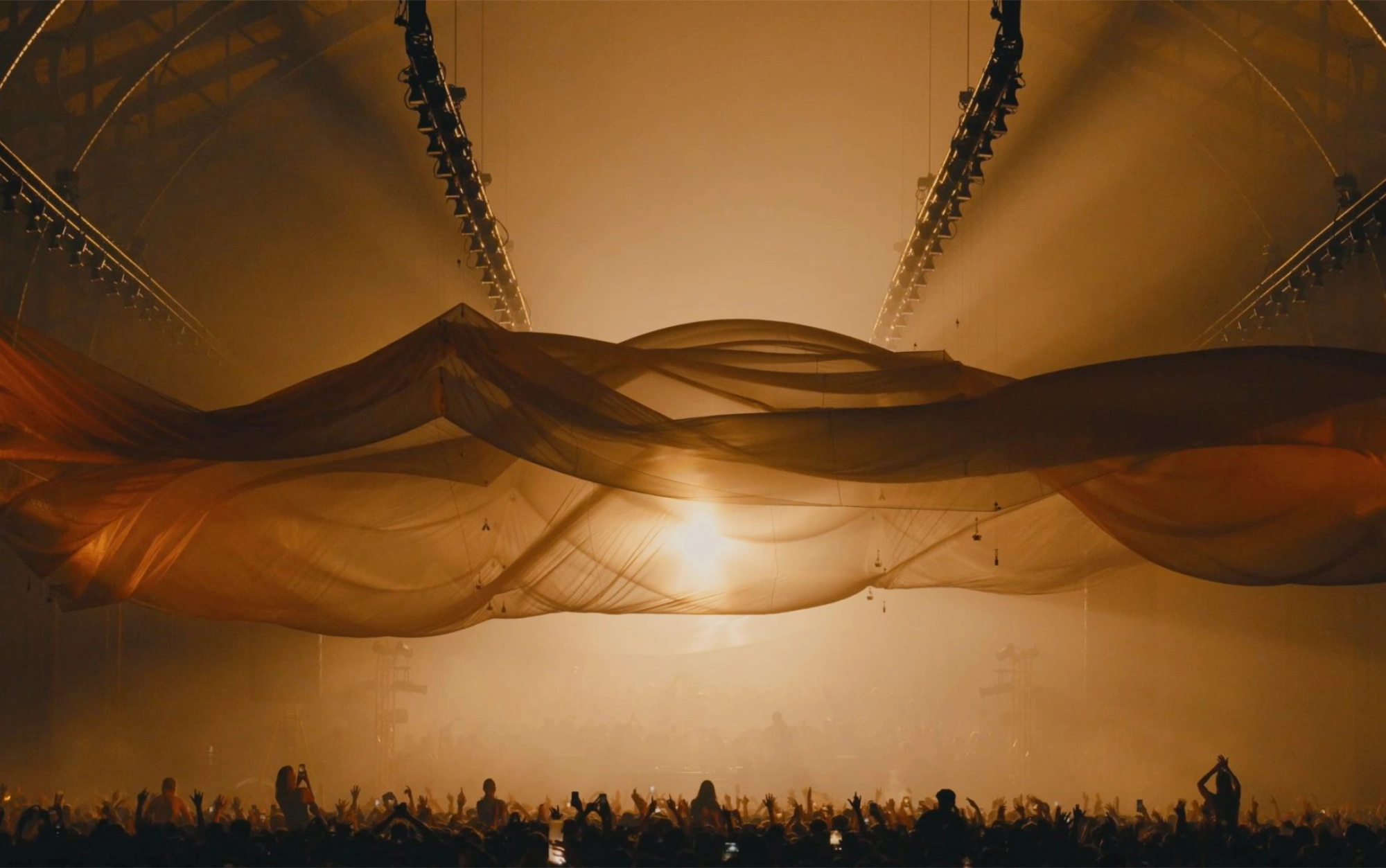
An atmospheric view of the Dezeen Awards 2025 ceremony, celebrating the pinnacle of global architectural and design excellence. Image sourced from https://www.dezeen.com/2025/.
The Purpose and Judging Principles
The awards seek to identify outstanding work and give international visibility to its creators. Their stated assessment framework rests on three principles: beautiful, innovative, and beneficial. These criteria remain part of the 2026 program.
Beauty as a considered design achievement
Beauty becomes more interesting when examined beyond a striking photograph. Proportion, material transitions, spatial clarity, and the handling of light offer useful ways to assess whether a project has depth. For a prospective entrant, these qualities should be visible in the documentation and understandable in the accompanying explanation.
Innovation with a clear purpose
Originality does not always require an unfamiliar shape or an experimental technology. It can emerge through a better plan, a resourceful construction method, or an intelligent response to an overlooked constraint. A strong project explains the problem it addresses and makes the value of its solution clear.
Benefit to people and the environment
The third principle encourages a broader discussion about design quality. Comfort, accessibility, material responsibility, and long term usefulness deserve attention alongside visual appeal. These are also productive questions for clients reviewing shortlisted work.
The Handcrafted Living perspective: The most compelling design connects what we see with what we experience. Its quality becomes clearer through occupation, use, and time.
Dezeen Awards 2026: Key Details and Dates
The Dezeen Awards 2026 program includes 49 project categories: 19 for architecture, 14 for interiors, and 16 for design. The published entry timetable is now complete, and the submission platform confirms that entries are closed.
Organizer: Dezeen.
Edition: Ninth annual edition.
Headline partner: Trimble.
Entries opened: February 11, 2026.
Early entry deadline: March 25, 2026.
Standard entry deadline: May 27, 2026.
Late entry deadline: June 3, 2026.
Deadline time: 11:59 p.m. London time.
Public voting: Scheduled to open October 5, 2026.
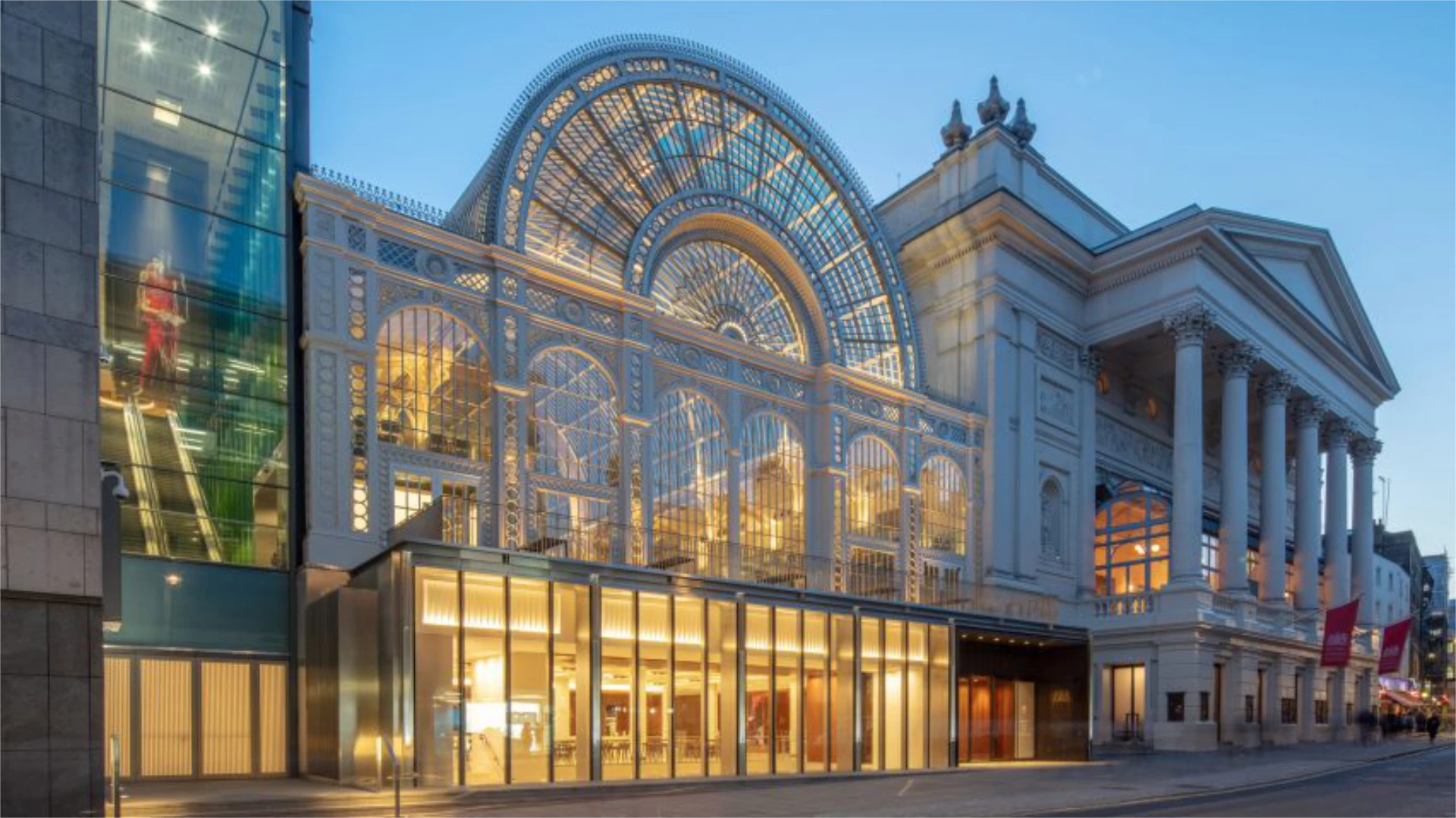
Awards celebration: November 16, 2026, at the Royal Opera House in London.
The entry dates and voting schedule appear in the published competition information, while the shortlist announcements identify the November ceremony date and venue. Consult the official prices and dates page and event ticket information for subsequent updates.
Future entrants should treat these dates as historical reference only. A subsequent edition may change its timetable, fees, eligibility window, or category structure.
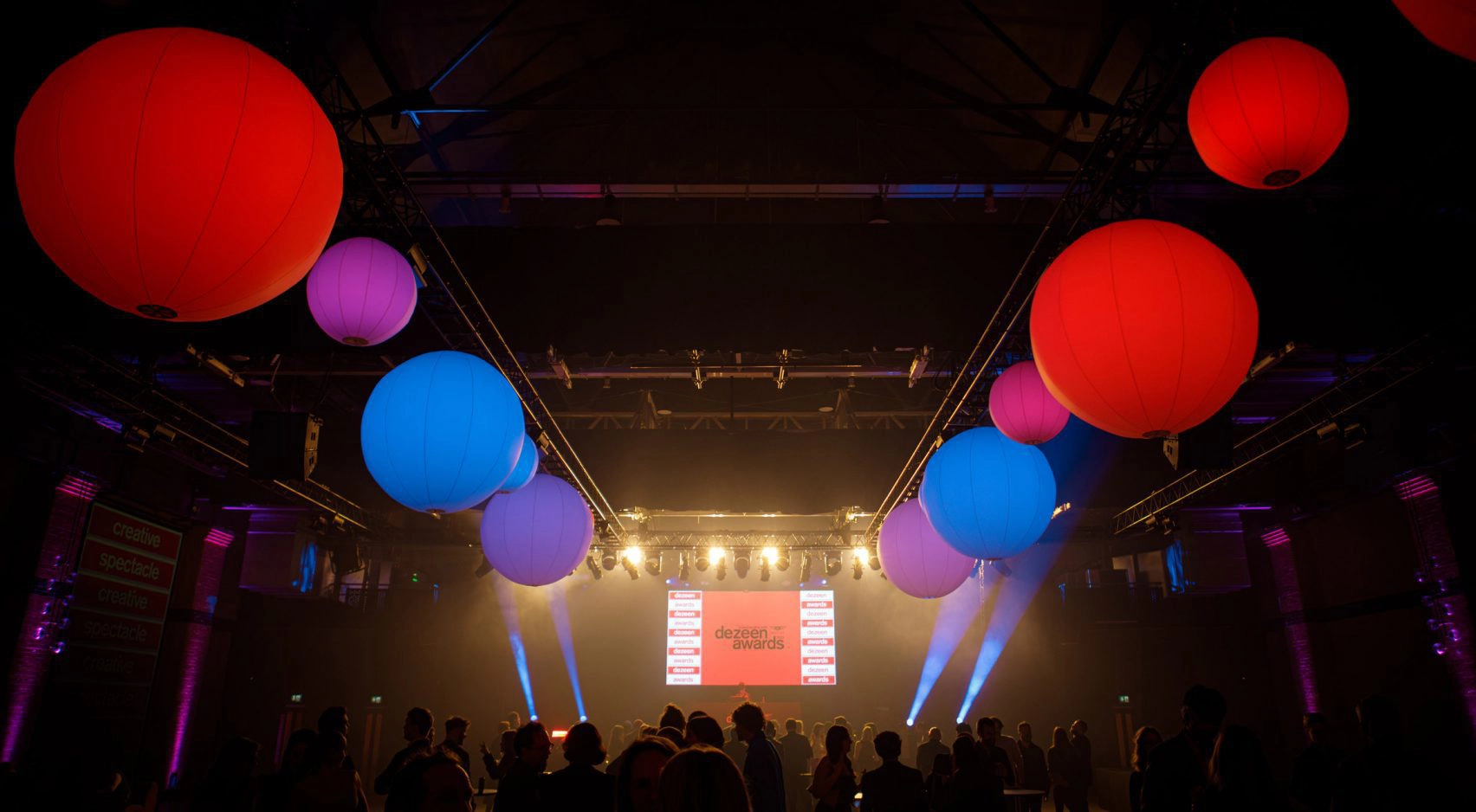
Immersive lighting and monumental glowing spheres set the celebratory atmosphere at the Dezeen Awards 2025. “The party featured a striking and playful show design inspired by the circus” Image sourced from https://www.dezeen.com/2025/12/02/dezeen-awards-2025-party-london/.
What Is New in the 2026 Edition?
Regional Showcases widen the geographical perspective
A significant addition to Dezeen Awards 2026 is the Regional Showcases initiative. Dezeen’s editors select three Top 50 lists covering Europe, the Middle East and Africa; Asia Pacific; and the Americas. Projects entered into the awards could also be entered for consideration in these regional selections.
This offers a useful additional way to explore contemporary practice. Regional context helps readers consider climate, construction culture, and local priorities, rather than viewing every project through the same aesthetic expectations.
Regional recognition and category shortlisting are distinct achievements. A project’s description should identify the specific selection it received.
A new partnership and wider public participation
Trimble announced a three year headline sponsorship beginning with this edition. The 2026 program also includes public voting, opening in October, alongside its professional assessment process.
For readers, this creates different ways to engage with the projects. Jury evaluation invites close professional scrutiny, while public participation opens the conversation to a broader audience. Any eventual coverage should specify which form of recognition a project has received.
The 2026 Finalists: Projects and Official Lists
The Dezeen Awards 2026 shortlists span three principal disciplines. The architecture announcement identifies 152 shortlisted projects across 19 categories. Interiors includes 112 projects across 14 categories, while the organizer’s design announcement identifies 128 projects across 16 categories. These are shortlisted entries, not an inventory of every submission received.
Where to find the complete finalist lists
The official 2026 shortlist directory is the central reference for the complete selections. The following editorial selection highlights residential architecture, interiors, and furniture relevant to the art of living. It is not the complete cross category finalist list.
Architecture: the rural house shortlist
The rural house category provides a focused introduction to the participating architects and their geographical range. Its eight shortlisted projects are:
Casa Plaj, Portugal, by Extrastudio.
Hata Mazanka Guesthouses, Ukraine, by YOD Group.
House under the Pagoda, China, by Studio FSJ.
Jiang Deng Lu, China, by Shisuo Design Office.
Shoreline Studio, Denmark, by Norm Architects.
Simpsons Bay House, Australia, by Dock4 Architects.
South Barn, United Kingdom, by Studio Weave.
Toronjos, Mexico, by PPAA.
These names appear in the published architecture shortlist. Explore the official rural house category for individual project records.
For clients planning a country residence, the value of this selection lies in comparison. Examine how each project addresses arrival, privacy, outdoor space, and its relationship with the surrounding landscape. The most useful inspiration is often a spatial principle that can be adapted to a different setting.
The Scoop by Corstorphine & Wright is shortlisted in the small workplace project category, as confirmed by the practice. Its inclusion broadens the discussion from domestic life to the environments in which people work.
Interiors: two verified projects to explore
The Forest, by Woods Bagot: Shortlisted in the sustainable interior category. The practice identifies it as a University of Tasmania project.
Hotel Indigo Nalati, by CCD / Cheng Chung Design: The studio confirms its place on the interiors shortlist, following its inclusion in the Asia Pacific Regional Showcase.
These projects introduce different questions for interior design. Educational environments invite consideration of shared use and material responsibility. Hospitality spaces raise questions about identity, comfort, and the relationship between a destination and its guest experience.
The published interiors announcement also names Isern Serra, Snøhetta, and YSG among the shortlisted practices. Readers should consult the official directory for the complete project and category records.
Design: the furniture shortlist
The furniture design category includes the following eight finalists:
ADP Bench, by Spacon.
Circulari, by Pablo Castillo Design.
Dado Series, by Allen Kaufmann Objects.
Junnuo, by Yabu Pushelberg.
Mast Shelving System, by Studio Ville Auvinen.
Museum Trolley, by TAF Studio.
Sail Table, by Tom Fereday.
Wa Side Table, by Noo.ma.
The design announcement also includes Hug by Pearson Lloyd for Cozmo in seating design, Lima Charlie by Studio Laurids Gallée in collectible design, and Amoreba by Golem in bespoke design. Together, these selections connect everyday furniture with more exploratory forms of object making.
For collectors and interior designers, an awards shortlist can begin a valuable investigation. Materials, production methods, repairability, and suitability for a particular space remain essential considerations when moving from admiration to specification.
London’s historic Royal Opera House will host the Dezeen Awards 2026 celebration on November 16, merging architectural heritage with global design excellence. Image sourced from https://www.dezeen.com/awards/.
Previous Edition: Lessons from 2025
The previous edition provides useful context for understanding the range of work recognized by Dezeen Awards.
Architecture project of the year: University Children’s Hospital Zurich, by Herzog & de Meuron.
Interiors project of the year: Symbolplus Office, by Symbolplus.
Design project of the year: J39.5, by AtMa.
Portugal also featured among the architecture category winners through Quinta de Adorigo Winery by Atelier Sérgio Rebelo, which received the hospitality project award.
What the previous edition suggests
Our editorial reading of these results is that design excellence operates across very different briefs. Healthcare, workplace design, furniture, and hospitality each demand a distinct response. The useful lesson for architects is to explain the particular achievement of a project rather than imitate the appearance of a previous winner.
For future entrants: Study past winners to understand the clarity of their ideas, the quality of their execution, and the evidence supporting their achievement.
How to Enter a Future Edition
Entries for Dezeen Awards 2026 are closed. Architects and designers preparing for a future edition should monitor the official website for the next announcement. The sources reviewed for this article do not establish confirmed 2027 dates or fees.
The following preparation process is editorial guidance. Exact submission requirements must be checked against the rules published for the edition being entered.
Review eligibility first. Confirm the accepted completion dates, entrant requirements, geographical provisions, and relevant project types before committing resources.
Select the most appropriate category. Read its definition carefully. An accurate fit helps the project’s strengths remain clear within the judging context.
Prepare a concise project argument. Explain the brief, the main constraints, the design response, and the result. Replace broad claims with specific decisions.
Assemble clear visual documentation. Choose photographs and any permitted drawings that explain the project’s organization, materials, details, and use.
Support environmental claims. Where relevant, gather reliable information about retained structures, material sourcing, energy performance, or waste reduction.
Confirm credits and permissions. Check the names of collaborators and photographers, alongside client approval and image publication rights.
Review fees and complete submission. Follow the official platform’s instructions and retain confirmation that the entry has been successfully submitted.
For context, the published 2026 eligibility information specified a project completion window of June 1, 2024, through May 31, 2026. That window must not be assumed to apply to a later edition. Consult the official entry information when planning a submission.
Present the project as a clear argument
A useful entry allows an unfamiliar reader to understand why the work matters. If a renovation preserves an existing structure, explain what was retained and how that shaped the result. If furniture addresses a practical limitation, show the solution in use.
Precision also improves the relationship between words and images. A photograph can establish atmosphere, while a plan may explain circulation more effectively. Each element should contribute information that helps the reader understand the same central idea.
Why the Awards Matter for Design and Living
For The Handcrafted Living, the lasting interest of Dezeen Awards lies in the questions raised by its projects. How can buildings support a more generous daily life? What makes an interior belong to its setting? Which objects deserve a place in our homes over many years?
Architects can use the selections as a comparative resource, examining how other practices resolve familiar challenges. Interior designers can discover collaborators and investigate materials or production approaches. Clients can develop a more informed vocabulary for discussing the spaces they commission.
For property owners and hospitality developers, recognition offers a starting point for examining design quality. The deeper assessment still concerns how a place works: its comfort, adaptability, maintenance requirements, and relationship with its users.
The 2026 edition is therefore best approached with curiosity. Look closely at the projects, read the explanations, and consider the decisions behind the images. That is where an awards list becomes useful editorial knowledge.
Winners of the Dezeen Awards 2025 gather on stage in a triumphant celebration of global design and architectural excellence. Image sourced from https://www.dezeen.com/2025
Frequently Asked Questions
When did Dezeen Awards begin?
The program began in 2018. Its 2026 edition is the ninth annual edition.
Can architects still enter Dezeen Awards 2026?
No. The official entry platform confirms that submissions are closed. Future applicants should wait for the next edition’s published rules and timetable.
Have the 2026 finalists been announced?
Yes. Architecture, interiors, and design shortlists have been published. The lists linked above provide access to the official project records; the examples reproduced in this article are a selected overview.
When will the winners be announced?
The project category winners are scheduled to be announced at the November 16, 2026 celebration at London’s Royal Opera House. Check the official event page for updates before making attendance arrangements.
What should a future entrant prepare now?
Begin with accurate project records, strong photography, complete credits, and a clear explanation of the design’s achievement. Once the next call opens, adapt that material to the confirmed eligibility rules and submission requirements.
Design That Leaves a Lasting Impression
Dezeen Awards 2026 invites us to look beyond first impressions and consider how thoughtful design enriches everyday life. Behind the shortlisted projects are architects and designers exploring how we inhabit spaces, work with materials, and connect with our surroundings. Their work reminds us that design’s deepest achievement is its ability to create places and objects we value, care for, and carry into the future.
World Architecture Festival 2026: Dates, Speakers & Guide
Manage Consent
To provide the best experiences, we use technologies like cookies to store and/or access device information. Consenting to these technologies will allow us to process data such as browsing behavior or unique IDs on this site. Not consenting or withdrawing consent, may adversely affect certain features and functions.
Functional
Always active
The technical storage or access is strictly necessary for the legitimate purpose of enabling the use of a specific service explicitly requested by the subscriber or user, or for the sole purpose of carrying out the transmission of a communication over an electronic communications network.
Preferences
The technical storage or access is necessary for the legitimate purpose of storing preferences that are not requested by the subscriber or user.
Statistics
The technical storage or access that is used exclusively for statistical purposes.The technical storage or access that is used exclusively for anonymous statistical purposes. Without a subpoena, voluntary compliance on the part of your Internet Service Provider, or additional records from a third party, information stored or retrieved for this purpose alone cannot usually be used to identify you.
Marketing
The technical storage or access is required to create user profiles to send advertising, or to track the user on a website or across several websites for similar marketing purposes.