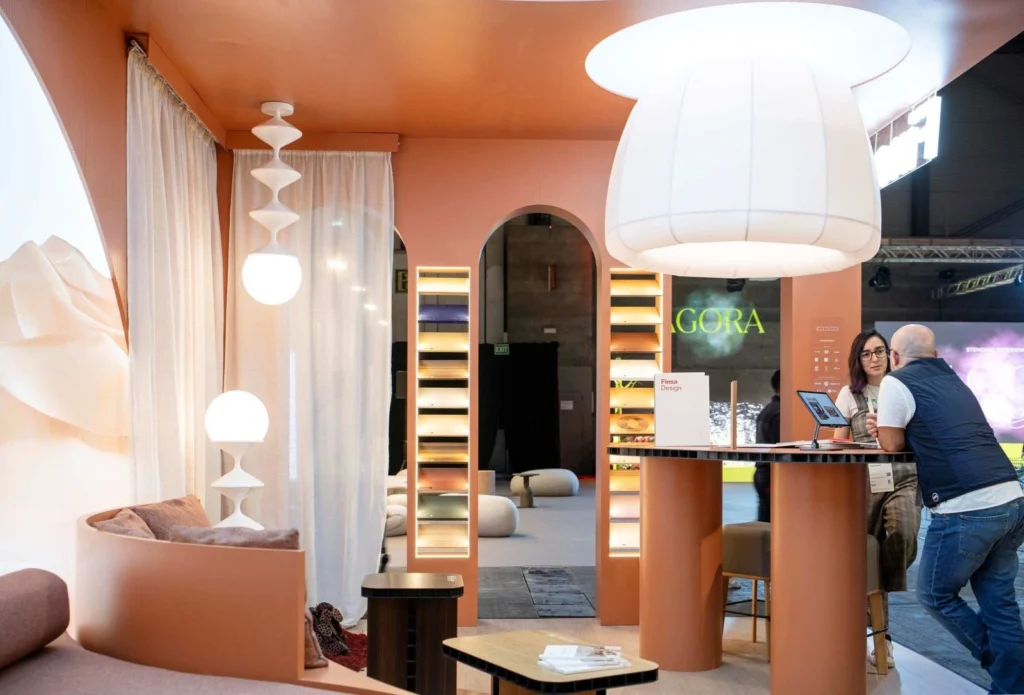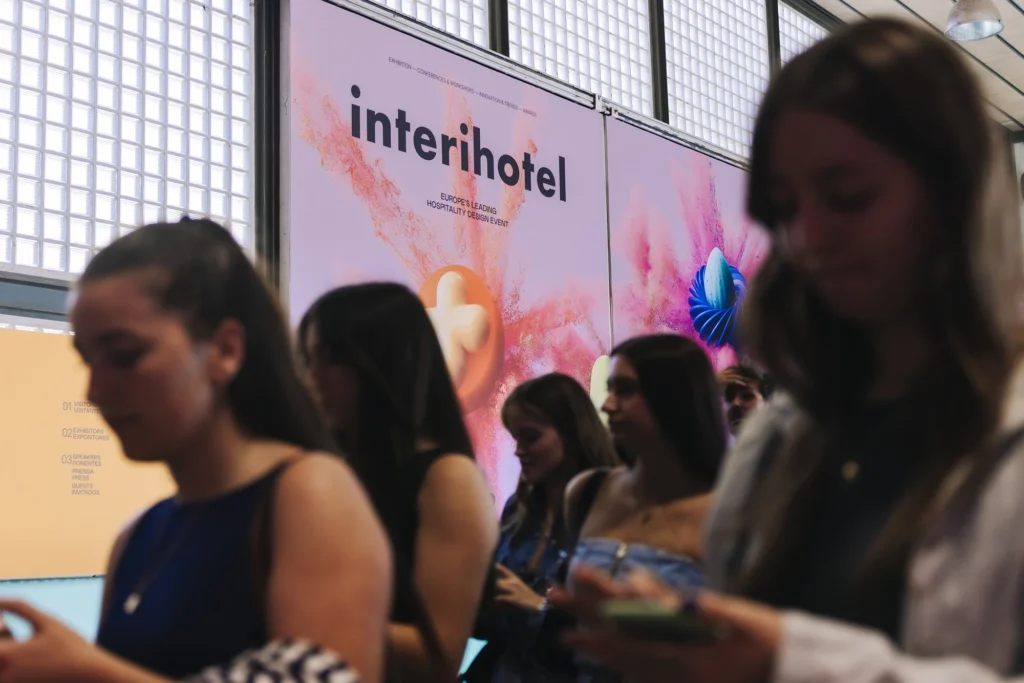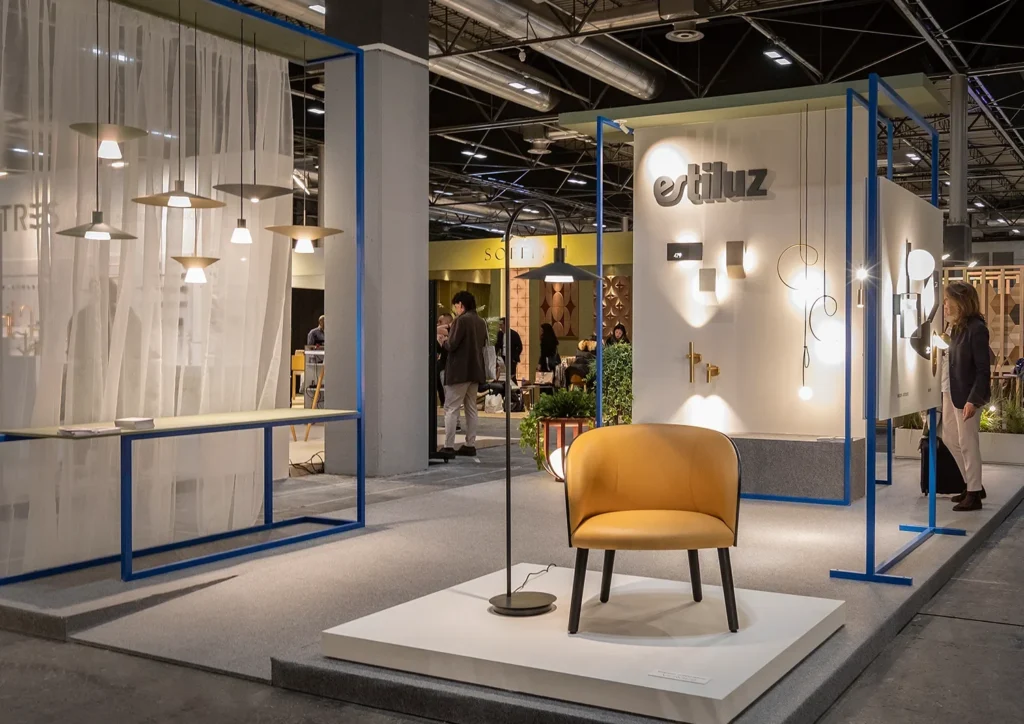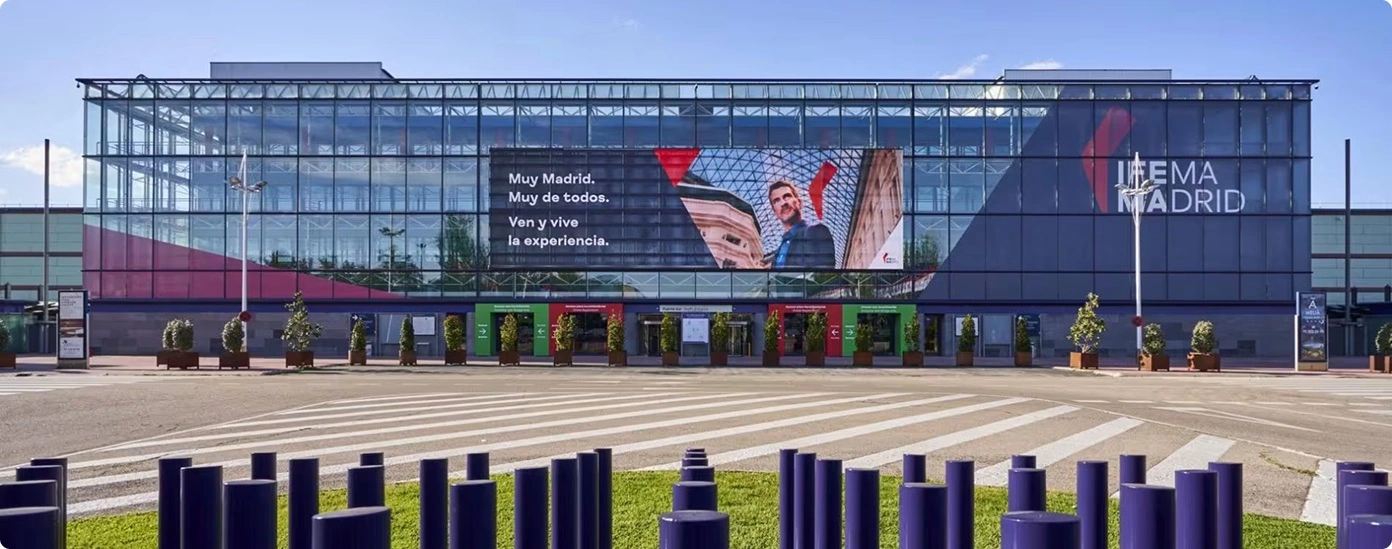
What makes a hotel stay memorable? Sometimes it is the quiet comfort of a room, the texture of a handmade surface, or the way a restaurant connects with its neighbourhood. Interihotel brings these questions into a professional setting, where design ideas meet the realities of creating and operating hospitality spaces. Returning to Madrid in November 2026, this annual event offers architects, interior designers, hoteliers and investors a focused meeting point within the international calendar of trade fairs. For The Hand Crafted Living, its appeal lies in that connection between thoughtful design and the experience of everyday living.
Interihotel Details
Interihotel MAD26 takes place from 17 to 19 November 2026 at IFEMA Madrid, with published opening hours of 10:00 to 19:00. The exhibition focuses on hotel and restaurant design, bringing products, professional knowledge and spatial experimentation into one annual event.
Essential Information for Your Visit
- Tradeshow: Interihotel.
- Edition: Interihotel MAD26, the 2026 Madrid edition.
- Dates: Tuesday, 17 November, to Thursday, 19 November 2026.
- Venue: IFEMA Madrid, Halls 1 and 3, Madrid, Spain.
- Arrival: South Entrance on Avenida del Partenón, with event entry through Hall 1.
- Opening hours: 10:00 to 19:00, local Madrid time.
- Organiser: AMBIT Living Spaces Cluster.
- Official website: Interihotel.
- Next announced edition: AMBIT lists Barcelona in October 2027 at Fira Barcelona Gran Via. Exact dates are not yet specified on its project page.
The organiser’s visitor information confirms the Madrid halls and entrance. For the following annual event, consult AMBIT’s Interihotel overview before making travel commitments. Information in this guide reflects official material checked on 29 October 2026.
Where Interihotel Sits Among Design Trade Fairs
Interihotel’s hospitality focus provides a useful lens for evaluating design. A chair must support both the visual character of a restaurant and the demands of repeated use. Lighting needs to create atmosphere while helping people navigate comfortably. Meanwhile, a distinctive material should justify its place through performance, maintenance and relevance to the project.
For professionals comparing trade fairs, this creates a practical advantage: the conversation can move quickly from appearance to application. An architect might investigate how a finish performs across several locations. An operator may ask about replacement components. A developer can explore how design decisions support a property’s identity without making future refurbishment unnecessarily difficult.
The annual event also offers a valuable perspective for residential designers. Hotels can serve as testing grounds for compact planning, layered lighting and generous shared spaces. However, the most useful lesson rarely involves copying a lobby. It involves understanding why a particular arrangement makes people feel comfortable.
Previous Edition Context: Barcelona 2025
Interihotel BCN25 took place from 21 to 23 October 2025 at Fira Barcelona Gran Via. Its theme, “The Power of Encounters,” framed a meeting between design practice and hospitality business. The organiser reported 11,675 attendees, 291 exhibiting brands and visitors from 53 countries. These are previous edition results, not confirmed attendance figures for Madrid 2026.
That distinction matters when reading about trade fairs. Historical results demonstrate an established professional audience, while forecasts describe ambitions. For visitors, the better question is how closely the exhibitors, sessions and conversations match their current work.
The editorial perspective: The value of an annual event becomes clearer when a beautiful object leads to a better question about how people live, rest, gather and belong.
Meet the Speakers
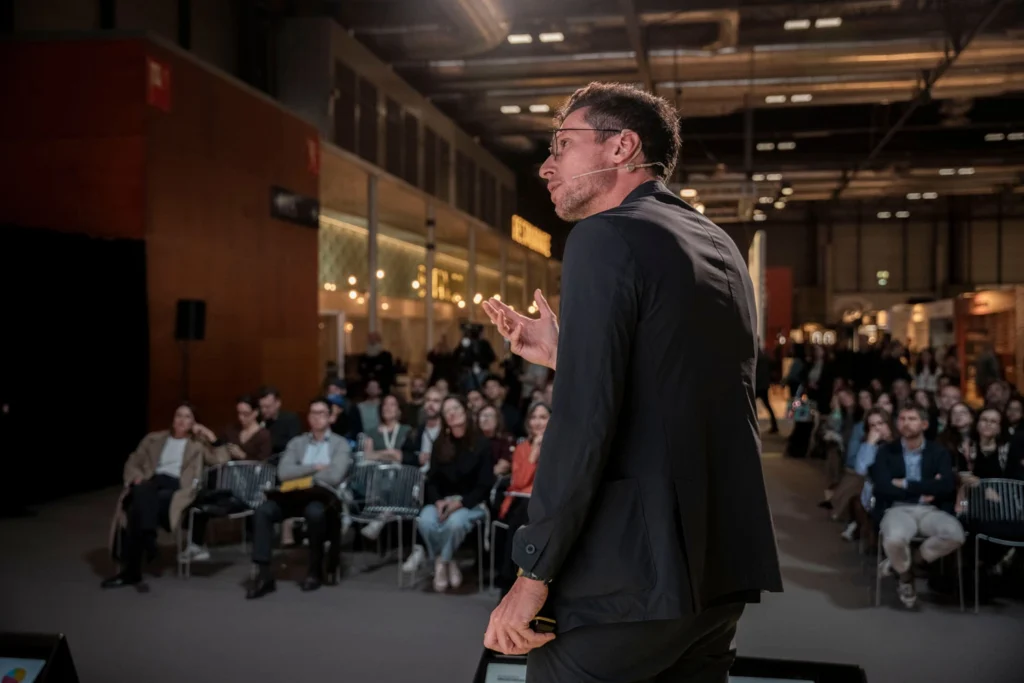
The announced speakers connect several fields that shape hospitality: visual communication, architecture, interiors, environmental research and gastronomy. This breadth gives the annual event a wider perspective than a purely product led exhibition. The following selection introduces confirmed participants, rather than reproducing the complete speaker directory.
Stefan Sagmeister, Sagmeister Inc.
Stefan Sagmeister, of Sagmeister Inc., brings a design practice that explores beauty, emotion and the communication of complex ideas. His recent work includes exhibitions and projects involving data visualisation. Interihotel confirms his participation on 17 November.
For hospitality professionals, his presence suggests a productive question: how can a space communicate an idea without relying on an explanation? At trade fairs, where visual impact competes for attention, that question encourages a more considered reading of colour, graphics and atmosphere.
Lyndon Neri and Rossana Hu, Neri&Hu
Lyndon Neri and Rossana Hu, founding partners of Neri&Hu Design and Research Office, bring an interdisciplinary approach spanning architecture, interiors, furniture and other design fields. Their official event profile emphasises research, cultural context and the relationship between contemporary life and collective history.
Their participation makes this annual event particularly interesting for readers concerned with place. A hotel can offer international standards of comfort while retaining local character. The challenge lies in expressing that character through meaningful spatial decisions rather than decorative references alone.
Dani García, Grupo Dani García
Dani García, the chef and entrepreneur behind Grupo Dani García, represents the relationship between culinary creativity and hospitality concepts. His confirmed appearance adds the operator’s perspective to a programme that also includes architects and designers.
Restaurant design depends on more than a compelling dining room. Service sequences, sound, movement and the relationship between kitchen and table all shape the experience. Trade fairs gain depth when these operational considerations enter the creative discussion.
Nini Andrade Silva, Atelier Nini Andrade Silva
Nini Andrade Silva, founder of Atelier Nini Andrade Silva, contributes a Portuguese perspective grounded in identity, culture and the character of a destination. Her practice encompasses hospitality, residential and commercial interiors.
Her inclusion gives the annual event a relevant point of connection with bespoke living. For designers, the useful question is how a material, object or spatial sequence can carry a story while remaining comfortable and functional.
Bill Browning, Terrapin Bright Green
Bill Browning, partner at Terrapin Bright Green, brings experience in environmental strategy and biophilic design research. His official profile includes work on hospitality design guidelines and the relationship between nature and the built environment.
For visitors attending several trade fairs each year, this offers a useful counterweight to visual novelty. Claims about wellbeing deserve questions about evidence, context and implementation.
Interihotel Talks and Program
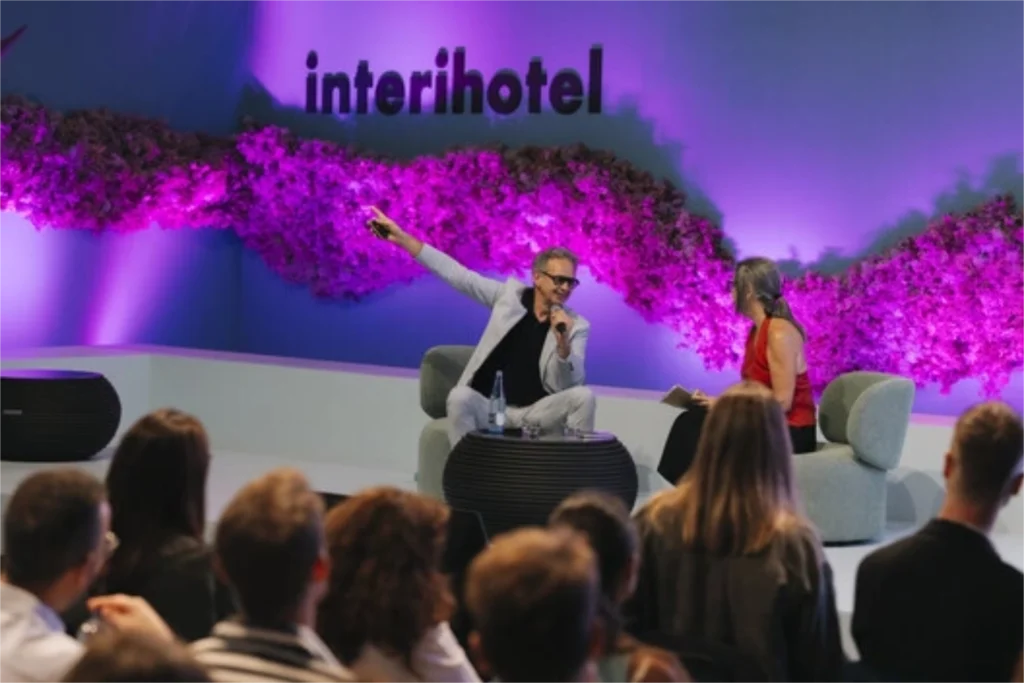
The 2026 programme follows “Creative Rebellion”, with three daily themes: The Inside Rebellion, The Green Rebellion and The Future Rebellion. The organiser combines talks, workshops and debates with five specialist forums. Together, these formats give the annual event several routes through the subject of hospitality design.
Use the official Interihotel programme as the final reference. The selections below reflect the published schedule at the time of checking. All times refer to Madrid local time, and programme details may change.
17 November: The Inside Rebellion
Stefan Sagmeister: No Doom, no Gloom
13:30 to 14:15, Agora. Stefan Sagmeister of Sagmeister Inc. presents “No Doom, no Gloom.” The programme lists the session in English.
For visitors building an itinerary across trade fairs, this session offers a reason to step outside familiar product categories. Consider how design communicates optimism, clarity or reassurance. Then return to the exhibition with a more precise question: what does a particular room or object make its user understand and feel?
Nini Andrade Silva: Hotels as Stories
16:30 to 17:15, Agora. Nini Andrade Silva of Atelier Nini Andrade Silva presents a session listed in Spanish as “Los hoteles no son edificios, son historias.” The talk takes place in English and explores hospitality through memory, identity and emotional connection.
This is a relevant session for anyone developing a boutique hotel or a residence with a strong sense of place. A useful listening exercise is to distinguish between storytelling through objects and storytelling through experience. Arrival, privacy, views and the pace of movement can communicate as much as artwork or furnishings.
18 November: The Green Rebellion
Lyndon Neri and Rossana Hu: Strangers at Home
13:30 to 14:15, Agora. Lyndon Neri and Rossana Hu of Neri&Hu present “Strangers at Home.” Their official speaker page confirms the session and timing; the agenda lists English as its language.
The title opens a compelling line of enquiry for hospitality: how can an unfamiliar place create a sense of belonging? This editorial reading does not predict the speakers’ conclusions. Instead, it offers a question to carry into the session, especially when considering heritage buildings, adaptive reuse or culturally sensitive development.
Bill Browning: Biophilic Design and the Built Environment
15:40 to 16:30, Forum. Bill Browning of Terrapin Bright Green delivers the biophilic design keynote within the WellSpaces Forum. The forum focuses on connecting research, spatial experience and practical design decisions.
At trade fairs, natural textures and planting can attract immediate attention. A stronger professional assessment also considers daylight, views, sensory comfort and maintenance. Visitors should listen for the conditions behind an example, because a successful intervention in one building may require substantial adaptation elsewhere.
A question for the exhibition floor: What evidence supports this design claim, and what would we need to measure after installation?
19 November: The Future Rebellion
Dani García: Deconstructing Dani García
13:30 to 14:15, Agora. Dani García of Grupo Dani García presents “Deconstructing Dani García,” listed in Spanish. The session brings culinary entrepreneurship into the annual event’s discussion of future hospitality.
For designers, a restaurant concept provides a useful test of coherence. Does the room support the pace of service? Can staff move comfortably? Does the experience retain its character during a busy evening? These questions help turn inspiration from trade fairs into a more complete brief.
Further Sessions for Architects and Interior Designers
- 15:30 to 16:15, Agora: María García Arribas of BAR Studio addresses the evolution of luxury hotels as adaptable spaces.
- 16:00 to 16:45, Forum: Tim Fu of Studio Tim Fu presents “AI Architecture Office.”
- 17:00 to 17:45, Agora: Belén Moneo of Moneo Brock discusses architecture for a future of wellbeing.
These published sessions overlap in part, so visitors should choose their priorities before arriving.
Adaptability deserves particular attention. A room that accommodates changing uses may retain value longer, but flexibility needs careful detailing. Similarly, an impressive AI generated image does not resolve construction, access or maintenance. The most useful conversations at trade fairs connect creative possibilities with the responsibilities of delivery.
Five Forums to Guide Your Visit
The annual event lists Future Living on the morning of 17 November; Circular Spaces and WellSpaces on 18 November; and Hospitality Building Systems and AI Interiors on 19 November. Their subjects range from new living models and circularity to industrialised construction and digital practice.
Choose a forum according to a current decision. A refurbishment team might prioritise circularity. A developer investigating delivery methods may favour building systems. A studio reviewing its workflow could focus on AI. This approach makes trade fairs easier to navigate and reduces the temptation to collect ideas without a clear purpose.