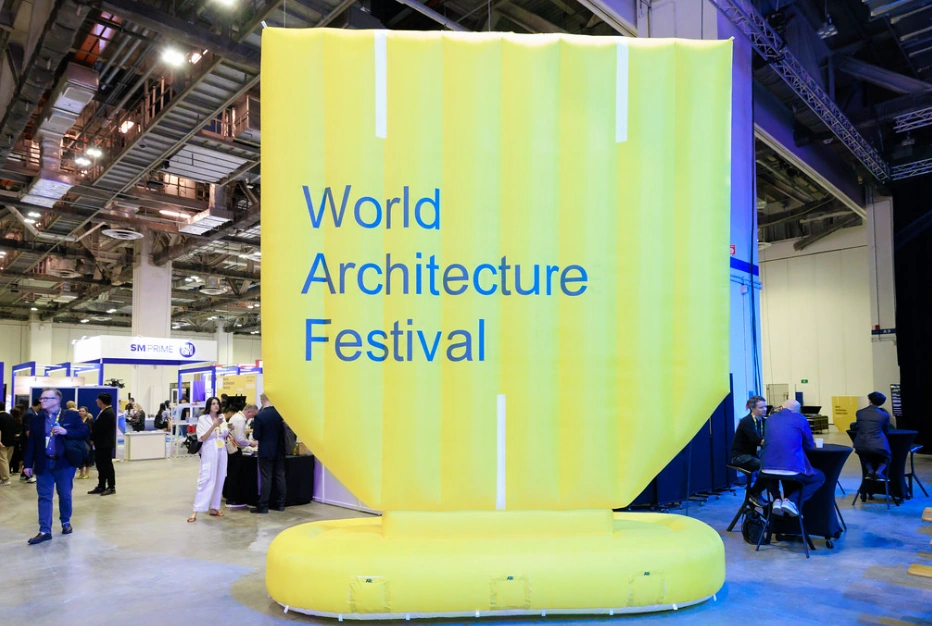
Some buildings impress at first glance. Others become more compelling when their architects explain the decisions behind them. World Architecture Festival (WAF) brings those conversations into public view, combining live architectural judging with talks, exhibitions, and professional exchange. For readers who follow international trade fairs, this annual event offers something particularly valuable: the opportunity to examine how ambitious ideas become places where people live, work, gather, and belong.
In 2026, WAF returns to the United States, this time to Fort Lauderdale, Florida, with Water as its central theme. The setting gives the discussion immediate relevance. Here, the relationship between buildings, landscape, and water extends far beyond the waterfront view. It raises questions about comfort, infrastructure, environmental responsibility, and the future of desirable places to live.
World Architecture Festival (WAF) Details
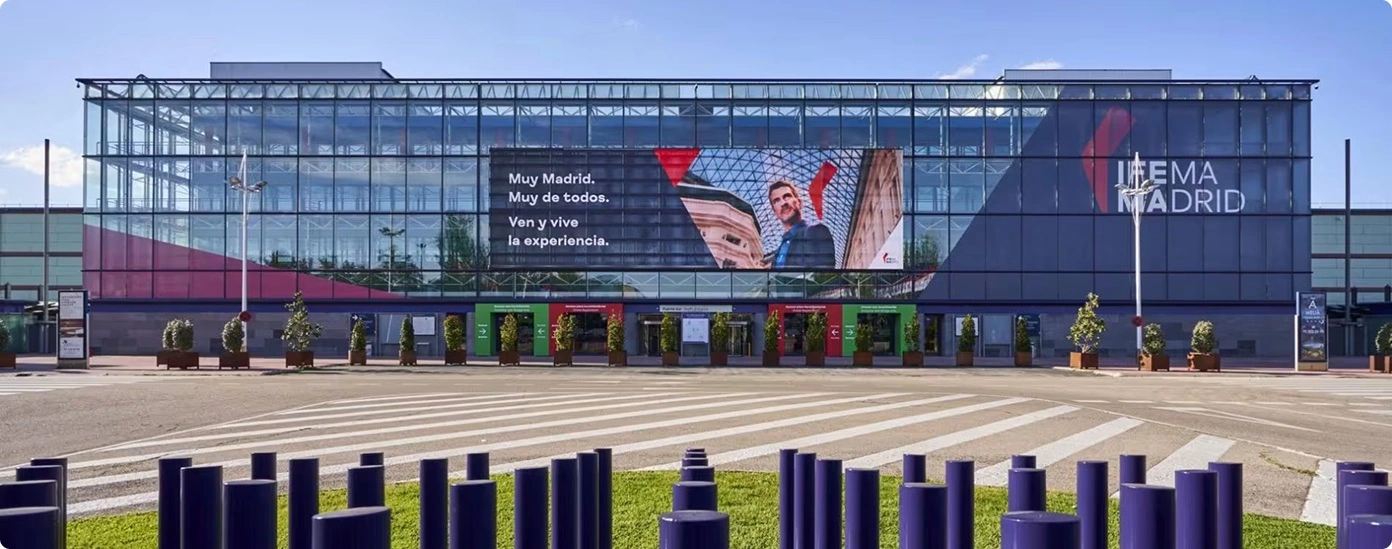
World Architecture Festival 2026 takes place November 18–20 at the Broward County Convention Center in Fort Lauderdale, Florida. Its combination of project presentations, architectural debate, and product discovery places it within the wider calendar of design trade fairs, although its live awards process gives the annual event a distinct identity.
- Event name: World Architecture Festival, commonly known as WAF.
- Edition: WAF 2026, the festival’s second consecutive year in the United States.
- Dates: Wednesday, November 18, through Friday, November 20, 2026.
- Location: Broward County Convention Center, Fort Lauderdale, Florida, United States.
- Theme: Water.
- Opening hours: The organizer publishes individual session times, but the reviewed information does not establish one definitive daily opening and closing schedule covering registration, exhibition access, and all activities. Confirm these separately before arrival.
- Official website: World Architecture Festival.
- Following edition: WAF has opened registration of interest for 2027. Dates and a venue were not published on the reviewed 2027 interest page as of November 5, 2026.
For updates on the following annual event, use the official WAF 2027 interest form. Registering interest does not constitute a delegate booking or an awards submission.
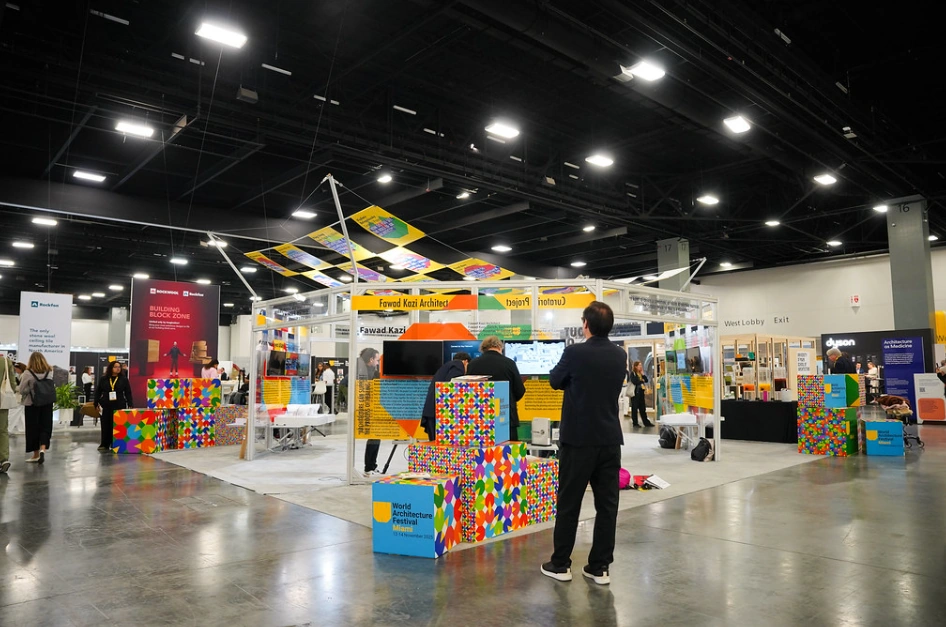
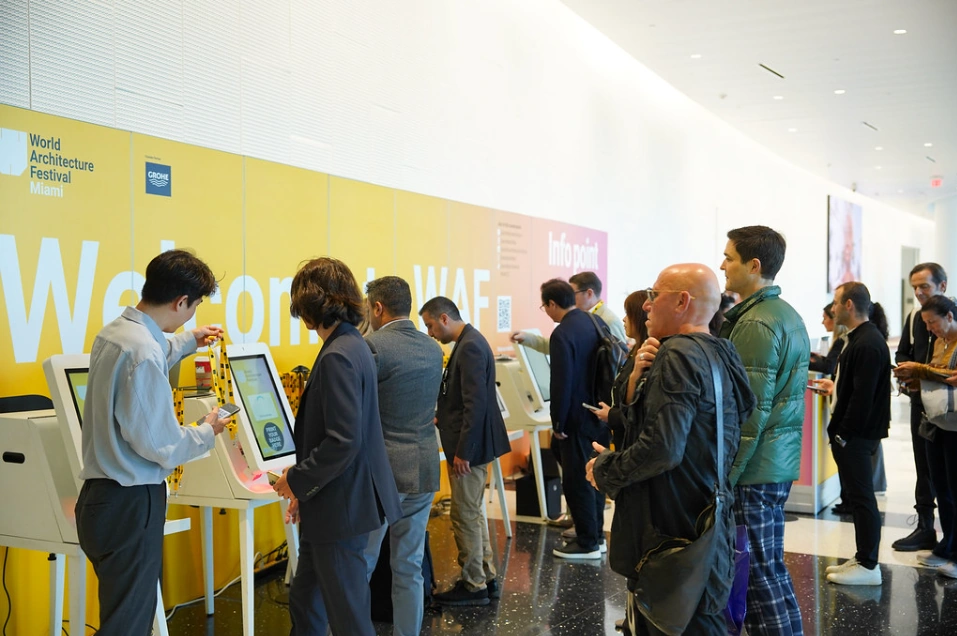
Image credit: World Architecture Festival / Flickr.
What Makes WAF Different From Other Trade Fairs?
At many trade fairs, visitors encounter architecture through finished photographs, material samples, and presentations prepared for a commercial audience. WAF adds direct professional scrutiny. Architects explain shortlisted projects before judges and delegates, bringing the reasoning behind the images into the room.
That format changes how visitors should approach the annual event. A beautiful facade becomes the beginning of a discussion rather than its conclusion. Questions about context, construction, circulation, and use can reveal whether a compelling visual idea also produces convincing architecture.
For clients, this offers a useful education in commissioning. For architects, it creates an opportunity to compare methods across cultures and building types. Meanwhile, designers visiting international trade fairs can connect material choices with the larger spatial decisions those materials serve.
A Brief History and Previous Edition Context
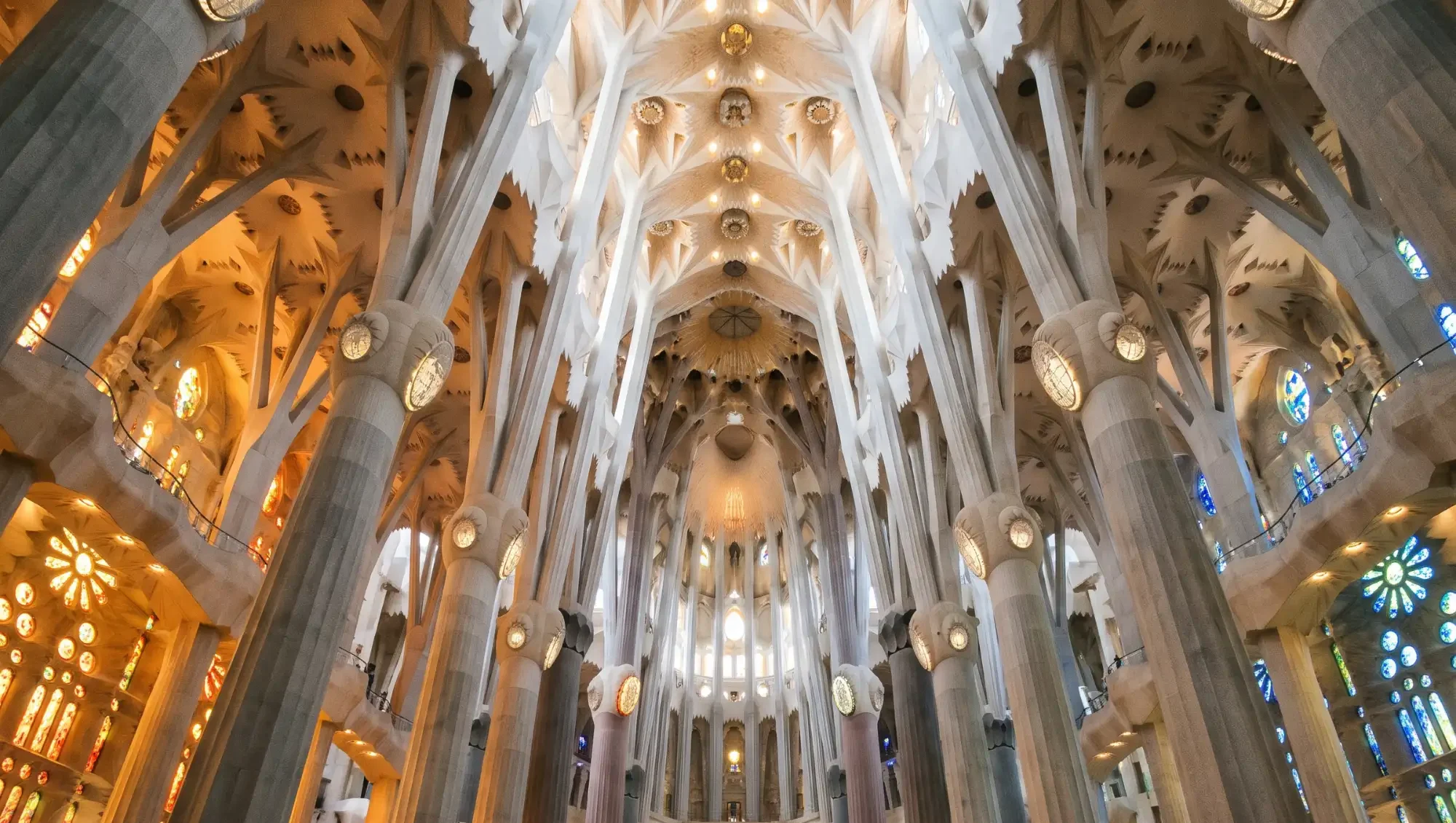
WAF began in Barcelona in 2008. Its inaugural World Building of the Year award went to Bocconi University in Milan by Grafton Architects. Subsequent host cities have included Singapore, Berlin, Amsterdam, and Lisbon, establishing the annual event as an international meeting point rather than a gathering tied permanently to one market.
The 2025 edition brought WAF to Miami Beach. That year, the World Building of the Year award went to the Holy Redeemer Church and Community Centre of Las Chumberas in Spain, designed by Fernando Menis. The Royal Institute of British Architects’ account of WAF 2025 records the result.
Previous edition perspective: A community building receiving WAF’s leading award offers a useful reminder for visitors to design trade fairs: architectural significance does not depend solely on commercial scale, spectacular form, or an exclusive address.
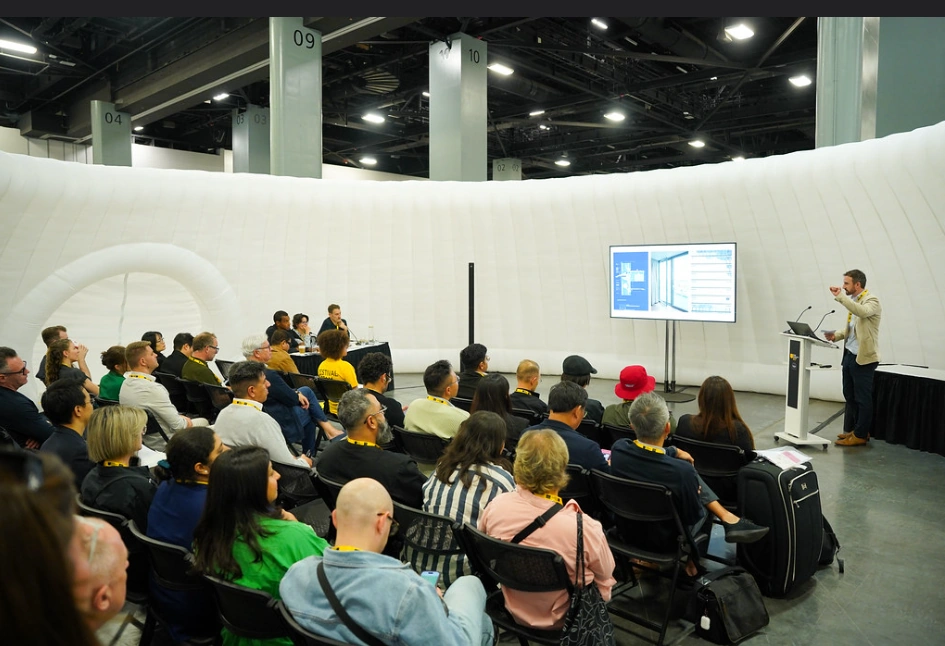
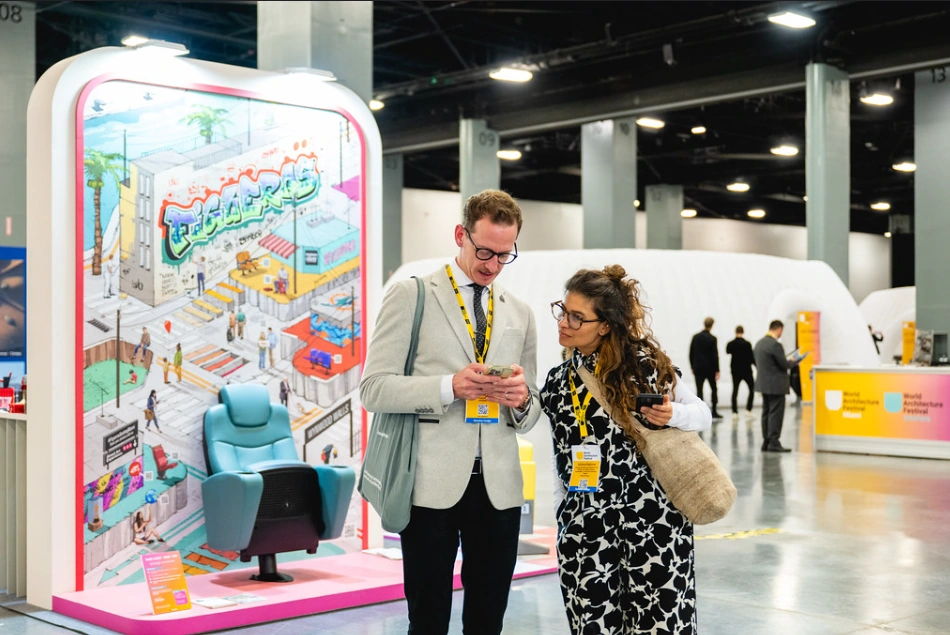
Image credit: World Architecture Festival / Flickr.
Meet the Speakers
The official WAF 2026 speaker roster brings together architects, landscape designers, and other built environment specialists. The following selection introduces several confirmed participants and suggests questions readers might bring to their sessions. These editorial perspectives should not be mistaken for promises about individual presentation content.
Elizabeth Diller, Diller Scofidio + Renfro
Elizabeth Diller, partner at Diller Scofidio + Renfro, appears on the confirmed roster. Her participation provides a strong reason to consider architecture as an experience that unfolds over time, rather than an object understood from one viewpoint.
For cultural clients and hospitality developers, a useful question follows: how does a building guide attention? An entrance, a pause, or a change in level can shape the experience as decisively as a dramatic exterior. Visitors to trade fairs can apply that same attention when assessing products within a complete spatial sequence.
Benedetta Tagliabue, EMBT Architects
Benedetta Tagliabue, principal of EMBT Architects, also joins the annual event. Her studio describes a practice that connects architecture with art, nature, and cultural context.
For The Handcrafted Living’s readers, that connection invites a particularly relevant line of inquiry. How can a contemporary building feel rooted in its setting without relying on familiar regional motifs? Materials, shadows, patterns of movement, and the treatment of public space offer richer possibilities than decorative references alone.
Andrew Whalley and Jolyon Brewis, Grimshaw
WAF lists Andrew Whalley, chairman, and Jolyon Brewis, partner, from Grimshaw. Their presence gives delegates another opportunity to examine the relationship between architectural ambition and the systems that support it.
A productive approach is to listen for how an idea changes during delivery. What survives from the first concept? Which constraints improve the design? Among the many lessons an annual event can offer, understanding that process often proves more useful than collecting a new vocabulary of forms.
Mary Bowman, Gustafson Porter + Bowman
Mary Bowman, founding partner of Gustafson Porter + Bowman, brings landscape architecture into the speaker lineup. The practice’s published work places people, nature, and water within the design of public space.
Her inclusion encourages visitors to look beyond the building envelope. For residential estates and hotels, landscape deserves attention from the earliest brief. Consider how arrival routes, planted areas, outdoor rooms, and shared spaces contribute to everyday use before selecting their finishes.
Tobias Wallisser, LAVA
Tobias Wallisser, co-founder and partner of LAVA, Laboratory for Visionary Architecture, is another confirmed speaker. Together, these participants give the annual event a range of perspectives that extends beyond a single architectural style. Speaker participation remains subject to organizer updates.
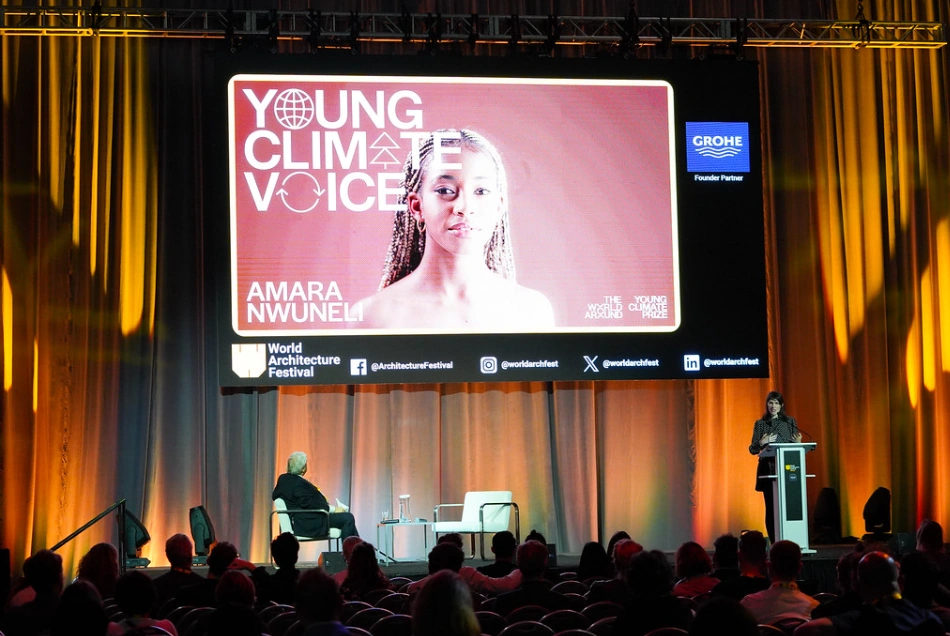
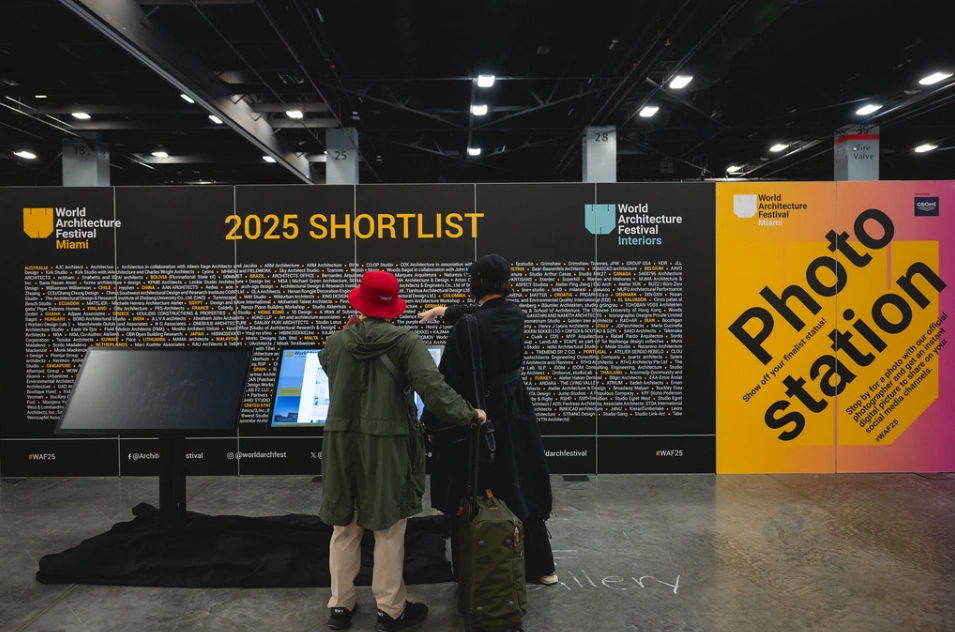
Image credit: World Architecture Festival / Flickr.
World Architecture Festival (WAF) Talks and Program
Water is the organizing theme of the WAF 2026 talks program. The WAF Stage hosts keynotes and discussions, while the Festival Hall Stage includes WAFX project presentations and technical content. Live project judging runs alongside these sessions. Consult the official talks program when building a personal schedule.
Water as an Architectural Question
Water offers a revealing subject for an annual event concerned with the future of architecture. In residential and hospitality imagery, it often appears as an amenity: a pool, a fountain, a sea view. A more demanding design brief asks how water enters, moves through, and leaves a property.
That shift matters to anyone who commissions buildings. The experience of a garden after rain deserves as much thought as its appearance in perfect weather. Likewise, the relationship between a terrace and its surrounding landscape should emerge from the site’s conditions, not simply from a desired photograph.
For professionals accustomed to trade fairs, WAF offers an opportunity to connect individual specifications with these broader questions. A surface, fitting, or landscape component becomes more meaningful when its contribution to the whole project is clear.
Selected Talks to Explore
Benedetta Tagliabue: Water, Memory, and Design
The published program includes “Water Draws Always in Plural” with Benedetta Tagliabue of EMBT Architects. Its outline considers water’s multiple roles within architectural thinking.
The editorial interest lies in that plurality. Water can establish an edge, connect spaces, introduce sound, or hold a cultural association. Visitors might listen for how those qualities affect a plan or section. Doing so turns an evocative theme into a more precise discussion about design decisions.
Ted Givens: Architecture and a Changing Climate
The program also identifies Ted Givens, senior design principal at 10 Design, in a session examining water and climate responsive architecture. Readers can explore the practice through 10 Design’s official website.
For developers and private clients, the useful question is how an environmental constraint changes the brief. Does it alter the placement of buildings, the use of outdoor space, or the sequence of arrival? Those decisions should inform the architectural concept before the project reaches material selection.
Check the live schedule for the latest times and room assignments. The organizer states that program times use the venue’s local time and may change.
Live Judging: Where the Annual Event Becomes Most Revealing
The 2026 judging schedule spans completed buildings, future projects, interiors, and landscape. Listed presentations include urban houses, housing, hotels, health facilities, and mixed use developments.
Choose at least one session directly related to your work and another outside it. A residential architect might learn from a health project’s treatment of privacy. A hotel developer could find useful ideas in a public landscape presentation. This is where an annual event can become more than a review of familiar professional territory.
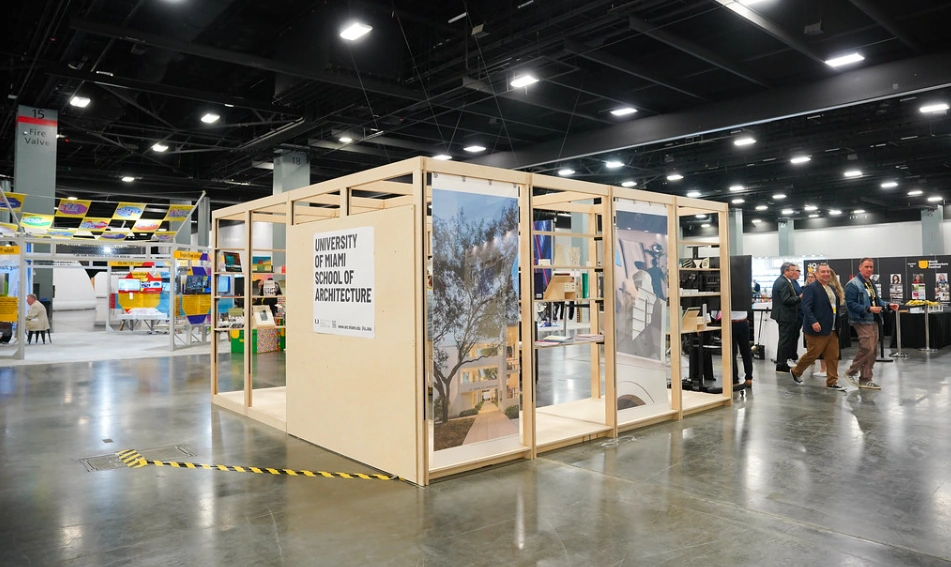
Image credit: World Architecture Festival / Flickr.
Three Questions Worth Taking Into the Room
- What problem did the project identify? Establish whether the presentation explains a specific need or begins mainly with an image.
- How does the design respond? Look for connections between the stated ambition and decisions about space, construction, and use.
- What remains uncertain? Distinguish measured outcomes from intentions, particularly when listening to future project presentations.
Editorial perspective: The strongest lesson from architectural trade fairs may be a better question. At WAF, the opportunity is to see which questions a persuasive project can answer.
The Exhibition and Informal Program
WAF also includes a product exhibition, tours, partner activities, and an awards dinner. The organizer’s attendance page outlines the available activities and ticket inclusions.
Approach the exhibition with a short specification brief. Instead of collecting every brochure, identify the questions that matter to an active project: maintenance, customization, repair, technical support, or suitability for a particular setting. This makes visits to trade fairs more useful long after the displays disappear.
Similarly, leave space between sessions for conversation. A carefully chosen meeting can help clarify an issue raised during a presentation. The annual event rewards a schedule with room for reflection, especially when several compelling discussions overlap.